
Choosing the right sublimation aluminum sheet manufacturer affects everything downstream — print quality, color consistency, and how reliably your orders ship on time. A factory that controls its own coating process, alloy sourcing, and quality testing will give you far more consistent results than a trading company reselling someone else’s stock.
What to Look for in a Sublimation Aluminum Sheet Manufacturer
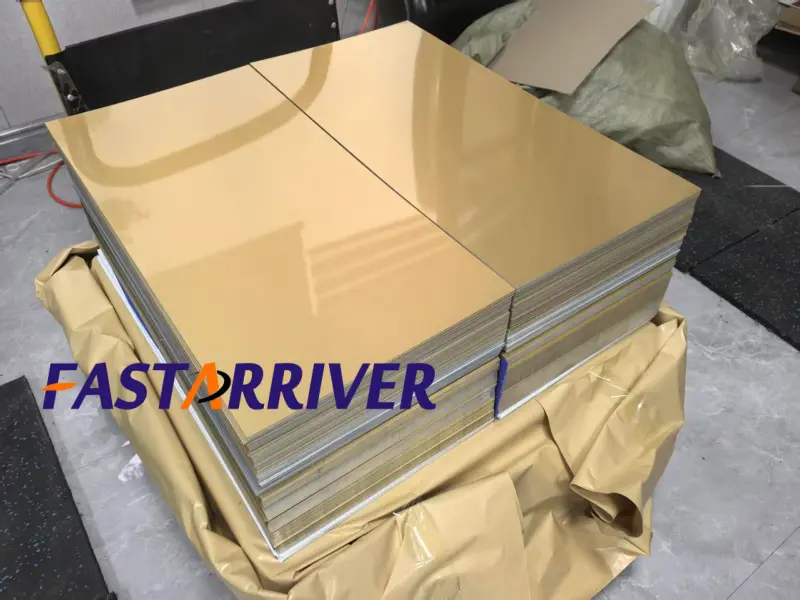
A direct manufacturer gives the best pricing and the most control over coating thickness, alloy selection, and finish consistency. Trading companies can be useful for small first orders or language support, but they add a markup and reduce transparency into the actual production process. Local distributors work well for samples or urgent small quantities, not bulk sourcing.
Manufacturer vs Trading Company vs Distributor
| Source Type | Pricing | Quality Control | Customization | Lead Time |
|---|---|---|---|---|
| Direct factory/manufacturer | Lowest | Full control over process | High, MOQ-dependent | Longer for custom runs |
| Trading company | Medium | Limited, relies on factory | Limited | Variable, extra middleman delay |
| Local distributor | Highest | None, resells finished stock | Very limited | Fastest for small orders |
Alloy Options Manufacturers Typically Offer
| Alloy | Strength Level | Best Trait | Common Manufacturer Use |
|---|---|---|---|
| 1100 | Low | Softest, easiest to cut and shape | Small craft panels, gift items |
| 3003 | Medium | Good rigidity, anti-rust | Standard photo panels, signage |
| 5052 | Medium-High | Best flatness, strongest | Large format panels, outdoor signage |
1100 Aluminum from Manufacturers
Most factories stock 1100 for smaller, lightweight applications. It’s the cheapest alloy to produce in bulk and cuts cleanly into custom shapes, which makes it popular for gift and craft product lines.
3003 Aluminum from Manufacturers
3003 is the workhorse alloy for general sublimation production. A reliable manufacturer should be able to supply this in consistent coil widths and thicknesses, since it’s the most commonly ordered grade for standard photo panel and signage runs.
5052 Aluminum from Manufacturers
For large-format or outdoor-rated panels, 5052 is the alloy that holds flatness best. Manufacturers producing premium product lines typically stock this as their top-tier offering, often paired with a heavier coating for added durability.
Coating Process: What a Manufacturer Should Control
| Coating Type | Process Control Needed | Result If Done Well | Result If Done Poorly |
|---|---|---|---|
| Gloss white | Even spray/roll application, controlled curing | Bright, vivid prints | Streaking, uneven color |
| Matte white | Consistent texture application | Soft, even non-glare finish | Patchy or inconsistent sheen |
| Two-sided coating | Equal coating on both faces | Reliable double-sided printing | Weaker bond on second side |
Thickness Range Manufacturers Typically Produce
| Thickness (mm) | Common Manufacturing Output |
|---|---|
| 0.45–0.6 | Standard photo panel stock |
| 0.6–1.0 | Mid-size signage and decor panels |
| 1.0–1.5 | General outdoor-rated panels |
| 2.0–3.0 | Large format wall art, architectural panels |
| 3.0+ | Heavy-duty display panels |
Full Technical Specifications
| Parameter | Value |
|---|---|
| Alloy | 1100 / 3003 / 5052 |
| Temper | H14, H16, H18, H24 |
| Thickness | 0.45–3.0 mm |
| Width | 600–1,600 mm |
| Length | 1,000–4,000 mm (or coil) |
| Surface | White polymer coated |
| Standards | ISO, ASTM, SGS |
Production Capabilities to Ask About
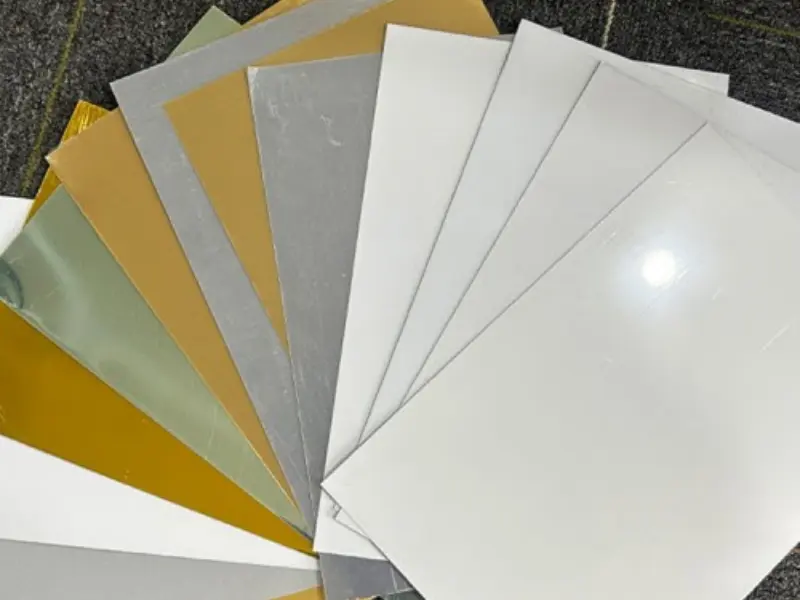
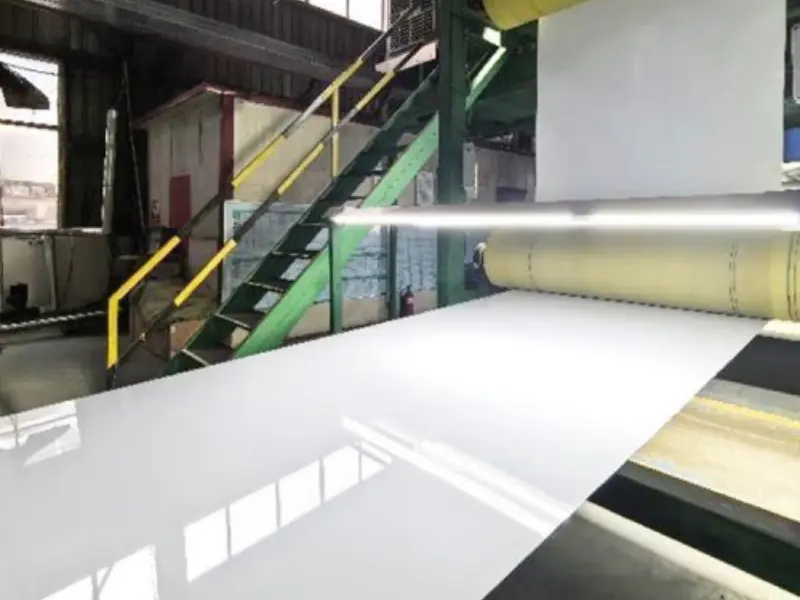
Coil Coating Line Capacity
Manufacturers running a continuous coil coating line can produce large volumes efficiently and maintain more consistent coating thickness across long runs compared to manual spray-coating smaller batches.
Cutting and Slitting Services
Many manufacturers offer in-house slitting to custom widths and cutting to length, which saves buyers from needing a separate fabrication step before printing or resale.
Custom Coating Formulation
Some manufacturers can adjust coating gloss level, opacity, or thickness based on a buyer’s specific print testing results, which matters for buyers with strict color accuracy requirements.
Sample and Testing Support
A manufacturer confident in its product should offer sample panels for sublimation testing before a full order is placed. This lets buyers confirm dye adhesion, color output, and surface quality on their own printing equipment first.
Product Types Manufacturers Typically Offer
Standard Photo Panel Stock
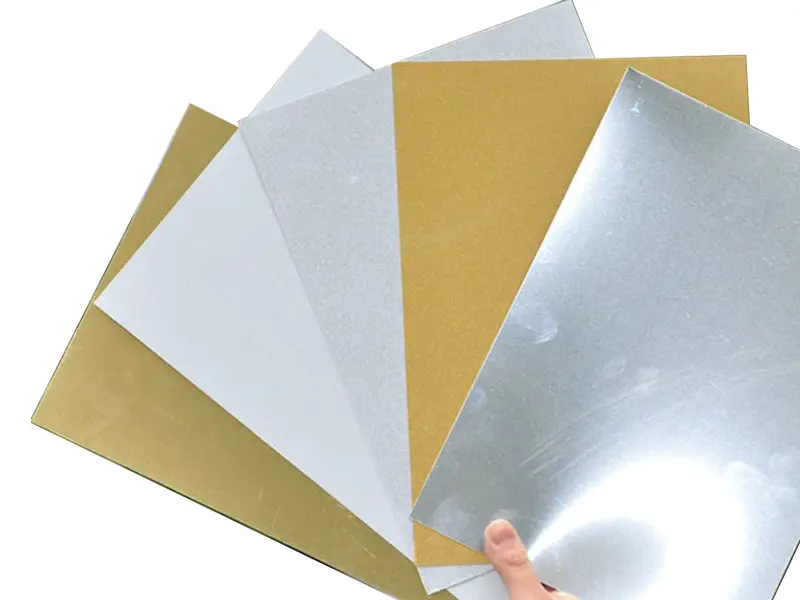
This is the bread-and-butter product for most manufacturers — gloss or matte white coated sheet in common photo panel sizes, ready for cutting and resale.
Bulk Coil Stock for Converters
Manufacturers serving large print shops or converters often supply uncut coils, letting the buyer’s own facility handle cutting and finishing to their exact specifications.
Pre-Cut Blanks for Retail Resale
Smaller cut-to-size blanks — square, rectangular, or custom shapes — are common for manufacturers supplying gift, craft, or personalized product sellers.
Two-Sided Coated Sheet
Manufacturers with the right line setup can coat both faces, useful for double-sided signage, hanging panels, and award products.
Outdoor-Grade Coated Sheet
Some manufacturers add a UV-protective topcoat over the standard white coating, extending the panel’s color life under direct sun exposure.
Alloy Comparison Table
| Feature | 1100 | 3003 | 5052 |
|---|---|---|---|
| Strength | Low | Medium | Medium-High |
| Flatness retention | Fair | Good | Excellent |
| Cost | Lowest | Medium | Higher |
| Outdoor durability | Fair | Good | Excellent |
| Best panel size | Small | Medium | Large format |
| Workability (cutting/bending) | Easiest | Good | Moderate |
OEM and Private Label Manufacturing
Many sublimation aluminum sheet manufacturers offer OEM and private label services for businesses building their own branded product line.
| Service | What It Covers |
|---|---|
| OEM production | Manufacturer produces to buyer’s exact spec, no branding |
| Private label packaging | Manufacturer’s product shipped under buyer’s brand name |
| Custom sizing | Non-standard dimensions cut to buyer’s request |
| Custom coating spec | Gloss level, thickness, or finish adjusted per buyer testing |
Key Properties to Verify Before Ordering
- Coating adhesion: request test panels and run them through your own heat press
- Flatness consistency: check multiple panels from the same batch for warping
- Color matching: confirm gloss/matte consistency across a full production run
- Edge quality: inspect cut edges for burrs or coating chips
- Packaging for shipping: ask how panels are protected from scratching in transit
- Certifications: confirm ISO, ASTM, or SGS documentation is available on request
Application Areas Served by Manufacturers

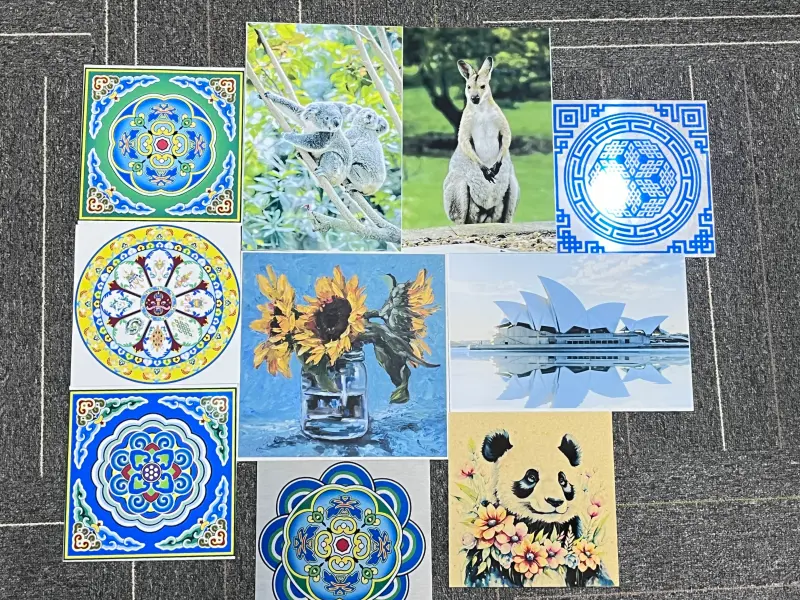
Photo & Print Industry
- Photo lab and printing service supply
- Custom photo gift production
- Wedding and event photography products
- Portrait studio retail products
Awards & Recognition Industry
- Corporate award and plaque manufacturers
- Sports trophy component suppliers
- Engraving and personalization businesses
- Memorial and dedication plaque producers
Signage & Display Industry
- Retail signage manufacturers
- Trade show display producers
- Architectural signage suppliers
- Real estate signage companies
Wholesale & E-commerce Sellers
- Print-on-demand platform suppliers
- Online custom gift sellers
- Craft marketplace bulk suppliers
- Dropship product sourcing
How Production Works at a Sublimation Sheet Factory
Step One: Raw Aluminum Coil Sourcing
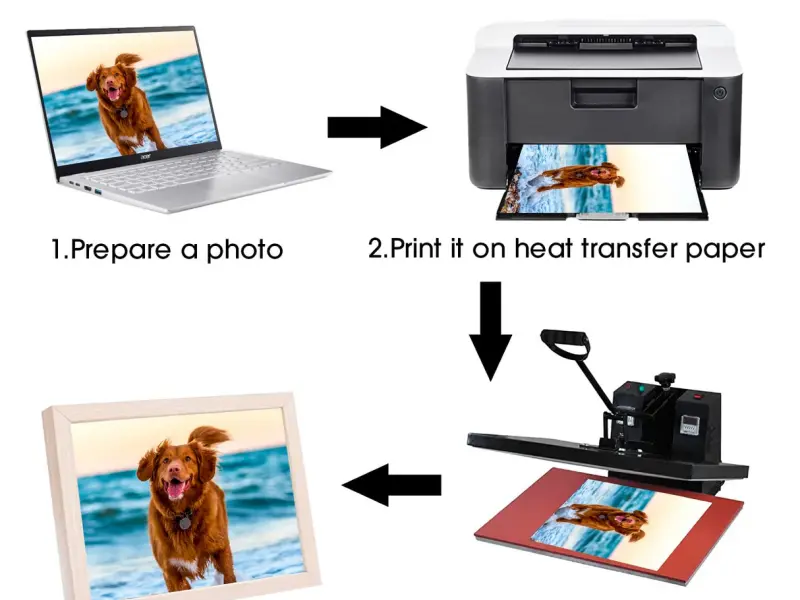
The factory sources base aluminum coil in the target alloy — typically 1100, 3003, or 5052 — at the specified thickness and width.
Step Two: Surface Cleaning and Pretreatment
Before coating, the aluminum surface is cleaned and chemically pretreated to help the white polymer coating bond properly during application.
Step Three: Coating Application
The coating is applied through roller coating or spray systems, depending on the factory’s equipment, then run through a curing oven to set the finish.
Step Four: Quality Inspection and Cutting
Finished coil or sheet goes through quality checks for coating thickness, gloss level, and flatness before being cut to standard sizes or shipped as bulk coil.
Thickness vs. Buyer Type Quick Reference
| Buyer Type | Recommended Thickness | Recommended Alloy |
|---|---|---|
| Gift/craft resellers | 0.45 mm | 1100 |
| Photo panel sellers | 0.45–0.6 mm | 1100 / 3003 |
| Award and plaque makers | 0.6–1.0 mm | 3003 |
| General signage businesses | 1.0–1.5 mm | 3003 / 5052 |
| Large format/outdoor sellers | 2.0 mm+ | 5052 |
Frequently Asked Questions
How Do I Verify a Sublimation Aluminum Sheet Manufacturer Is Legitimate?
Ask for factory audit reports, production photos or videos, and references from existing customers. A legitimate manufacturer should also be willing to provide test panels before a bulk order, along with relevant quality certifications like ISO or ASTM documentation.
What Is a Typical MOQ for Ordering from a Manufacturer?
MOQ varies by manufacturer and product type. Standard stock sizes and coatings often have a lower minimum, while custom coating formulations, non-standard thicknesses, or private label packaging usually require a higher minimum order to justify the production setup cost.
Can a Manufacturer Match a Specific Coating Gloss Level?
Many manufacturers with in-house coating lines can adjust gloss level, opacity, and coating thickness based on buyer testing feedback. This typically requires sample rounds and approval before committing to a full production batch.
What’s the Difference Between Buying from a Manufacturer and a Trading Company?
A manufacturer controls the actual production process, giving better pricing and more customization options. A trading company resells a manufacturer’s product with an added markup, which can simplify communication for first-time buyers but reduces transparency into quality control and production timelines.
How Long Does It Take to Get a Sample from a Manufacturer?
Sample turnaround usually ranges from a few days for stock sizes to one to two weeks for custom specifications. Always test samples on your own sublimation equipment before placing a bulk order, since heat press settings and ink type can affect final results.
Do Manufacturers Offer Private Label or OEM Services?
Yes, many manufacturers offer OEM production and private label packaging for buyers building their own branded product line. These services typically come with a higher MOQ than standard stock orders, since the production run is customized specifically for one buyer.
What Should I Check Before Placing a Bulk Order?
Confirm coating adhesion through your own print testing, check flatness consistency across multiple sample panels, and verify the manufacturer can document alloy and coating specifications in writing. It also helps to clarify packaging methods to ensure panels won’t scratch during shipping.
Can Manufacturers Supply Uncut Coil Instead of Pre-Cut Sheets?
Yes, manufacturers serving converters and large print operations often supply uncut coil stock, letting the buyer’s facility handle cutting and finishing in-house. This is usually more cost-effective for high-volume buyers with their own cutting equipment.
Leave a Reply
You must be logged in to post a comment.