
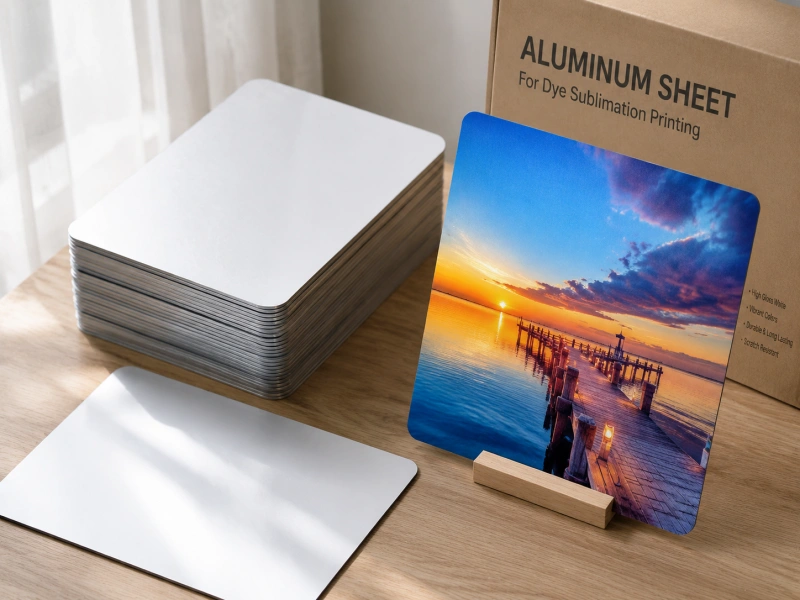
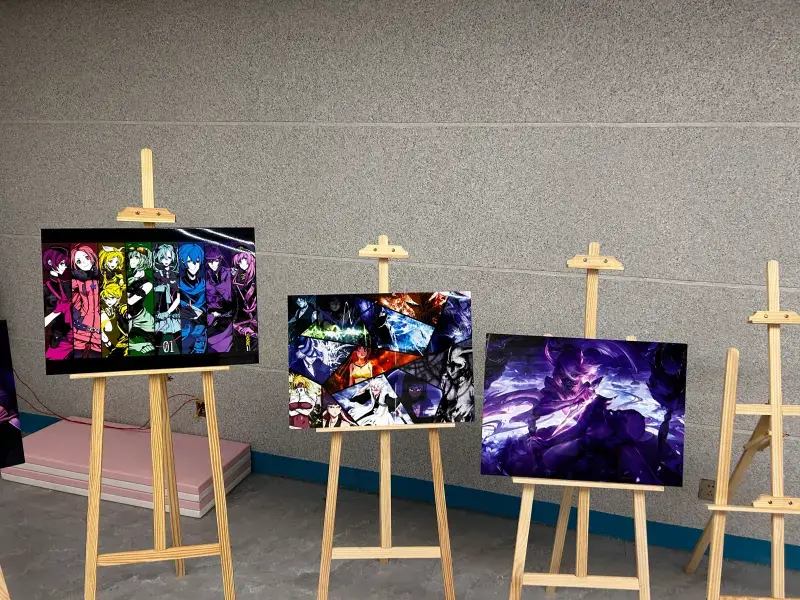
Walk into any print shop that offers metal prints and you will see gloss white sublimation aluminum panels stacked by the shelf.
There is a reason this finish dominates the market. The bright white base acts like a fresh canvas.
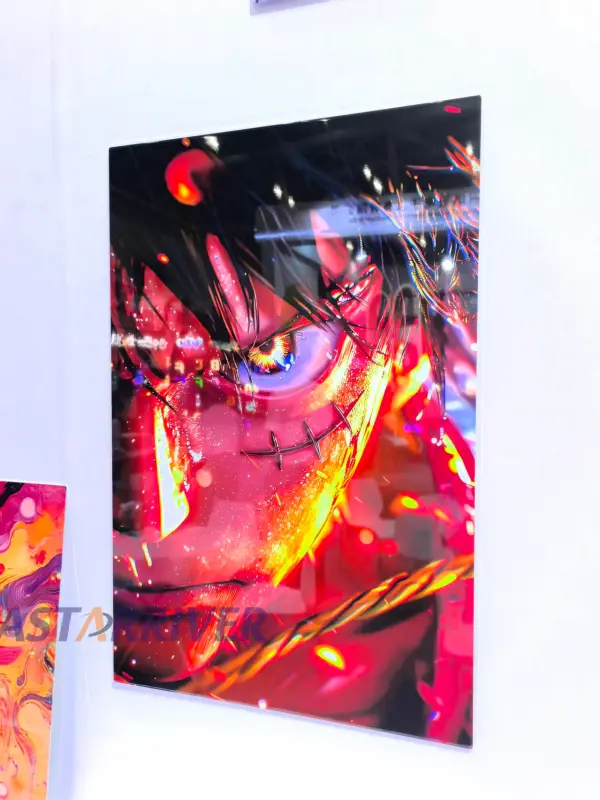
It reflects light back through the ink. Colors look saturated. Blacks look deep. Skin tones stay natural.
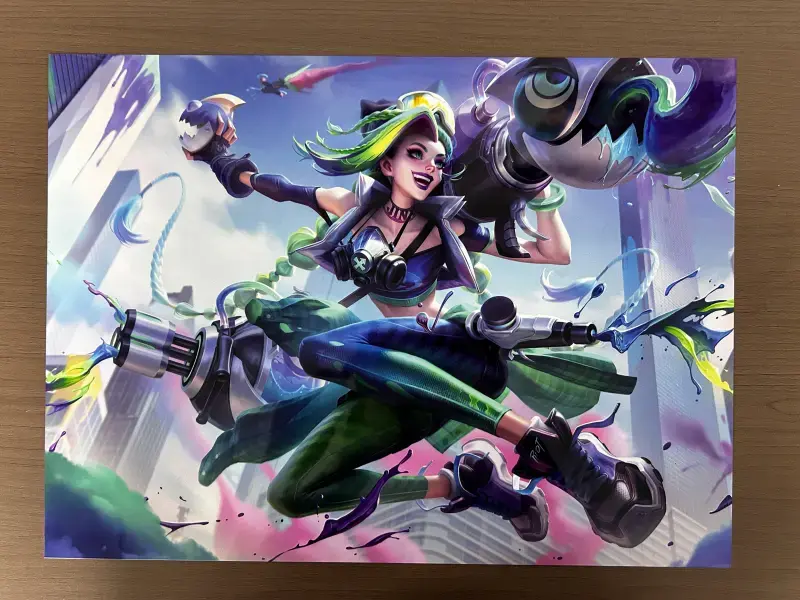
Matte finishes absorb light. Brushed finishes let metal show through in the white areas. Gloss white keeps every pixel true to the original file.
For photographers, this means the print matches the screen. For gift shops, it means happy customers who get exactly what they ordered.
Alloy Breakdown: The Metal Under the Coating
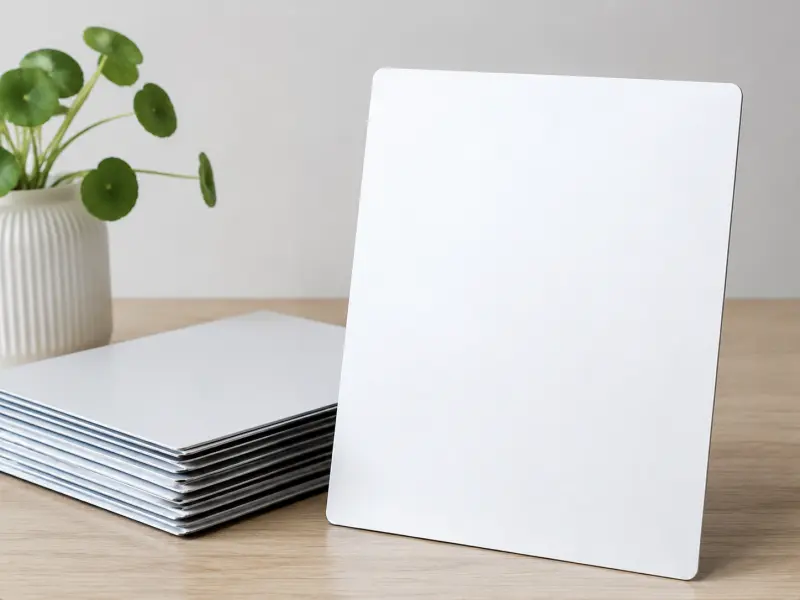
The gloss white surface is just a thin layer of polyester. The aluminum underneath gives the panel its bones. Different alloys change how the panel behaves during pressing and after hanging.
1050 and 1060: Pure and Soft
These alloys contain 99.5% or more pure aluminum. The surface is very smooth. That helps the coating go on evenly. These panels are cheap and great for small prints, keychains, and test pieces. The downside is strength. Thin 1050 panels can warp under heat. They also flex if you print larger than 11 by 14 inches.
1100: The Budget Workhorse
1100 is commercially pure aluminum. It is slightly less pure than 1050 but still very soft. It is common in low-cost sublimation blanks sold online. For small photo panels and craft projects, it works fine. For professional wall art, it is a gamble because large panels may not stay flat.

3003: The Professional Standard
3003 adds manganese. For it is roughly 20% stronger than the 1000 series. It resists warping when you press it at 200 degrees Celsius. It stays flat on the wall after hanging. Most gloss white sublimation aluminum panels sold by professional distributors use 3003 as the base.
5052: Heavy Duty and Outdoor Ready
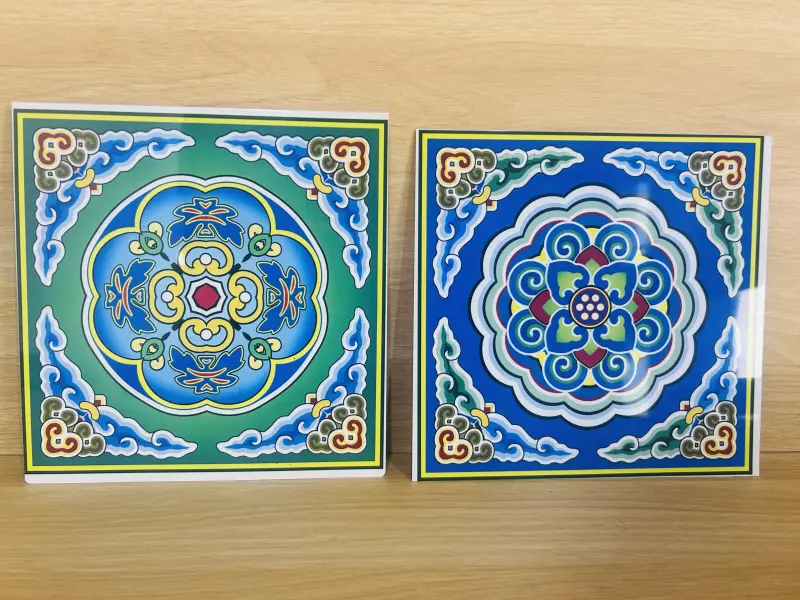
5052 contains magnesium. It is the strongest of the common sublimation alloys. It handles bumps, scratches, and outdoor humidity better than the others. If you plan to hang panels in bathrooms, kitchens, or covered outdoor patios, 5052 is the safer base. It costs more and is harder to cut with hand shears, but the durability pays off.
| Alloy | Purity | Strength | Heat Warp Risk | Best Panel Size | Cost Level |
|---|---|---|---|---|---|
| 1050 | 99.5% Al | Low | Medium | Under 8 × 10 in | Low |
| 1060 | 99.6% Al | Low | Medium | Under 8 × 10 in | Low |
| 1100 | 99.0% Al | Low | High | Small tags only | Lowest |
| 3003 | 96.75% Al | Medium | Low | Up to 24 × 36 in | Medium |
| 5052 | Al + Mg | High | Very low | Any size, outdoor | High |
Thickness Guide: From Thin Ornaments to Statement Pieces
Thickness changes the feel, weight, and rigidity of the final print. It also changes how the panel handles heat.
0.45 mm: Light and Affordable
This is roughly 0.018 inches. It works for small desk frames, keychains, and thin tags. At this thickness, the panel feels light in the hand. It can flex if bumped. It heats up quickly in the press, so timing is critical.
0.55 mm: The Sweet Spot
This is the most popular thickness for gloss white sublimation aluminum panels in the photo gift market. It is rigid enough to hang flat without a backing. It is thin enough to keep shipping costs down. Most 8 by 10, 11 by 14, and 12 by 18 panels use this thickness.
0.65 mm: Gallery Grade
At this thickness, the panel feels substantial. It does not flex when you pick it up. It is common for 16 by 20 and 20 by 30 prints. The extra metal absorbs heat more evenly during pressing, which reduces the risk of hot spots.
0.80 mm and Up: Heavy Duty
These thick panels are used for large wall art, commercial displays, and outdoor signs. They can be mounted with standoffs for a floating effect. The edge profile looks clean and professional. They cost more and weigh more, but the durability is unmatched.
| Thickness | mm | Inch | Weight Class | Best For | Press Time Adjustment |
|---|---|---|---|---|---|
| 0.45 | 0.45 | 0.018 | Light | Small frames, tags, gifts | Standard |
| 0.55 | 0.55 | 0.022 | Medium | Standard photo panels | Standard |
| 0.65 | 0.65 | 0.026 | Medium-heavy | Gallery prints, large wall art | +5 to 10 seconds |
| 0.80 | 0.80 | 0.031 | Heavy | Commercial displays, standoff mount | +10 to 15 seconds |
| 1.00 | 1.00 | 0.039 | Very heavy | Monument signs, outdoor panels | +15 to 20 seconds |
| 1.15 | 1.15 | 0.045 | Premium | Structural art, large murals | +20 to 30 seconds |
Gloss White vs Other Sublimation Finishes
Not every job needs gloss white. Here is how the main finishes stack up.
Gloss White vs Matte White
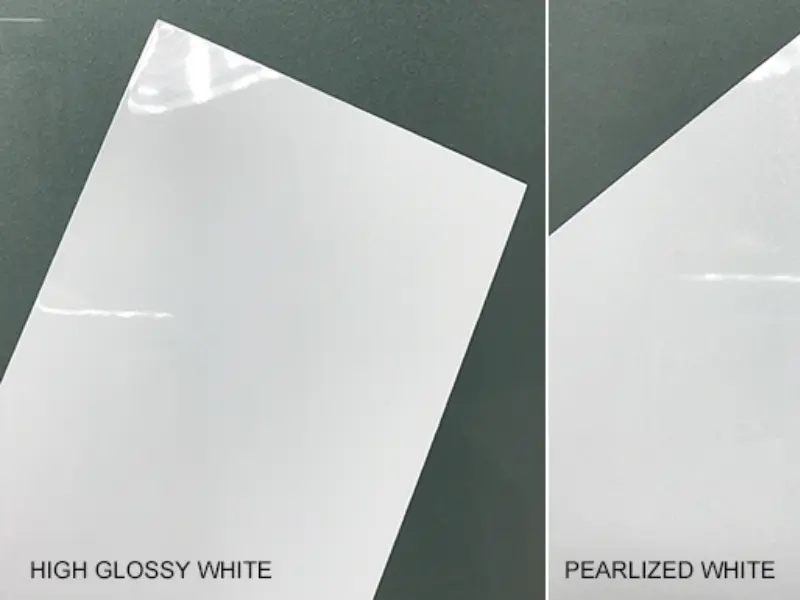
Gloss white reflects light. Colors pop. Detail is sharp. The downside is glare. In a room with windows behind the viewer, gloss can create mirror-like reflections that hide the image.
Matte white absorbs light. There is no glare. The image looks softer and more like a fine art paper print. The trade-off is slightly less contrast and vibrancy.
Gloss White vs Brushed Silver
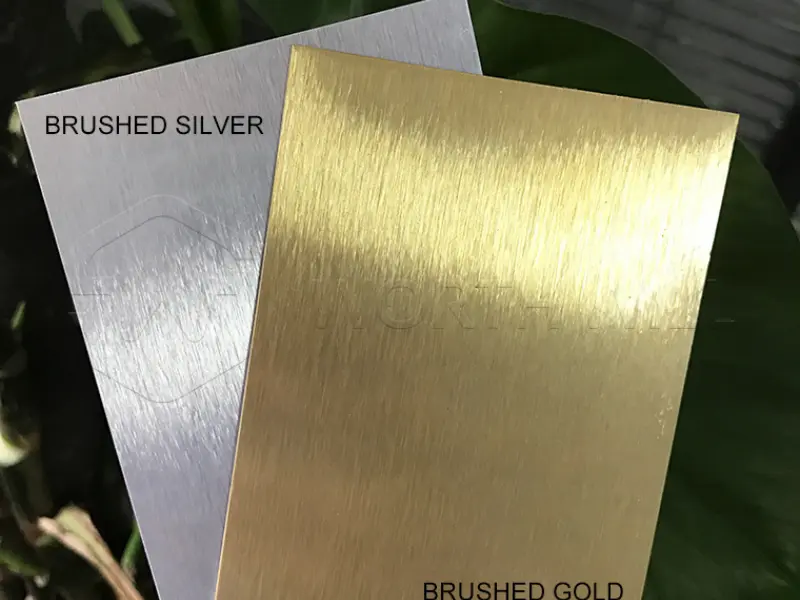
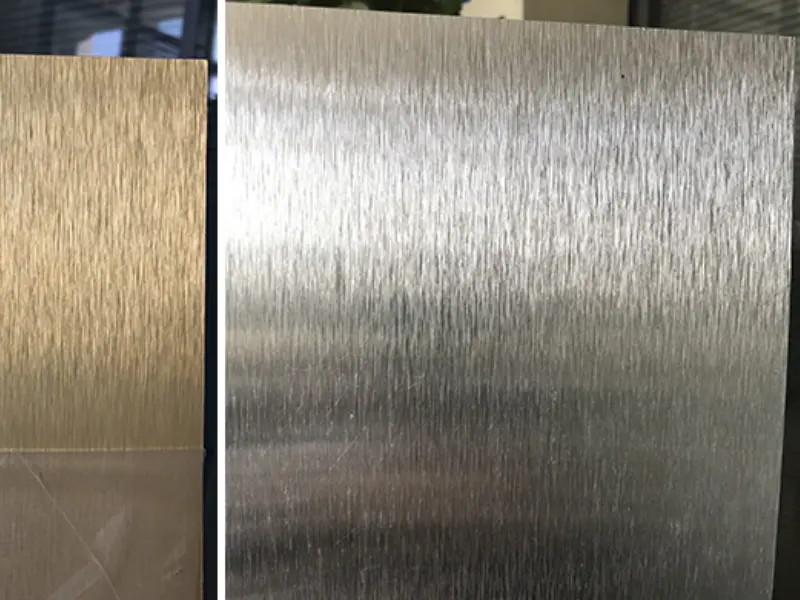
Brushed silver lets the metal show through in areas where the design is white or light. This creates a metallic effect that gloss white cannot match. However, if your image has a white background, brushed silver turns that background into metal. Gloss white keeps the background pure white.
Gloss White vs Clear
Clear coated panels have no white base. The ink bonds directly to the aluminum. This works for designs where you want a metallic look. It fails for photographs because there is no white to support the colors. Gloss white is the safer choice for any image that needs accurate color reproduction.
| Finish | White Areas | Color Pop | Glare Level | Best For |
|---|---|---|---|---|
| Gloss white | Pure white | Very high | High | Photos, vibrant graphics |
| Matte white | Pure white | High | None | Fine art, bright rooms |
| Brushed silver | Metallic silver | Medium | Medium | Logos, modern designs |
| Clear / transparent | Aluminum gray | Low | Low | Metallic effects, abstracts |
| Pearl white | Shimmer white | High | Medium | Weddings, special events |
Size Formats That Move the Market
Gloss white sublimation aluminum panels come in standard sizes. Custom cutting is available but adds cost and lead time.
| Size (inches) | Size (mm) | Aspect Ratio | Typical Use |
|---|---|---|---|
| 4 × 6 | 102 × 152 | 2:3 | Desk frames, small gifts |
| 5 × 7 | 127 × 178 | 5:7 | Shelf decor, greeting cards |
| 8 × 10 | 203 × 254 | 4:5 | Standard photo print |
| 8 × 12 | 203 × 305 | 2:3 | Digital photo ratio |
| 11 × 14 | 279 × 356 | 11:14 | Gallery wall sets |
| 12 × 18 | 305 × 457 | 2:3 | Large desk or small wall |
| 16 × 20 | 406 × 508 | 4:5 | Portrait and wedding prints |
| 20 × 30 | 508 × 762 | 2:3 | Statement wall art |
| 24 × 36 | 610 × 914 | 2:3 | Oversized murals |
| 30 × 40 | 762 × 1016 | 3:4 | Commercial displays |
The 8 by 10, 11 by 14, and 12 by 18 sizes are the top sellers. They fit standard photo aspect ratios and ship easily without oversize fees.
Product Types: More Than Just Flat Sheets
Manufacturers have created several formats from the basic gloss white blank. Each one suits a different workflow.
Flat Panels with Rounded Corners
These are the classic blanks. They come with slightly rounded corners for safety and style. Holes may be pre-drilled or not. They are the most versatile format.
Panels with Pre-Drilled Holes
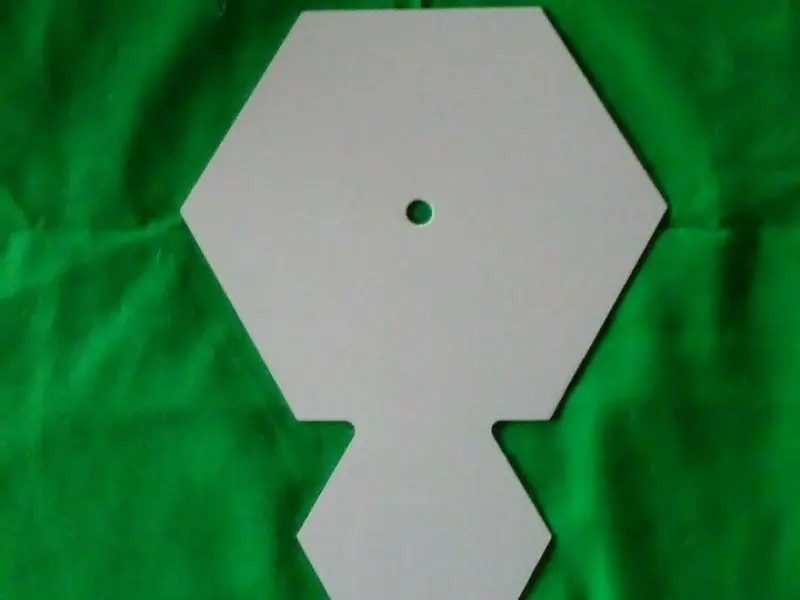
These have holes in each corner for easy standoff mounting. The holes are usually 3 to 5 mm in diameter. They save time in the finishing shop.
Panels with Standoff Mounts Included
Some suppliers sell the panel with aluminum standoffs and screws in the box. This is a premium bundle aimed at photographers who want a complete product ready to hang.
Curved and Bent Panels
Some suppliers offer panels pre-bent into gentle curves. These create a 3D effect on the wall. They are popular in modern galleries and retail displays.
Panels with White Backing
A white coating is applied to the back side. This is useful for double-sided displays or for panels mounted in windows where the back is visible.
Magnetic Backed Panels
Thin panels with a magnetic sheet glued to the back. They stick to refrigerators, whiteboards, or metal display walls. Common thickness is 0.45 mm.
| Product Type | Thickness | Extra Feature | Best For |
|---|---|---|---|
| Flat panel | 0.55–0.65 mm | Standard | General photo printing |
| Pre-drilled panel | 0.55–1.00 mm | Mounting holes | Standoff displays |
| Panel with standoffs | 0.65–0.80 mm | Hardware included | Photographer bundles |
| Curved panel | 0.55–0.80 mm | 3D bend | Modern galleries |
| White back panel | 0.55–0.80 mm | Double-sided look | Window displays |
| Magnetic panel | 0.45 mm | Magnetic sheet | Fridge art, retail magnets |
Indoor vs Outdoor: Can Gloss White Survive Outside?
Gloss white sublimation aluminum panels are mainly designed for indoor use. The polyester coating accepts dye sublimation ink beautifully, but standard coatings are not UV-rated for long outdoor exposure.
Indoor Life
Inside a home or office, a gloss white panel lasts 20 years or more. It does not fade because UV exposure is minimal. It does not warp because humidity is controlled. It cleans with a soft cloth.
Outdoor Life
Outside, the story changes. Standard gloss white coatings fade in 6 to 18 months of direct sun. The metal itself does not rust, but the image loses saturation. If you need outdoor metal prints, look for panels with UV-resistant coating. These are usually made from 5052 H32 alloy and carry a special topcoat. They cost more but can last 3 to 5 years outside.
| Factor | Indoor Gloss White | Outdoor-Rated Gloss White |
|---|---|---|
| Base alloy | 1050, 1060, 3003 | 3003, 5052 |
| Temper | H14, H24 | H24, H32 |
| Coating | Standard polyester | UV-resistant polyester |
| Expected life | 20+ years | 3–5 years direct sun |
| Cost | Standard | +20–40% |
Printing Specs: Getting the Transfer Right

The gloss white coating is sensitive to heat and pressure. Small changes in settings affect the final image.
Temperature
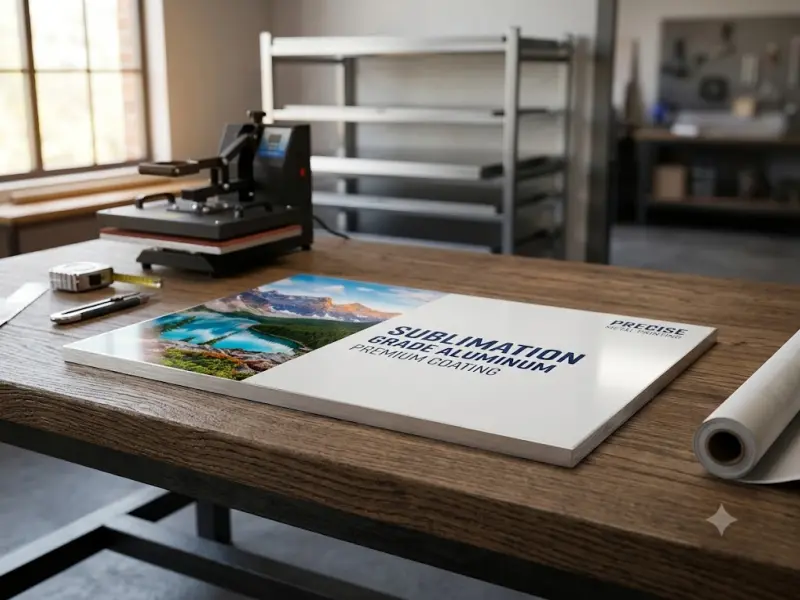
Most gloss white sublimation aluminum panels press at 200°C. Some premium coatings prefer 195°C. Thicker panels may need 205°C to let the heat soak through. Always test a small corner first.
Time
Standard thickness panels need 60 to 75 seconds. Panels over 0.80 mm need 90 to 120 seconds. If the image looks blurry or the whites turn yellow, you are pressing too long.
Pressure
Use medium to high pressure. The paper must make full contact with the coating. Any air gap creates a faded ghost spot.
Cooling
Let the panel cool flat on a heat-resistant surface. Do not bend it while hot. Do not stack hot panels on top of each other. The coating is soft until it cools.
| Parameter | Standard Setting | Thick Panel Setting | Troubleshooting |
|---|---|---|---|
| Temperature | 200°C | 205°C | Yellowing = too hot |
| Time | 60–75 sec | 90–120 sec | Blurry = too long |
| Pressure | Medium-high | Medium-high | Faded spots = low pressure |
| Cooling | Flat, 2–3 min | Flat, 3–5 min | Warping = moved while hot |
Applications: Where Gloss White Panels Shine
These panels fit more jobs than many people expect. Here are the top uses:
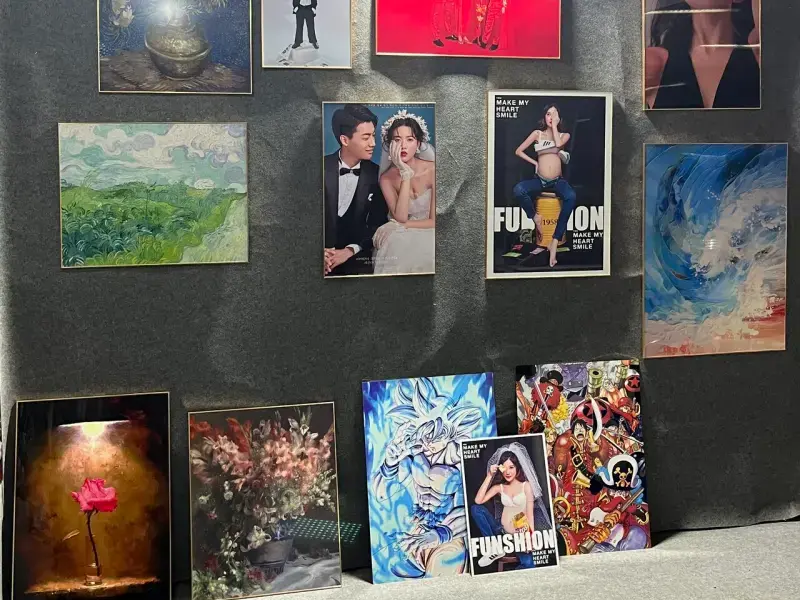

- Portrait photography – skin tones look natural and glowing
- Wedding albums on the wall – large prints that last a lifetime
- Landscape prints – skies look deep, greens look vivid
- Real estate marketing – property photos in lobby displays
- Restaurant decor – food photography that pops under spotlights
- Hotel room art – durable, easy to clean, modern look
- Medical office waiting rooms – calming nature scenes
- Retail point-of-sale displays – bright graphics that draw the eye
- Corporate branding walls – logos and mission statements
- Sports team photos – vibrant uniforms and action shots
- Pet photography – glossy finish makes fur look rich
- Graduation and family portraits – gifts that feel premium
- Trade show displays – lightweight panels that ship flat
- Bathroom and kitchen art – moisture-proof when sealed properly
Cost Factors: What Moves the Price
Not all gloss white sublimation aluminum panels cost the same. Several variables change the invoice.
| Factor | Budget Choice | Premium Choice | Price Impact |
|---|---|---|---|
| Alloy | 1100, 1050 | 3003, 5052 | +15–30% |
| Thickness | 0.45 mm | 0.80 mm | +40–60% |
| Size | 4 × 6 in | 24 × 36 in | Scales with area |
| Pre-drilled holes | None | Yes | +10–15% |
| Standoffs included | None | Yes | +20–30% |
| Packaging | Bulk stack | Individual box | +5–10% |
| Quantity | 1 piece | 100+ pieces | –20–40% per unit |
For a standard 11 by 14 inch panel in 3003 H24 at 0.55 mm, expect a moderate price. The value comes from the print quality and longevity. A gloss white metal print outlasts canvas and paper by decades.
Quality Checks Before You Buy
Not all blanks are equal. Here is what to look for when sourcing.
| Check | Good Sign | Red Flag |
|---|---|---|
| Flatness | Sits flat on a table | Rocks or bows |
| Coating uniformity | Even bright white | Streaks, yellow spots, thin areas |
| Edge quality | Clean cut, no burrs | Rough edges, sharp slivers |
| Protective film | Smooth, covers fully | Wrinkled, torn, or missing |
| Back side | Smooth, no scratches | Deep gouges, oil stains |
Always press a solid black test image. Check for banding or mottling. Run a fingernail scratch test on a corner after pressing. If the image lifts, the coating adhesion is poor.
Frequently Asked Questions
What alloy is best for gloss white photo panels?
Alloy 3003 in H24 temper is the professional standard. It stays flat during pressing and hangs straight on the wall. For budget crafts, 1050 works. For outdoor use, upgrade to 5052 H32.
How thick should a gloss white panel be?
For standard sizes up to 11 by 14 inches, 0.55 mm is ideal. For 16 by 20 and larger, use 0.65 mm or 0.80 mm to prevent flexing.
Will gloss white panels fade over time?
Indoors, no. A quality gloss white sublimation aluminum panel lasts 20 years or more in normal room light. In direct sunlight, standard coatings fade in 6 to 18 months. Use UV-rated panels for sunlit spaces.
Can I use gloss white panels in a bathroom?
Yes, if you seal the edges. The coating and aluminum are moisture-proof, but the cut edge is raw metal. A thin bead of silicone or clear nail polish on the edge stops moisture from wicking under the coating.
Gloss white or matte white: which sells better?

Gloss white outsells matte white by roughly three to one in photo gift markets. Customers love the vibrancy. Matte white sells better in fine art galleries where glare is a concern.
Can I press both sides of a gloss white panel?
Only if you buy double-sided coated panels. Most gloss white blanks are coated on one side only. Check with your supplier before ordering.
Why do my whites look yellow after pressing?
You are pressing too hot or too long. Drop the temperature by 5 degrees or reduce time by 10 seconds. Also check that your heat press is calibrated. Older presses often run hotter than the display reads.
How do I clean a finished gloss white metal print?
Use a soft microfiber cloth. For fingerprints, dampen the cloth slightly. Do not use ammonia-based cleaners or abrasive pads. They can dull the gloss over time.
What is the largest gloss white panel available?
Stock sizes typically top out at 24 by 36 inches. Some suppliers offer 30 by 40 or 40 by 60 inches by special order. For very large prints, consider tiling multiple panels.
Are gloss white panels recyclable?
Yes. The aluminum base is 100% recyclable. The polyester coating burns off during re-melting. This makes gloss white sublimation aluminum panels a greener long-term choice than plastic or acrylic prints.
Leave a Reply
You must be logged in to post a comment.