
Custom Printed Aluminum Panels show up everywhere — on building facades, in retail stores, at trade shows, on walls of hospital corridors, and in homes as metal art prints. The reason is simple: aluminum takes print well, lasts outdoors for years, and looks sharper than most alternatives.
What Makes Aluminum the Right Base for Custom Printing
Why Aluminum Works Where Other Materials Fall Short
Aluminum is flat, rigid, and dimensionally stable under heat. It does not warp, expand significantly, or absorb moisture. That means a printed panel stays the same shape in summer heat, winter cold, and humid coastal air.
It is also light. A 1.5mm aluminum panel weighs about 4 kg per square meter — less than a third of steel. Large format printed panels can be installed without heavy hardware or structural reinforcement.
The surface accepts coating and print bonding better than most metals. A properly applied polyester or UV coating bonds permanently, giving the image a hard, scratch-resistant finish that outdoor conditions cannot easily fade or peel.
Product Structure — What a Printed Aluminum Panel Is Made Of
| Layer | Material | Role |
|---|---|---|
| Aluminum base | 1060, 3003, or 5052 alloy | Flatness, rigidity, structural strength |
| Surface primer | Chemical conversion coat | Bonds coating to aluminum |
| White base coat | Polyester or epoxy white | Creates print-ready surface, blocks metal show-through |
| Print layer | UV ink, sublimation dye, or screen ink | The actual image |
| Clear topcoat | UV-cured lacquer or PVDF | Scratch and weather protection |
| Protective film | PE film | Protects during transport and installation |
Not every panel type uses all six layers. Sublimation panels skip the UV topcoat. Screen-printed panels may skip the separate white base if the background is printed. But the aluminum base and surface prep are constant across every type.
Printing Methods — How the Image Gets onto the Panel
UV Flatbed Printing
A UV flatbed printer moves across the aluminum panel surface and deposits UV-curable ink directly. The ink cures instantly under UV lamps built into the print head carriage. No transfer paper, no heat press — the image goes straight onto the panel.
Resolution: Up to 1440 dpi, photo-realistic output Best for: signage, retail displays, large-format wall art, custom branding panels Panel thickness it handles: 0.5mm to 6mm+
| Advantage | Detail |
|---|---|
| No minimum quantity | Single panels are printable |
| Full color | CMYK + white + varnish in one pass |
| Outdoor durability | UV inks rated 3–7 years outdoors |
| Fast turnaround | Print-ready in minutes per panel |
Sublimation Printing
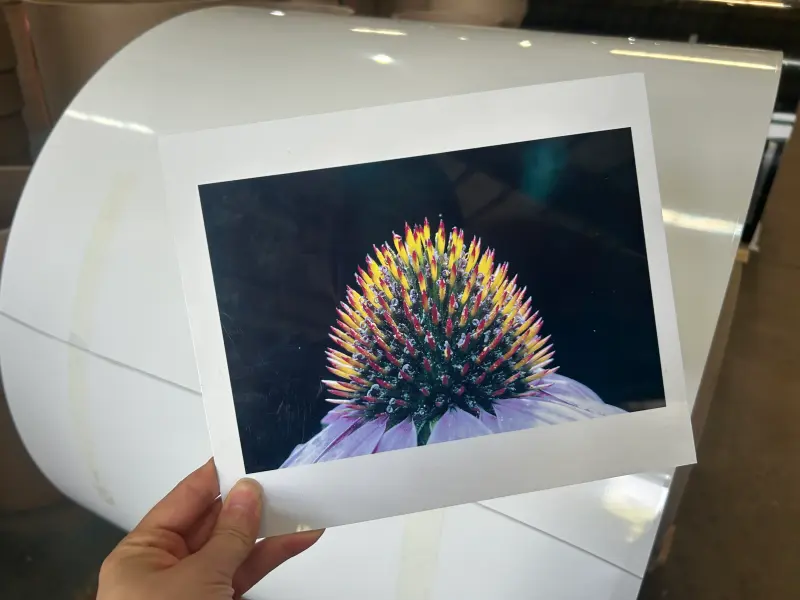
Sublimation requires a specially coated panel — white polyester coating on high-purity aluminum (1060 or 1100). The printed transfer paper is placed face-down on the panel and run through a heat press at 180–200°C for 45–90 seconds. The dye converts to gas, penetrates the coating, and bonds permanently.
Resolution: Up to 1440 dpi, photo-grade Best for: photo panels, personalized gifts, portrait prints, small-format retail products Panel thickness range: 0.3mm to 2.0mm
| Feature | Sublimation Panel |
|---|---|
| Image location | Inside the coating (not on surface) |
| Scratch resistance | High — image cannot be scraped off |
| Outdoor life | 5–10 years with quality coating |
| Color vibrancy | Highest of any method |
| Setup cost | Low — no screens or plates |
Screen Printing
Ink is pushed through a mesh screen onto the panel surface. Each color requires a separate screen. Best for flat-color designs with sharp edges and high opacity. Used in industrial nameplates, product labels, and high-volume signage where consistent color across thousands of panels matters.
Best for: industrial labels, safety signs, product nameplates, high-volume signage runs Minimum quantity: typically 500+ panels per design
Inkjet / Digital Wide Format Printing
Similar to UV flatbed but uses solvent or latex inks on panels with a receptive coating. The ink bonds to the coating rather than directly to aluminum. Common for large-format outdoor billboards and display graphics.
Best for: large outdoor billboards, construction site hoarding, exterior commercial displays Panel thickness: 1.0mm to 3.0mm typically
Comparing Print Methods Side by Side
| Method | Min Qty | Resolution | Outdoor Life | Best Use |
|---|---|---|---|---|
| UV flatbed | 1 panel | Up to 1440 dpi | 3–7 years | Signage, displays, art |
| Sublimation | 1 panel | Up to 1440 dpi | 5–10 years | Photo gifts, retail panels |
| Screen print | 500+ | Line art / spot color | 5–10 years | Industrial labels, signs |
| Wide format inkjet | 1 panel | 720–1440 dpi | 3–5 years | Large displays, billboards |
Panel Types — Different Products for Different Needs
Sublimation Photo Panels
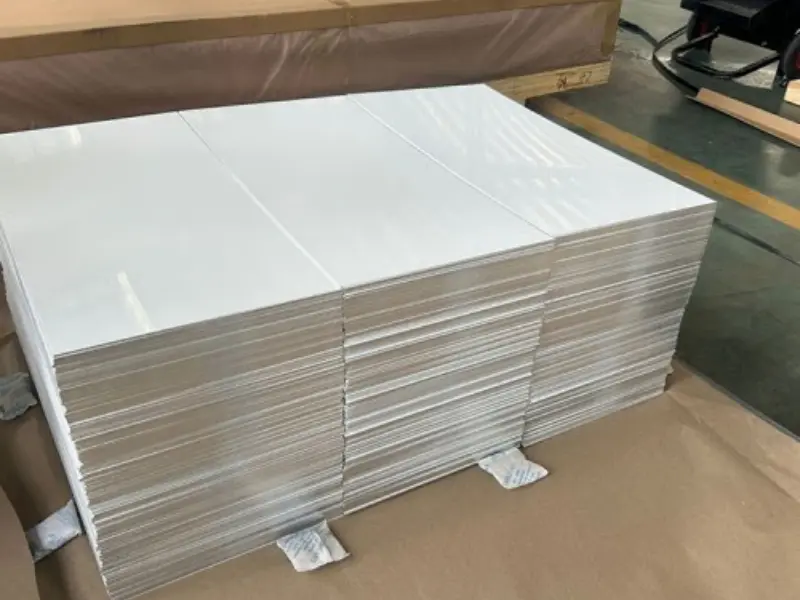
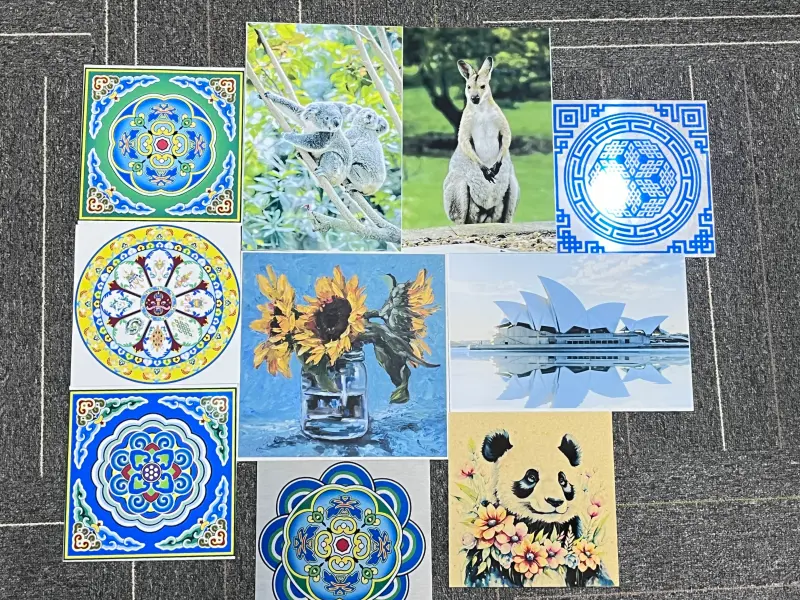
The most widely sold custom printed aluminum panel in the gift and retail market. White gloss or matte coated aluminum accepts the sublimation dye. Output looks like a professional photo print but on rigid metal. Popular in portrait studios, pet photography shops, online gift stores, and home décor retailers.
Common sizes: A5, A4, A3, 8×10 in, 12×18 in, 24×36 in Thickness: 0.3mm – 1.0mm Alloy: 1060-O or 1100-O
UV Printed Signage Panels
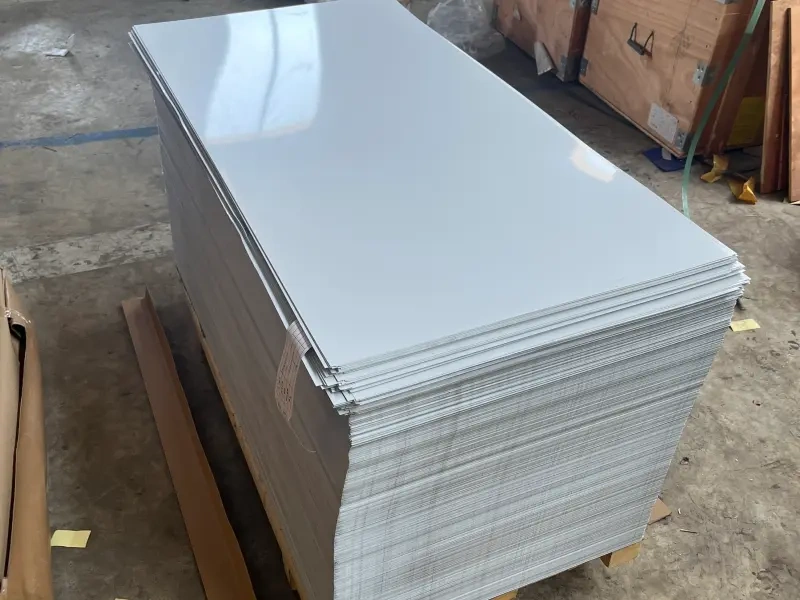
Retail stores, offices, and hospitality businesses use UV-printed aluminum panels for wayfinding signs, menu boards, room number plates, and reception displays. The UV process handles full-color logos, photos, and text in a single pass.
Common thickness: 1.5mm – 3.0mm Alloy: 3003-H14 or 5052-H32 Surface: mill finish or pre-white coated
Architectural Facade Panels (Custom Graphic)
Building facades with custom-printed graphics use coated aluminum panels installed on a subframe system. The print is applied either by UV flatbed or screen printing, then topcoated with a clear PVDF or polyurethane lacquer for outdoor durability.
Common thickness: 2.0mm – 4.0mm Alloy: 3003-H14 or 5052-H32 Surface: PVDF coated with print
Aluminum Composite Panel (ACP) with Custom Print
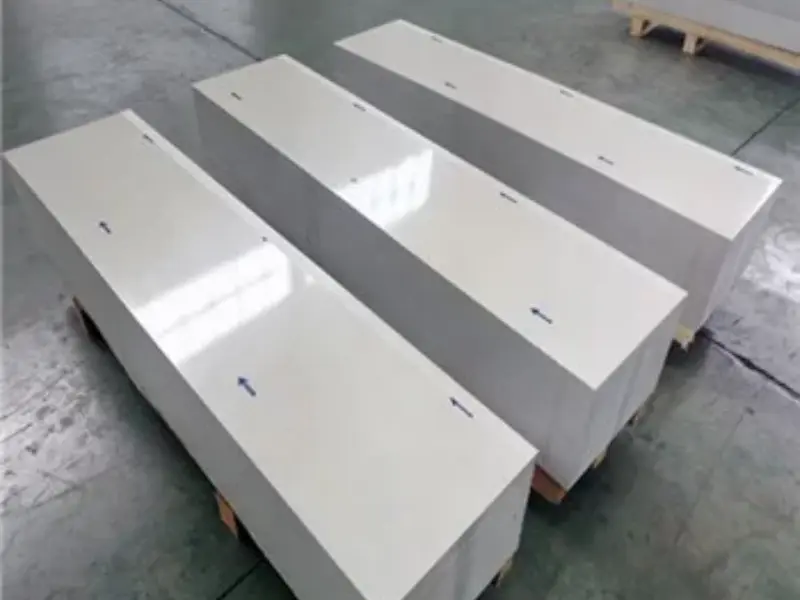
ACP is a sandwich panel — thin aluminum skins bonded to a polyethylene or mineral core. It is lighter and stiffer than solid aluminum at the same apparent thickness. Large-format printed graphics for building wraps, retail facade panels, and exhibition stands often use ACP as the base.
| Feature | Solid Aluminum Panel | ACP Panel |
|---|---|---|
| Core | None | PE or mineral |
| Weight (3mm) | ~8.1 kg/m² | ~4.5 kg/m² |
| Rigidity | High | Very high |
| Fire rating | Better | Depends on core type |
| Cost | Higher | Lower |
| Printability | Direct UV or coating | Direct UV |
Industrial Nameplates and Labels

Machinery, medical equipment, electrical panels, and consumer appliances use aluminum nameplates. These carry model numbers, serial numbers, safety warnings, and regulatory markings. Screen printing and UV printing are both used. Anodized or hard-coat aluminum resists chemicals and mechanical abrasion.
Thickness: 0.5mm – 2.0mm Alloy: 1060, 3003 Surface: anodized or clear-coated
Trade Show and Exhibition Display Panels
Exhibition panels need to look sharp under artificial lighting, pack flat, and install quickly. UV-printed 1.5mm–2.0mm aluminum panels with hanging brackets or snap-frame mounting suit this market well.
Common sizes: A1 (594×841mm), A0 (841×1189mm), custom banner sizes Finish: gloss or satin UV topcoat
Custom Metal Wall Art Panels
Interior designers, hotels, and residential customers order aluminum art panels for walls. Sublimation and UV both work here. The panel replaces a framed print — the aluminum surface gives images a metallic depth that paper cannot match.
Thickness: 0.45mm – 1.5mm Popular sizes: 20×30cm, 30×40cm, 40×60cm, 60×90cm Finish: gloss, matte, brushed-look
Safety and Regulatory Sign Panels
Traffic signs, hazard warnings, evacuation route signs, and workplace safety panels use aluminum for its outdoor durability and rigidity. Retroreflective sheeting is applied over the base panel for traffic-grade signs. UV or screen-printed graphics appear on standard indoor safety panels.
Alloy: 5052-H32 or 3003-H14 Thickness: 1.5mm – 3.0mm Surface: mill finish or white powder coat base
Alloys, Tempers, and Thickness — The Spec Behind the Panel
Which Alloy for Which Panel Type
| Application | Alloy | Temper | Reason |
|---|---|---|---|
| Sublimation photo panels | 1060 or 1100 | O | High purity = smooth coating, flat surface |
| UV-printed signage | 3003 | H14 | Good strength, cost-effective |
| Outdoor facade panels | 5052 | H32 | Corrosion resistance for weather exposure |
| Industrial nameplates | 3003 or 1060 | H14 / O | Smooth surface for fine print detail |
| Safety signs | 5052 | H32 | Durability in outdoor environments |
| Exhibition panels | 3003 | H14 | Lightweight for transport and installation |
| Metal wall art | 1060 | O | Flatness, smooth sublimation coating |
Thickness and Its Effect on Panel Performance
| Thickness | Weight /m² | Rigidity | Typical Panel Use |
|---|---|---|---|
| 0.3mm | 0.81 kg | Flexible | Thin sublimation gift panels |
| 0.45mm | 1.22 kg | Light | Photo panels, retail gifts (most popular) |
| 0.8mm | 2.16 kg | Moderate | Interior signs, A3–A4 sublimation |
| 1.0mm | 2.71 kg | Good | Standard indoor and outdoor signs |
| 1.5mm | 4.05 kg | Firm | Commercial signage, facade panels |
| 2.0mm | 5.40 kg | Rigid | Large outdoor displays, architectural use |
| 3.0mm | 8.10 kg | Very rigid | Curtain wall, heavy-duty structural panel |
For most photo gifts and small printed panels, 0.45mm is the industry standard. With signage that mounts on walls or posts, 1.0mm to 1.5mm handles outdoor wind load without bending. For architectural facade use, 2.0mm to 3.0mm is the minimum.
Applications — Where Custom Printed Aluminum Panels Are Used
Retail and Commercial Environments
- Point-of-sale display panels and promotional boards
- Brand wall panels in flagship stores
- Menu boards and price displays in cafes and restaurants
- Window graphics and store exterior signs
- Product launch campaign display panels
Architecture and Interior Design
- Custom graphic facade panels on commercial buildings
- Hotel corridor wall art and room number signs
- Office reception area brand walls
- Wayfinding and directory panels in public buildings
- Lift interior panels with custom finishes
Healthcare and Institutional
- Hospital corridor directional signs
- Room identification and department signs
- Safety and regulatory compliance panels
- Infection control zone marking panels
- Medical equipment nameplates
Gifting and Personal Use
- Custom portrait and family photo panels
- Pet photo panels for home display
- Anniversary and commemorative keepsake panels
- Personalized name plates for doors and desks
- Custom metal art prints for home and office walls
Trade Shows and Events
- Display graphics for exhibition booth walls
- Brand backdrop panels for media events
- Sponsor recognition boards
- Award plaques and recognition panels
- Event directional signage
Industrial and Manufacturing
- Equipment nameplates and serial number plates
- Machinery safety instruction panels
- Electrical panel labels and circuit identification
- Product rating and certification plates
- Barcoded asset identification panels
Custom Printed Aluminum vs Other Print Substrates
Aluminum vs Printed PVC Board
| Feature | Printed Aluminum | Printed PVC Board |
|---|---|---|
| Outdoor durability | 5–10 years | 2–4 years |
| Heat resistance | Excellent (no warp) | Poor (warps in sun) |
| Image sharpness | Excellent | Good |
| Weight | Light | Very light |
| Recyclable | Yes | No |
| Cost | Medium | Low |
PVC warps in direct sunlight and fades faster. For outdoor signage above 2 years’ service, aluminum is the practical choice.
Aluminum vs Acrylic Print Panels
| Feature | Printed Aluminum | Printed Acrylic |
|---|---|---|
| Breakage risk | Very low | Higher (brittle) |
| Backlit suitability | Limited | Excellent |
| Print method | UV or sublimation | UV on surface |
| Scratch resistance | Higher | Lower |
| Outdoor suitability | Excellent | Moderate |
Acrylic suits backlit display cases. Aluminum suits any application requiring durability over decorative effect.
Aluminum vs Dibond (ACP)
| Feature | Solid Aluminum | Dibond / ACP |
|---|---|---|
| Weight per m² (3mm equiv) | Higher | Lower |
| Rigidity | Good | Better |
| Fire performance | Better | Varies by core |
| Recyclability | Full | Limited |
| Surface printability | Excellent | Excellent |
| Cost per m² | Higher | Lower |
For large-format printed graphics where cost and flatness drive the decision, ACP wins. For single-material recycling compliance or fire-rated installations, solid aluminum is specified.
Size Options and Customization
Standard Sizes Available for Custom Print
| Format | Size | Common Market Use |
|---|---|---|
| A5 | 148 × 210 mm | Small gift panels, labels |
| A4 | 210 × 297 mm | Photo panels, office signs |
| A3 | 297 × 420 mm | Display boards, menus |
| 12 × 18 in | 305 × 457 mm | Retail and event signs |
| 24 × 36 in | 610 × 914 mm | Large display and poster panels |
| 4 × 8 ft | 1220 × 2440 mm | Full sheet — cut to any size |
What Can Be Customized
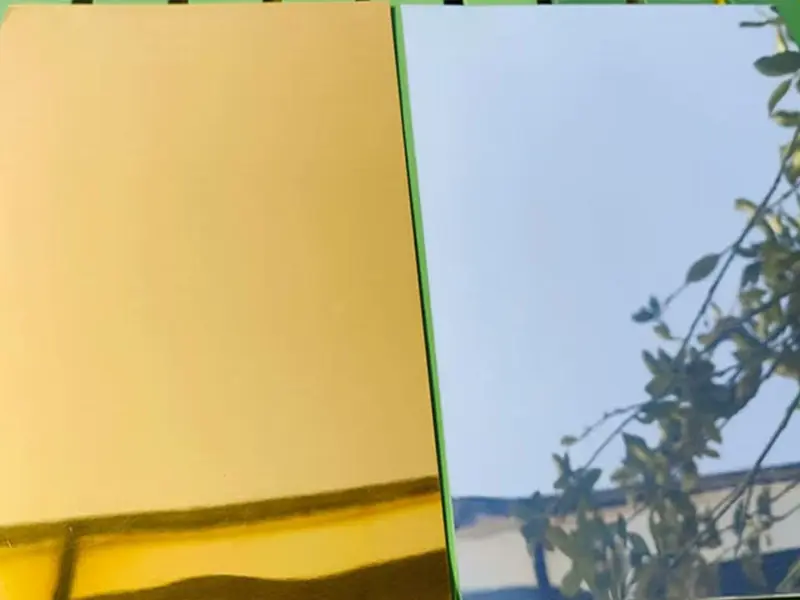
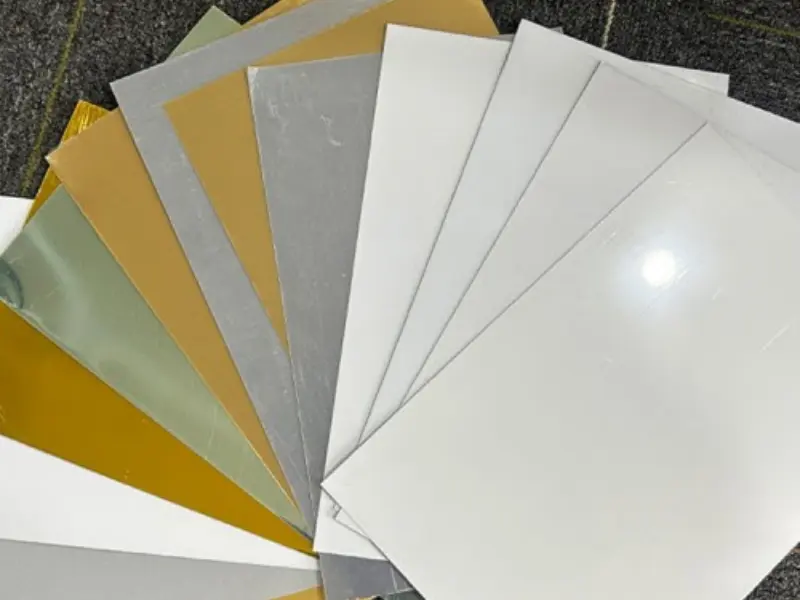
→ Size: Any dimension from small nameplate to large facade panel → Shape: Rectangular, square, custom cut profiles, round corners → Thickness: 0.3mm to 6mm+ → Alloy: Selected to match performance requirement → Coating: Gloss, matte, satin, brushed-look, mirror → Mounting: Holes drilled, standoffs, hanging bars, adhesive backing → Finishing: Lamination, UV spot varnish, anti-glare coating
Price Factors for Custom Printed Aluminum Panels
What Determines Cost Per Panel
| Factor | Impact |
|---|---|
| Panel size | Larger panels cost more per piece |
| Thickness | Thicker = more material cost |
| Print method | UV flatbed adds setup; sublimation has lower fixed cost |
| Quantity | Single panels cost more per unit than batch orders |
| Coating type | Gloss = base price; PVDF outdoor coat = premium |
| Custom cut | Non-rectangular shapes add cutting charge |
| Mounting hardware | Holes, standoffs, and brackets add cost |
Reference Pricing — UV Printed Panels (Factory Direct)
| Size | Thickness | Quantity | Price Per Panel (USD) |
|---|---|---|---|
| A4 (210×297mm) | 1.0mm | 1 | USD 8–15 |
| A4 (210×297mm) | 1.0mm | 100 | USD 3–6 |
| 12×18 in | 1.5mm | 50 | USD 12–22 |
| 24×36 in | 2.0mm | 20 | USD 35–65 |
| 4×8 ft | 2.0mm | 10 | USD 85–150 |
Reference Pricing — Sublimation Panels (Blank, Factory Direct)
| Size | Thickness | MOQ | Price Per Sheet (USD) |
|---|---|---|---|
| A4 | 0.45mm | 1,000 pcs | USD 0.18–0.38 |
| 8×10 in | 0.45mm | 500 pcs | USD 0.22–0.42 |
| 12×18 in | 0.8mm | 500 pcs | USD 0.65–1.10 |
| 24×36 in | 1.0mm | 200 pcs | USD 2.20–3.50 |
How to Order Custom Printed Aluminum Panels
Step 1 → Define Your Spec
Confirm: size, thickness, alloy, print method, surface finish, quantity, and mounting requirement before requesting a quote.
Step 2 → Prepare the Artwork
- UV print: supply PDF or AI file at 150–300 dpi, CMYK color mode
- Sublimation: supply RGB file at 300 dpi, mirrored for transfer
- Screen print: supply vector file with separated spot colors
Step 3 → Request a Sample
For orders above 50 panels, always request a printed sample first. Check color, sharpness, surface finish, and mounting fit before approving production.
Step 4 → Confirm and Produce
Sign off on the sample. Confirm order quantity and delivery schedule. Production time: 5–15 days for standard sizes. Larger or custom-cut orders may take 15–25 days.
Step 5 → Shipping and Handling
Panels ship with PE film on the print face, interleaved paper between panels, and foam or cardboard edge protection. Large panels ship flat on wooden pallets. Fragile custom pieces may be individually packed in foam-lined boxes.
Frequently Asked Questions
What Is the Best Aluminum Alloy for Printed Panels
For sublimation: 1060-O — high purity, flat surface, best coating adhesion. The UV-printed signage: 3003-H14 — stronger, more cost-effective for large format. For outdoor architectural panels: 5052-H32 — corrosion-resistant, handles coastal and industrial environments.
How Long Do Printed Aluminum Panels Last Outdoors
UV-printed panels with a quality clear coat last 3–7 years in direct outdoor exposure before noticeable fade. Sublimation panels with UV-resistant polyester coating last 5–10 years. PVDF-topcoated architectural panels carry 20–25 year coating warranties. Cheaper inks or unprotected prints may fade within 1–2 years outdoors.
Can Printed Aluminum Panels Be Used in Wet or Coastal Environments
Yes. The aluminum base is corrosion-resistant. The print and coating protect the surface further. For coastal environments, specify 5052 alloy as the base and confirm the topcoat is UV and salt-spray tested. Avoid bare mill finish panels in coastal settings — the cut edges can show white oxidation over time without edge sealing.
What Is the Minimum Order for Custom Printed Panels
For UV flatbed printing: no minimum — single panels are printable. For sublimation blanks ordered from a Chinese factory: MOQ is typically 500–1,000 panels per spec. The screen printing: 500+ panels per design to cover screen setup cost. For architectural facade panels: typically 10+ panels depending on factory setup.
Can Panels Be Mounted Without Frames
Yes. Common frameless mounting options include:
- Pre-drilled holes for standoff screws
- Adhesive backing (foam tape or VHB tape for lightweight panels)
- Hanging bars or wire systems for gallery-style wall art
- Routed channels for snap-frame integration
- Z-clips for flat wall mounting of larger panels
Final Buying Notes
Custom printed aluminum panels cover an enormous range of products — from a single sublimation photo panel to a full building facade system. The right spec depends on where the panel goes, how long it needs to last, and what the image demands in terms of resolution and color.
For photo gifts and retail sublimation products: 1060 alloy, 0.45mm, gloss white coating is the industry standard.
With commercial signage and displays: 3003-H14, 1.0–1.5mm, UV flatbed print with clear topcoat.
For outdoor architectural use: 5052-H32 or 3003-H14, 2.0–3.0mm, PVDF-topcoated.
Always test a sample before scaling to production volume. Confirm the ink or dye type, the topcoat, and the outdoor warranty in writing before placing a large order.
Leave a Reply
You must be logged in to post a comment.