
Aluminum Sublimation Sheet vs MDF If you are in the custom printing business, you know that the “base” material matters. Two of the most popular choices for heat transfer are the Aluminum Sublimation Sheet and MDF (Medium Density Fiberboard).
Both materials allow you to print high-quality images. However, they look, feel, and last differently.
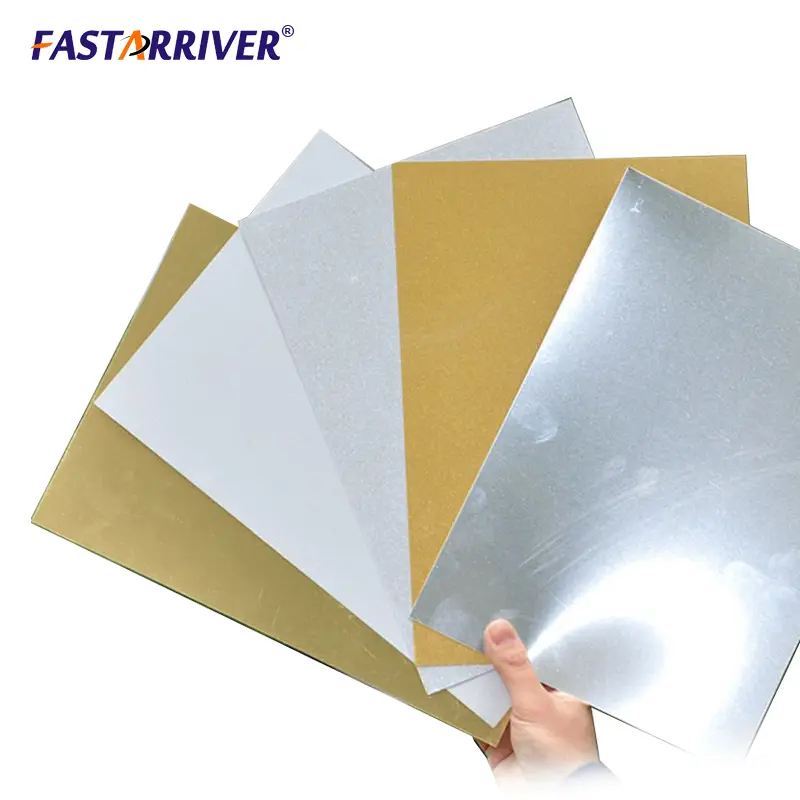
What is an Aluminum Sublimation Sheet?
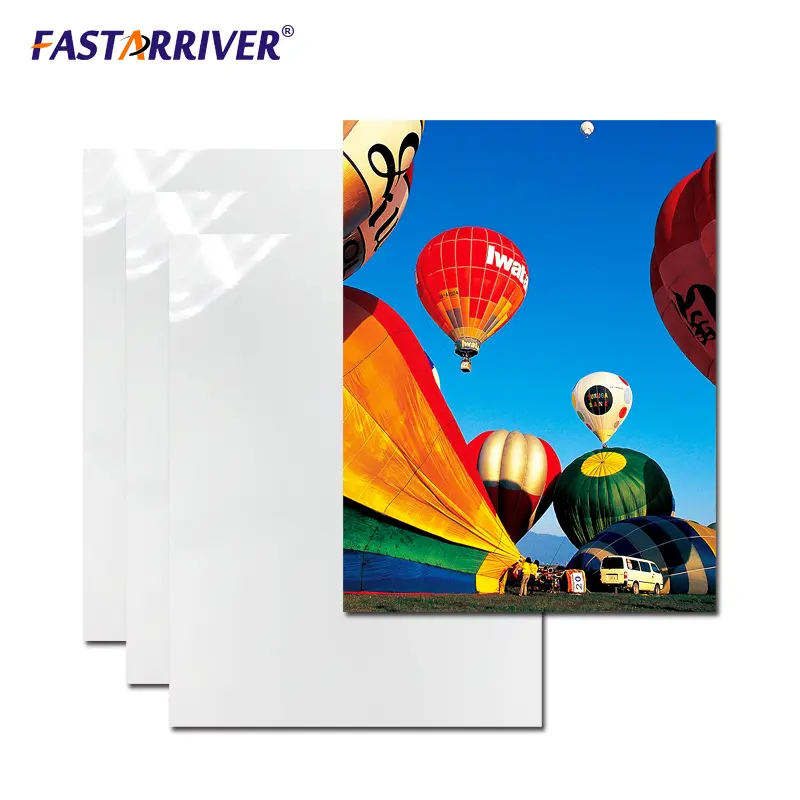
An aluminum sublimation sheet is a thin piece of aluminum alloy coated with a special polyester layer. This coating is what “grabs” the sublimation ink when you apply heat and pressure.
These sheets are known for their high-end look. They are very thin, lightweight, and offer the sharpest image quality. Because they are made of metal, they are waterproof and fire-resistant.
Popular Alloy Types and Tempers
Not all aluminum sheets are the same. Manufacturers use specific alloys to ensure the sheet stays flat and the coating sticks well.
| Component | Common Choice | Why it is used |
|---|---|---|
| Alloy Series | $$1050, 1060, 1100, 3003$$ | High purity and excellent flat surface |
| Temper (State) | $$H14, H18, H24$$ | Provides the right balance of hardness and flexibility |
| Coating Type | Polyester / Polymer | Allows the ink to gas into the surface |
What is Sublimation MDF?
MDF Sublimation panels are made from compressed wood fibers. One side is treated with a white or clear sublimation coating.
MDF is much thicker than aluminum. It has a “warm” and “natural” feel because it is made of wood. It is a favorite for home decor items like coasters, clocks, and photo blocks because it can stand on its own without a frame.
Key Differences at a Glance
| Feature | Aluminum Sublimation Sheet | MDF Sublimation Panel |
|---|---|---|
| Material | Metal (Aluminum Alloy) | Wood Fiber (Engineered Wood) |
| Thickness | Thin ($$0.45mm$$ to $$1.1mm$$) | Thick ($$3mm$$ to $$15mm$$) |
| Durability | Waterproof, Rustproof, UV resistant | Can swell if wet, sensitive to humidity |
| Image Quality | Extremely sharp, vibrant, HD feel | Good, but colors are slightly softer |
| Weight | Very light | Heavier / Solid |
| Price | Premium / Higher cost | Budget-friendly / Lower cost |
Technical Specifications: Aluminum vs MDF
When you order these products, you need to know the exact numbers. Digital specifications help you set up your heat press correctly.
Aluminum Sheet Specifications
- Common Thickness: $$0.45mm$$, $$0.5mm$$, $$0.7mm$$, $$1.0mm$$, $$1.1mm$$.
- Standard Sizes: $$300 \times 600mm$$, $$600 \times 1200mm$$, or custom A4/A3 sizes.
- Protective Film: Usually comes with a clear or blue PE film to prevent scratches before printing.
MDF Specifications
- Common Thickness: $$3mm$$, $$5mm$$, $$6mm$$, $$9mm$$, $$12mm$$.
- Density: Around $$700$$ to $$800$$ $$kg/m^3$$.
- Edge Finish: Usually raw wood color (brown/black), often laser-cut.
Different Product Types and Finishes
Aluminum Sublimation Sheet Varieties
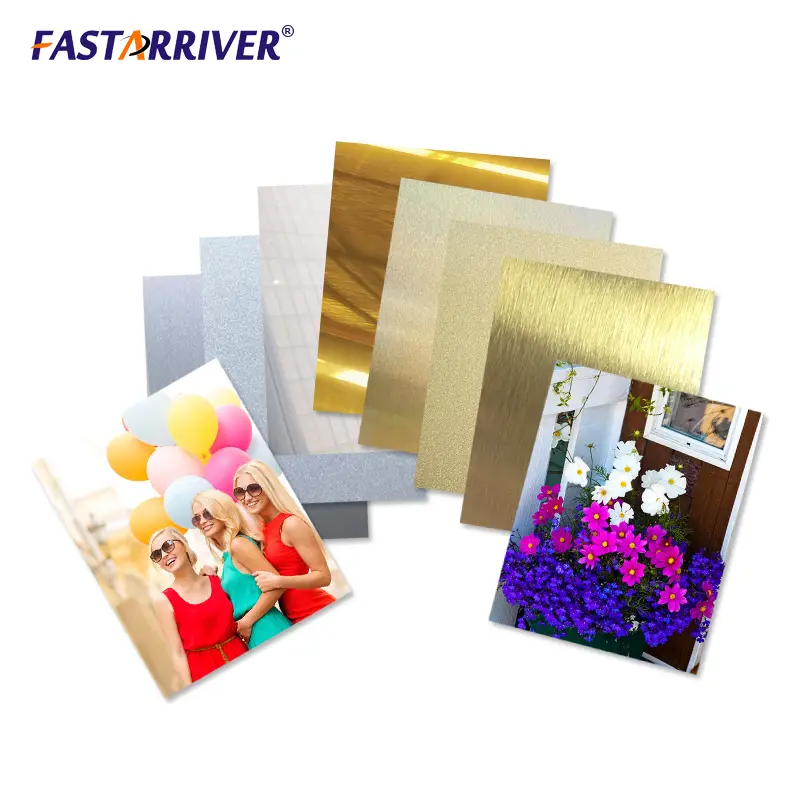
Manufacturers offer different “looks” for metal prints. This is a big advantage of aluminum.
1. White Gloss Finish
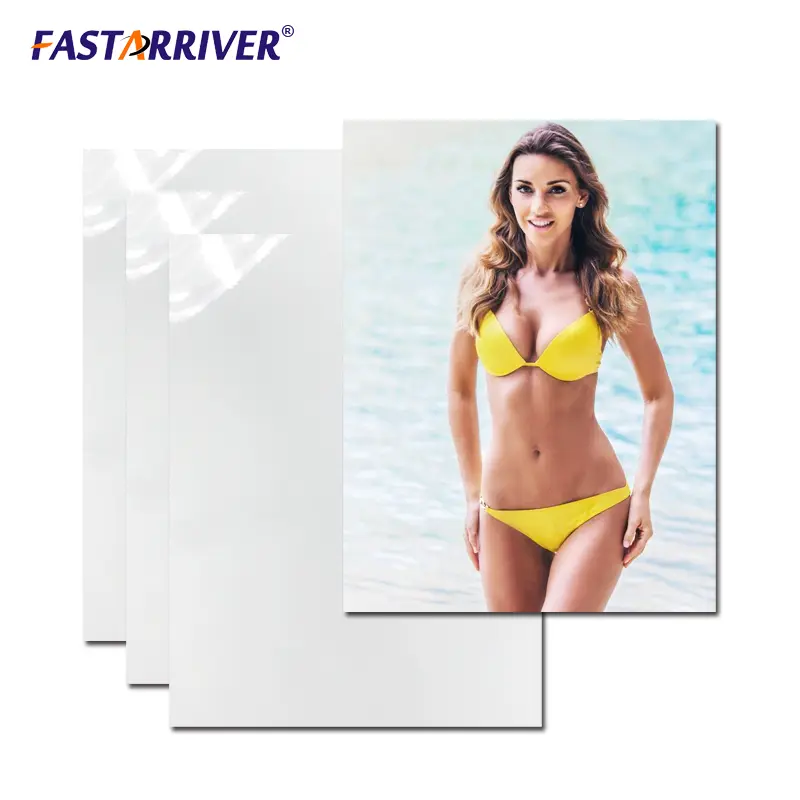
This is the most common type. The white background makes colors “pop.” It is the best choice for high-resolution photography and family portraits.
2. Silver Brushed Finish
The metal texture shows through the image. It gives a very modern, industrial look. It is often used for office signs and awards.
3. Gold Mirror Finish
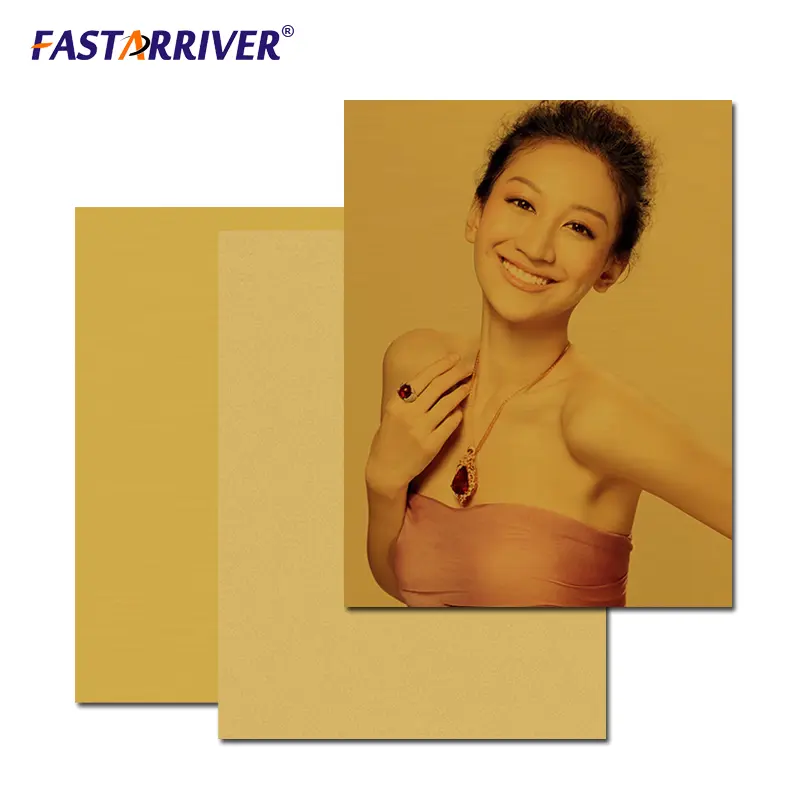
A shiny, reflective surface. When you print on it, the gold tint gives the image a luxury, vintage feel.
4. Matte Finish
Non-reflective. It is great for areas with a lot of light where you don’t want a glare, such as museum displays.
MDF Product Varieties
MDF is usually categorized by its shape and use rather than the finish of the metal.
1. Single-Sided MDF
Only one side has the white coating. The back is raw wood.
2. Double-Sided MDF
Both sides are coated. This is perfect for ornaments or keychains where you want a design on both sides.
3. Pre-Cut Shapes
MDF is easy to cut with a laser. You can find them as pre-cut puzzles, clocks, or door hangers.
Applications: Where to Use Which?
Best Uses for Aluminum Sublimation Sheets:
- High-End Photo Art: Large wall displays for galleries.
- Outdoor Signage: Business logos that need to resist rain and sun.
- Identification: High-quality nameplates, ID tags, and business cards.
- Kitchen Decor: Backsplashes or decorative tiles (because they are easy to wipe clean).
Best Uses for Sublimation MDF:
- Personalized Gifts: Custom coasters, keychains, and fridge magnets.
- Office Accessories: Desk nameplates and clipboards.
- Home Decor: Wall clocks, photo blocks, and hanging ornaments.
- Awards: Plaque inserts for schools or sports teams.
Heat Pressing Guide (General Numbers)
The settings for your heat press will change based on the material. Aluminum heats up very fast, while MDF takes longer to warm through.
| Material | Temperature | Time | Pressure |
|---|---|---|---|
| Aluminum | $$180^{\circ}C – 190^{\circ}C$$ | $$60 – 90$$ seconds | Medium |
| MDF | $$190^{\circ}C – 200^{\circ}C$$ | $$80 – 120$$ seconds | Medium / Firm |
Note: Always remove the protective plastic film from the aluminum sheet before pressing!
Why Choose Aluminum Sublimation Sheets? (Pros & Cons)
The Pros:
- Beauty: The gloss on metal is unmatched. It looks like “HD” printing.
- Longevity: Aluminum does not bend, warp, or crack over time.
- Resistance: It is much better at handling heat and moisture.
The Cons:
- Price: It is more expensive to manufacture than wood fiber.
- Sharp Edges: If not handled correctly, the thin edges can be sharp.
Why Choose Sublimation MDF? (Pros & Cons)
The Pros:
- Cost-Effective: Great for bulk orders like promotional giveaways.
- Thickness: The “chunky” feel makes it feel like a substantial object or gift.
- Ease of Use: MDF is very forgiving during the heat press process.
The Cons:
- Fragile: If dropped, the corners can dent.
- Water Sensitivity: If the edges are not sealed, moisture can make the wood swell.
How to Decide: Which One to Buy?
If you are still not sure, ask yourself these three questions:
1. Where will the item be kept?
If it is for a bathroom, kitchen, or outdoors, choose Aluminum. If it is for a dry living room or office desk, MDF is fine.
2. What is the budget?
For cheap, high-volume giveaways (like $$1000$$ keychains), MDF is the winner. For premium wall art that customers will pay a high price for, choose Aluminum.
3. What is the desired “Vibe”?
If you want a modern, sleek, “Apple-style” look, go for Brushed or Glossy Aluminum. If you want a cozy, rustic, or “Handmade” look, go for MDF.
Aluminum Sublimation Sheet vs MDF
Aluminum Sublimation Sheet vs MDF The Aluminum Sublimation Sheet is the gold standard for photo quality and durability. Its use of high-grade alloys like $$3003$$ or $$1050$$ ensures a professional result every time.
On the other hand, Sublimation MDF is the king of the gift industry. It is versatile, easy to handle, and very affordable.
Many successful printing shops keep both in stock. Use Aluminum for “Wow-factor” wall art and MDF for “Fast-moving” personalized gifts. No matter which you choose, ensuring you have a high-quality coating is the most important part for a perfect print.
Leave a Reply
You must be logged in to post a comment.