
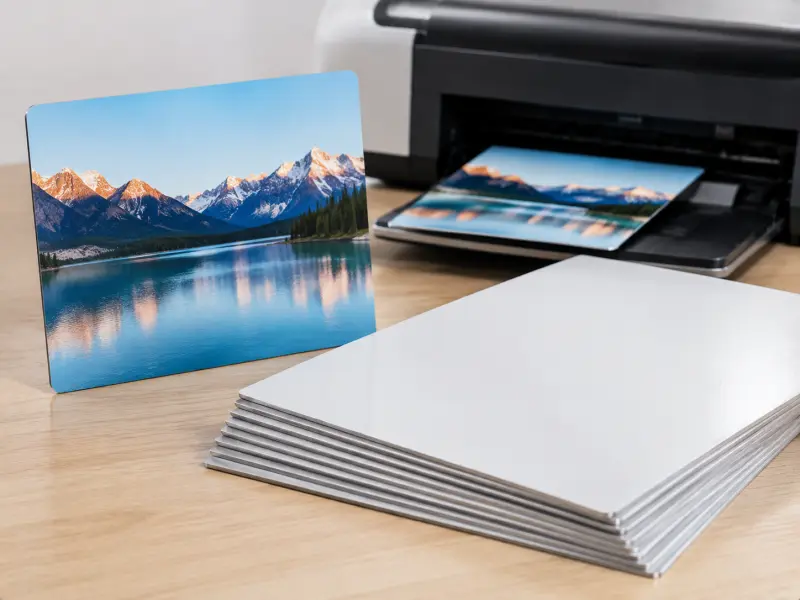
Aluminum sublimation printing sheet is a special metal blank made for heat transfer. Printers use it to turn digital photos into physical art. The sheet takes dye ink at high heat. The gas bonds into a polymer coating on the metal. The result is a sharp image that does not peel, scratch, or fade for years.
How Sublimation on Aluminum Works
Sublimation ink starts as a solid on paper. When you heat it past 180°C, it turns into gas. That gas hits the coated aluminum sheet. The pores of the coating open. The gas enters. When the sheet cools, the pores close. The image is now locked inside the surface. It is not a sticker on top. It is part of the coating itself.
That is why aluminum sublimation printing sheet beats paper or vinyl for durability. You can wipe it with a wet cloth. You can hang it in direct sun. The image stays bright.
Alloy Types That Form the Best Base
The alloy under the coating matters. It controls flatness, heat conduction, and cost. Here is how the common grades compare.
| Alloy | Purity | Flatness After Heating | Cost Level | Best Use |
|---|---|---|---|---|
| 1050 | 99.50% | Excellent | Lowest | Budget photo panels, keychains |
| 1100 | 99.00% | Very good | Low | Standard plaques, door signs |
| 3003 | 98.00% | Good | Mid-range | Thicker display boards, outdoor signs |
| 5005 | 99.00%+ | Very good | Mid-range | Premium photo panels, awards |
| 6061 | 98.00% | Good | Higher | Structural display mounts (rare) |
Most sublimation blanks use 1050 or 1100. These are nearly pure aluminum. They heat evenly across the whole sheet. That even heat stops ghosting and color shifts. Alloy 3003 adds manganese. It is a bit stiffer. You see it in thicker sheets that must hold their own weight without bending.
Alloy 5005 is popular in high-end markets. It offers a smoother mill finish before coating. That smooth base helps the coating layer stay uniform.
H14 Temper (Half Hard)
H14 is the most common temper for sublimation sheet. It is stiff enough to stay flat during shipping. Yet it is soft enough to cut on a CNC router or shear without cracking. Most A4 and A3 photo panels use H14.
Typical use: Standard photo panels, sign blanks, trophy plates
Alloys: 1050-H14, 1100-H14, 3003-H14
H24 Temper (Half Hard, Stabilized)
H24 is similar to H14 but with a different thermal history. It resists heat warping slightly better. Some large-format sheet makers prefer H24 because big panels stay flatter when they exit the press.
Typical use: Large wall panels, 4×8 foot sheets
Alloys: 3003-H24, 5005-H24
H18 Temper (Full Hard)
H18 is harder and more brittle. It holds a very flat profile. You see it in thin gauge sheets that must not curl at the edges. The trade-off is that it can crack if you bend it sharply.
Typical use: Thin luggage tags, metal business cards, rigid name badges
Alloys: 1100-H18, 1050-H18
O Temper (Soft Annealed)
O temper is fully soft. It is rare in rigid sublimation sheets but appears in flexible aluminum products that wrap around curves. If you need a sheet that forms around a cylinder, O temper is the choice.
Typical use: Wrap-around mug sleeves, curved display edges
Alloys: 1050-O, 1100-O
Temper and Hardness for Heat Press Work
After rolling, the sheet gets a temper label. This tells you how hard the metal is. Hardness affects how the sheet behaves under the heat press.
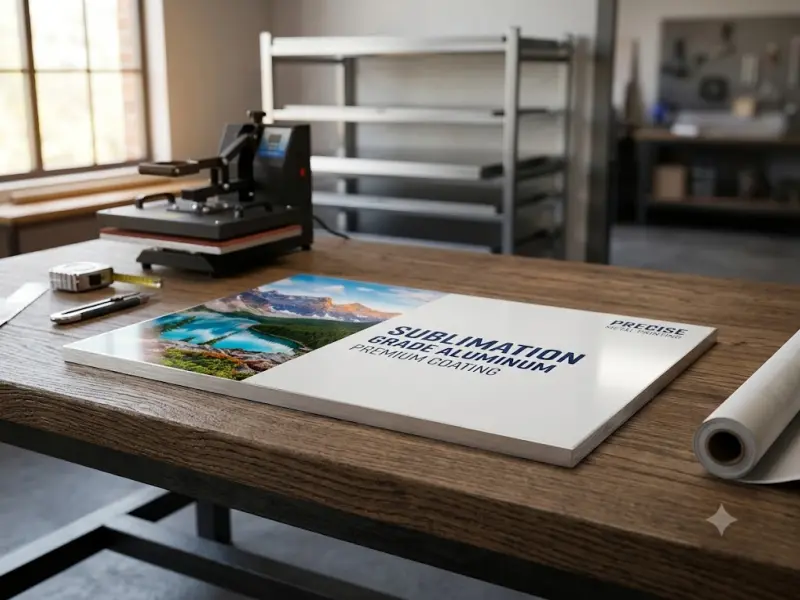
Thickness and Size Guide
Thickness changes the feel, weight, and cost of the final product. Here is how the numbers map to real jobs.
| Thickness | Weight Feel | Common Sizes | Best For |
|---|---|---|---|
| 0.45 mm | Very light, flexible | A4, A3, 4×6″ | Keychains, small tags, bookmarks |
| 0.55 mm | Light, slight rigidity | A4, A3, 8×10″ | Name badges, luggage tags, coasters |
| 0.65 mm | Medium, good hand feel | A3, A2, 11×14″ | Photo panels, desktop displays |
| 1.0 mm | Solid, premium feel | A3, A2, 12×18″, 16×20″ | Wall art, awards, signage |
| 1.14 mm (0.045″) | Heavy, very rigid | 12×24″, 24×36″ | Large wall murals, outdoor boards |
| 1.6 mm | Extra heavy | Custom cut | Stand-up displays, floor signs |
| 3.0 mm | Rigid plate | 4×8 ft, custom | Architectural panels, backsplash |
Most photo gift businesses stock 0.65 mm and 1.0 mm. These thicknesses feel valuable in the hand but do not cost too much.
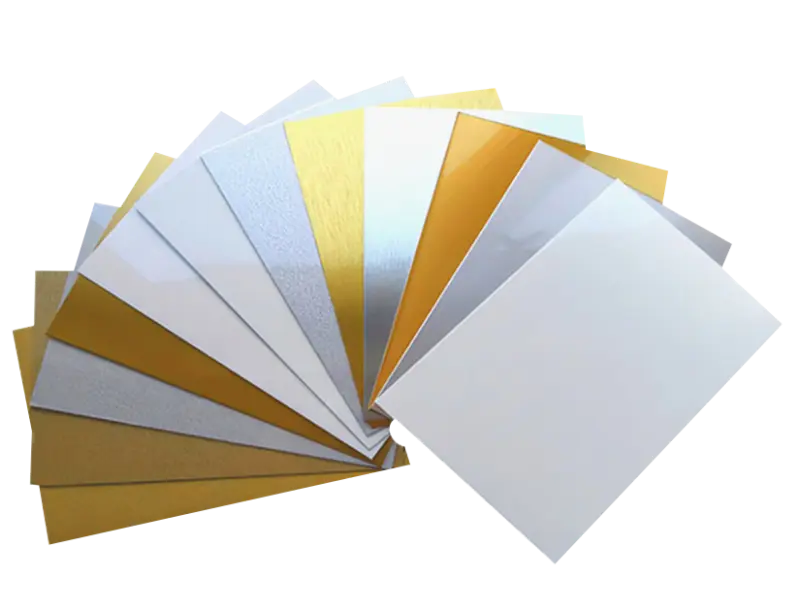
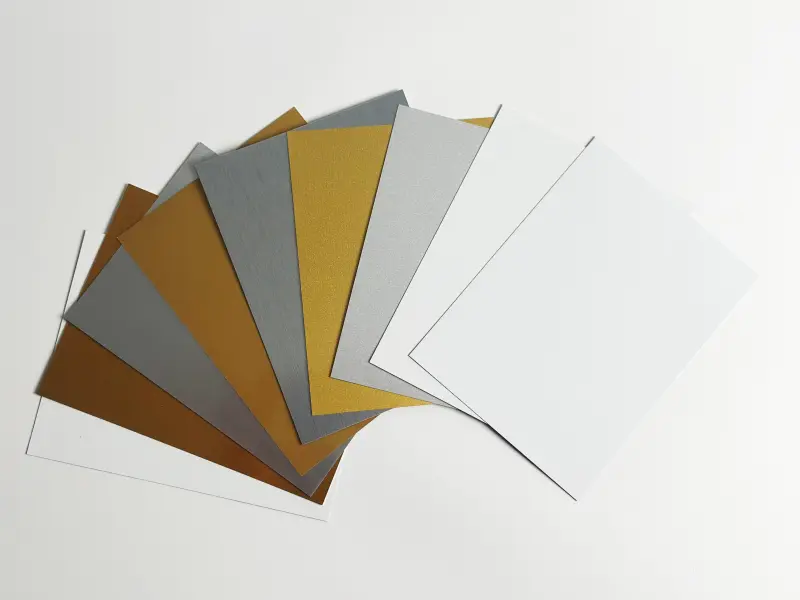
Surface Coatings and Colors
The coating on top is what catches the ink.
Without it, dye sublimation gas would just bounce off bare aluminum. Here are the main coating types you can order.
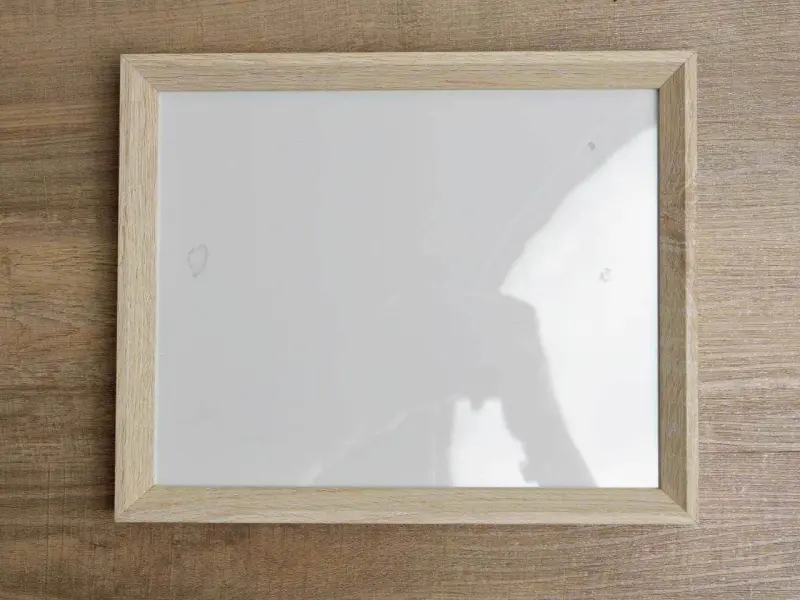
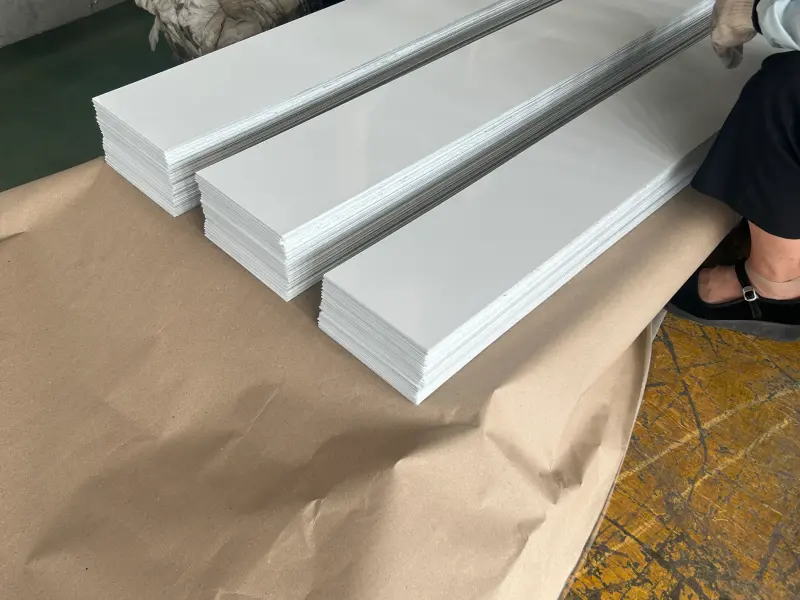
White Gloss Coating Aluminum Sublimation Printing Sheet
This is the top seller. The bright white base makes colors pop. Reds look red. Blues look blue. The gloss finish gives a shiny, almost glass-like surface. It works for photos, logos, and fine art prints.
Typical gloss level: 70 to 90 GU at 60°
Best for: Photo panels, wall art, awards
White Matte Coating Aluminum Sublimation Printing Sheet
Matte coating cuts glare. You can hang the panel under bright lights and still see the image. It has a soft, velvet look. Fingerprints are less visible than on gloss.
Typical gloss level: 5 to 15 GU at 60°
Best for: Gallery prints, menu boards, high-end signage
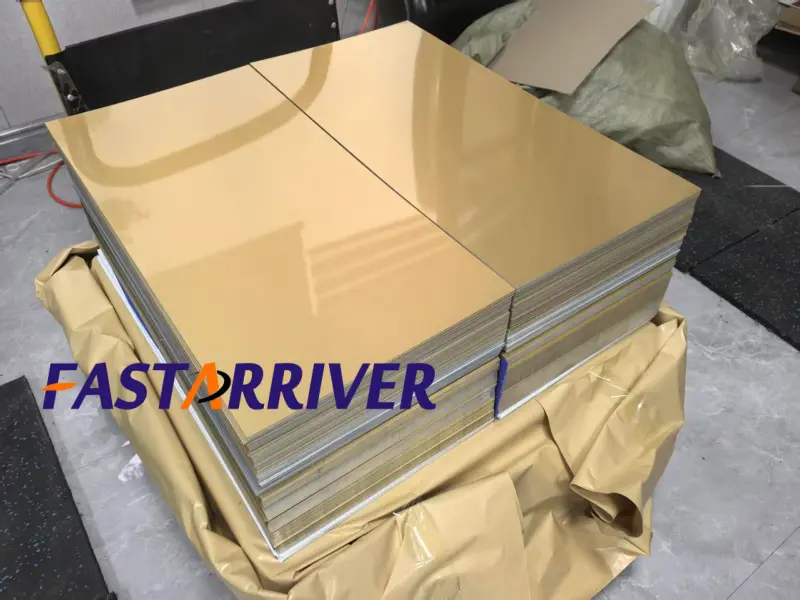
Clear Gloss Coating Aluminum Sublimation Printing Sheet
Clear coating lets the silver aluminum show through. When you print on it, the metal becomes part of the image. White areas in your design turn silver. This creates a metallic, industrial look.
Best for: Metal effect photos, brushed silver backgrounds, automotive art
Clear Matte Coating Aluminum Sublimation Printing Sheet
Same idea as clear gloss but without shine. It looks modern and understated. It pairs well with brushed or bead-blasted aluminum underneath.
Best for: Minimalist decor, corporate plaques
Brushed Silver Base Aluminum Sublimation Printing Sheet
The aluminum itself is brushed in one direction before coating. Under a clear coat, you see fine lines. Under a white coat, the brush adds depth. It is popular for trophies and executive gifts.
Brush direction: Usually linear, 400 to 600 grit visible
Best for: Awards, desk plates, premium signage
Brushed Gold Base Aluminum Sublimation Printing Sheet
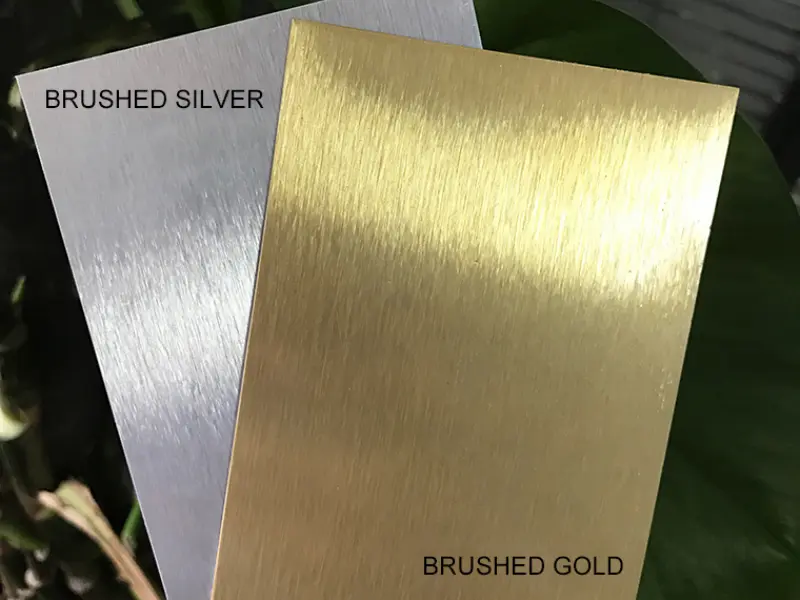
A gold-tone anodized or coated layer sits under the sublimation coating. When you print on white, the edges or unprinted areas show gold. It reads as luxury.
Best for: Championship plaques, wedding gifts, VIP badges
Pearl and Glitter Coatings Aluminum Sublimation Printing Sheet
Some specialty sheets carry a pearl or fine glitter embedded in the coating. The image takes on a shimmer. These are niche products but command higher prices in the gift market.
Best for: Holiday ornaments, dance competition trophies, novelty items
Standard White vs Clear vs Brushed: Side by Side
Buyers often wonder which base to stock. Here is a quick decision table.
| Feature | White Gloss | White Matte | Clear Gloss | Brushed Silver |
|---|---|---|---|---|
| Color vibrancy | Highest | High | Moderate | Moderate |
| Metallic look | None | None | Full | Full |
| Glare under lights | High | Low | High | Medium |
| Forgiveness of bad prints | High | High | Low | Low |
| Best image type | Full-color photos | Art prints, text | Logos, monochrome | Automotive, industrial |
| Typical price | Low | Low | Mid | Mid |
| End customer appeal | Broad | Broad | Niche | Premium |
If you are new to the business, start with white gloss. It sells to the widest market. Add clear and brushed later as upsell options.
Thickness Comparison for Common Products
The same photo looks different on a thin tag versus a thick plaque. Here is how thickness pairs with product type.
| Product | Suggested Thickness | Why It Works |
|---|---|---|
| Keychain | 0.45 – 0.55 mm | Light, easy to hang, low shipping cost |
| Fridge magnet | 0.45 – 0.65 mm | Thin enough for magnet backing |
| Coaster | 0.65 – 1.0 mm | Rigid, feels substantial, resists warping |
| Name badge | 0.55 – 0.65 mm | Light on clothing, sharp edges easy to finish |
| Wall photo panel | 1.0 – 1.14 mm | Sits flat, no bowing, premium weight |
| Outdoor sign | 1.14 – 3.0 mm | Survives wind, easy to mount with screws |
| Trophy plate | 0.65 – 1.0 mm | Fits standard trophy stands, easy to engrave edge |
| Kitchen backsplash | 1.0 – 3.0 mm | Heat resistant, scrubbable surface |
Applications That Drive Demand
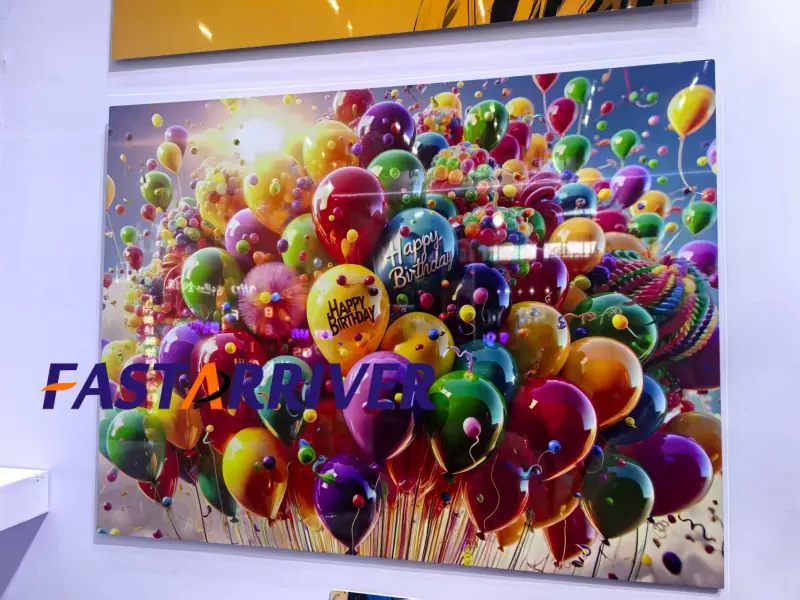
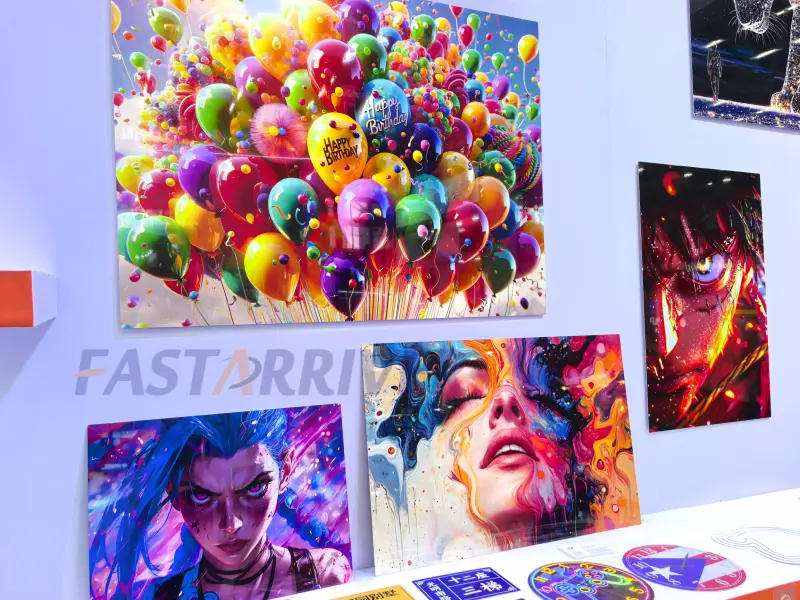
Aluminum sublimation printing sheet feeds dozens of product lines. Here is where it ends up.
- Photo panels — Families print wedding shots on glossy white aluminum. The result hangs in living rooms without glass or frames.
- Wall art and metal prints — Artists sell limited runs on brushed silver. The metal adds value over paper.
- Awards and trophies — Sublimated plates attach to wooden bases. Coaches print team photos next to player names.
- Name badges and ID cards — Hotels and conferences print full-color badges that last longer than laminated paper.
- Signage and door plates — Offices print room numbers and logos on matte white sheets. They screw to walls or stand on desks.
- Kitchen backsplashes — Custom images print on thick, coated aluminum. The surface wipes clean and resists stove heat.
- Keychains and luggage tags — Small blanks print on both sides. They are cheap to make and sell well at tourist spots.
- Coasters — Round or square blanks take coffee shop logos. The metal does not soak up water like cork or cardboard.
- QR code plaques — Restaurants print scannable menus on metal plates. They survive spills and daily wiping.
- Industrial labels — Asset tags and safety signs print on thick aluminum. They outlast vinyl in factories.
- Holiday ornaments — Shaped blanks hang on Christmas trees. The image lasts for decades.
- Pet tags and memorial plaques — Veterinarians and pet owners print portraits on small metal tags.
How Heat Press Settings Change by Thickness
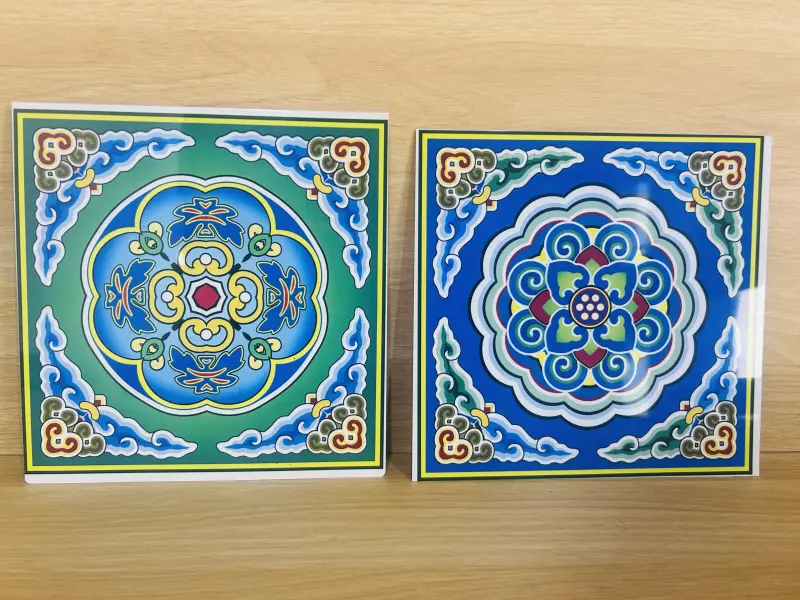
Thicker sheets need more heat and time. Thin sheets can scorch if you use too much. Here is a rough guide.
| Thickness | Temperature | Time | Pressure |
|---|---|---|---|
| 0.45 mm | 180 – 190°C | 45 – 60 sec | Medium |
| 0.65 mm | 185 – 195°C | 60 – 75 sec | Medium |
| 1.0 mm | 190 – 200°C | 75 – 90 sec | Medium-high |
| 1.14 mm+ | 195 – 205°C | 90 – 120 sec | High |
Always test a sample first. Heat press models vary. The coating brand on the sheet also changes the ideal window.
Cutting and Finishing After Printing
Most sheets arrive with a protective film on top. Peel it off after pressing. Then cut or finish the edges.
Shearing — A metal shear cuts straight lines on thin gauges up to 1.0 mm. It is fast and clean.
CNC routing — A router with a down-cut bit makes custom shapes. Keychains, coasters, and odd signs all start as rectangles and end as custom profiles.
Laser cutting — CO2 lasers can cut coated aluminum if the coating absorbs the beam. However, fiber lasers work better on bare metal. Many shops route instead to avoid burning the image edge.
Corner rounding — A corner punch takes the sharp 90-degree edge off photo panels. It gives a frame-like feel.
Standoffs — Wall panels mount with metal standoffs. The sheet floats an inch off the wall. Shadows add depth.
Packaging Formats from the Mill
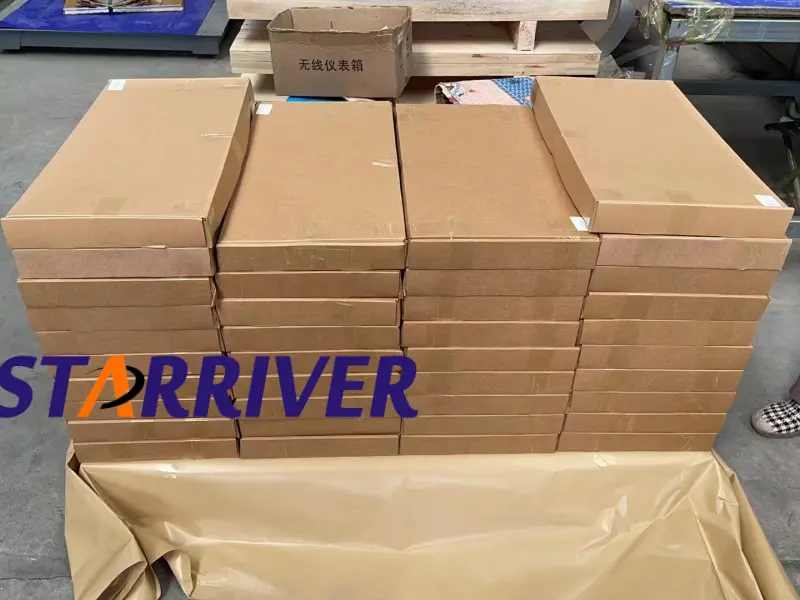
Sheets ship in several ways. Pick the one that fits your workshop.
| Format | Sheet Count | Protection | Best For |
|---|---|---|---|
| Individual film wrap | 1 | PE film both sides | Retail resale, clean rooms |
| Paper interleave stack | 50 – 100 | Kraft paper between sheets | High-volume printing shops |
| Foam-padded carton | 20 – 50 | Foam corners, cardboard box | A4 and A3 sizes, mail order |
| Wooden crate | 100+ | Foam sheets, strapping | Full 4×8 ft sheets, export |
| Pre-cut blanks in bin | 100 – 500 | Plastic bin with divider | Round coasters, keychain shapes |
Most wholesale buyers prefer paper interleave. It keeps sheets flat and stops scratches without plastic waste.
Global Standards and Coatings
Not all coatings are equal. Reputable mills test their sheets against these benchmarks.
- AAMA 2604 — Coating spec for high-performance exterior finishes. Some outdoor sublimation sheets aim for this.
- ASTM D3363 — Pencil hardness test. A good coating scores 2H or harder. That means keys and coins will not scratch it easily.
- ASTM D523 — Gloss measurement. Gloss and matte sheets get checked at 60 degrees.
- RoHS / REACH — Limits on heavy metals in the coating. Essential for toys, kitchenware, and EU export.
- FDA compliance — Some coatings claim food-contact safety for kitchen backsplash or serving tray use. Verify the certificate before you market it.
FAQ
What is the best alloy for sublimation printing sheet
Alloy 1050 and 1100 are the safest choices. They are nearly pure aluminum. They heat evenly and stay flat under press pressure. Alloy 5005 is also excellent if you want a smoother mill finish before coating.
Which temper stays flattest in a heat press
H14 is the industry standard. It resists warping during the heating cycle. H24 is even better for very large sheets. H18 is too brittle for most press work unless you are making thin tags that will not bend.
How thick should a metal photo panel be
For desk displays, 0.65 mm is enough. By wall art that ships to customers, 1.0 mm feels premium and stays flat. For outdoor signs, use 1.14 mm or thicker so wind does not flex the panel.
Can I print on both sides of the sheet
Yes, if the sheet is coated on both sides. Most standard blanks are single-side coated. Double-side coated blanks cost more but let you print front and back for signs, tags, and ornaments.
What is the difference between gloss and matte sublimation coating
Gloss coating makes colors look vivid and wet. It reflects light like a photo print. Matte coating cuts glare and hides fingerprints. It looks more like fine art paper. The choice depends on where the customer will hang the piece.
Do I need a special printer for aluminum sublimation
You need a dye sublimation printer with pigment or dye-sub ink. A standard office laser printer will not work. You also need a heat press that can hold even pressure across the whole sheet. Vacuum presses work best for large panels.
Can sublimated aluminum go outside
Yes, if the coating is rated for UV. Most quality sheets use polyester-based coatings that resist fading for five years or more in direct sun. For extreme climates, ask your supplier for an outdoor-grade coating.
How do I stop the sheet from warping during pressing
Use even pressure across the whole surface. Add a thin silicone pad on the bottom platen. Let the sheet cool flat on a metal table before you move it. Thicker sheets warp less than thin ones.
Is brushed aluminum better than white for photo prints
It depends on the image. White gives you true color. Brushed silver gives you a metallic effect where your design has white or light areas. Many customers love the brushed look for cars, motorcycles, and industrial themes.
Can I cut sublimation sheet with a standard paper trimmer
No. Aluminum is metal. A paper trimmer will damage the blade and give a jagged edge. Use a metal shear, a guillotine with a metal blade, or a CNC router. For small jobs, a sturdy bench shear works fine.
Leave a Reply
You must be logged in to post a comment.