
Aluminum Sublimation Sheet Manufacturer – Fastarriver. Aluminum sublimation sheet is a coated aluminum panel designed to accept sublimation ink. A special polymer coating is applied to the metal surface. When heat and pressure are applied, sublimation ink transfers from transfer paper into the coating layer. The result is a vivid, permanent image bonded to the metal.
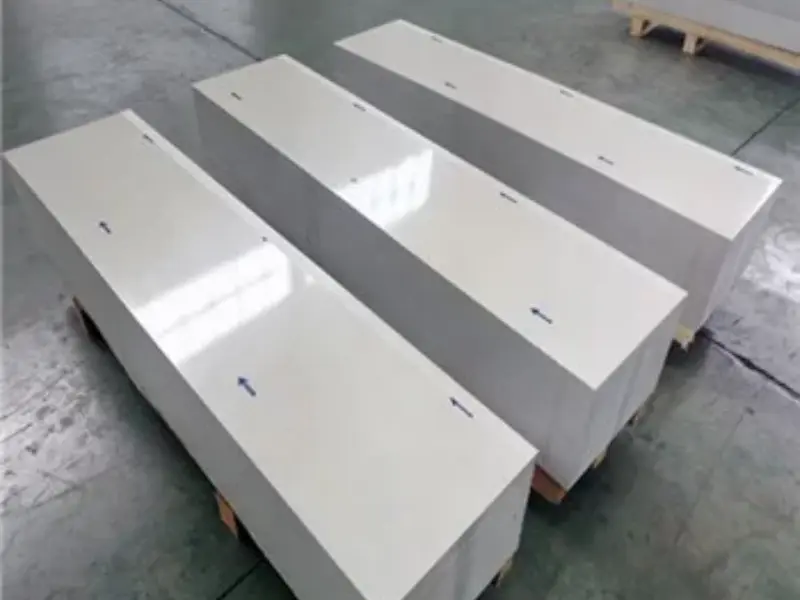
The base material is aluminum sheet — typically 0.2 mm to 6.0 mm thick. The coating is what makes it different from standard aluminum. Without the right coating, sublimation ink will not bond to bare metal.
Manufacturers supply sublimation aluminum in cut sheets, custom blanks, and coil form for high-volume print operations.
Coating Types — The Most Important Spec
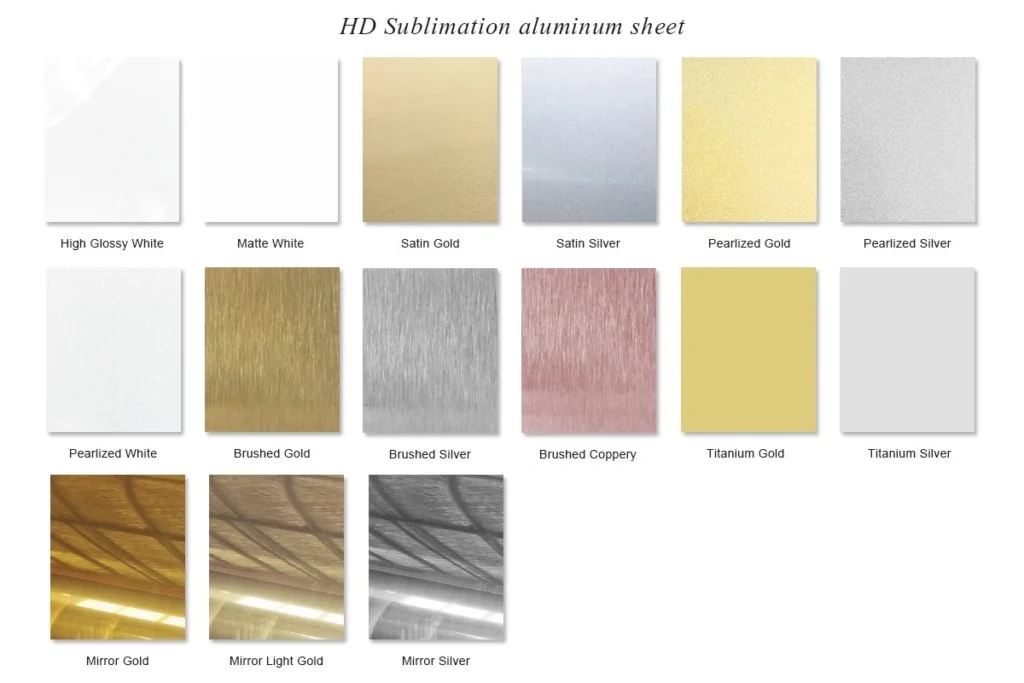
The coating determines print quality, durability, and surface look. Most manufacturers offer two main coating systems.
| Coating Type | Base | Surface Look | Color Vibrancy | Durability | Typical Use |
|---|---|---|---|---|---|
| Gloss white coat | Polyester resin | Bright white, shiny | Highest | Good | Photo panels, awards, signage |
| Matte white coat | Polyester resin | Soft white, no glare | High | Good | Wall art, office décor, displays |
| Gloss clear coat | Polyester resin | Shows metal underneath | Medium | Good | Brushed silver effect panels |
| Matte clear coat | Polyester resin | Soft metallic look | Medium | Good | Industrial chic décor, gifts |
| Nano coating | Nano-ceramic | Gloss or matte | Highest | Excellent | Outdoor signs, UV-exposed panels |
Gloss White vs. Matte White
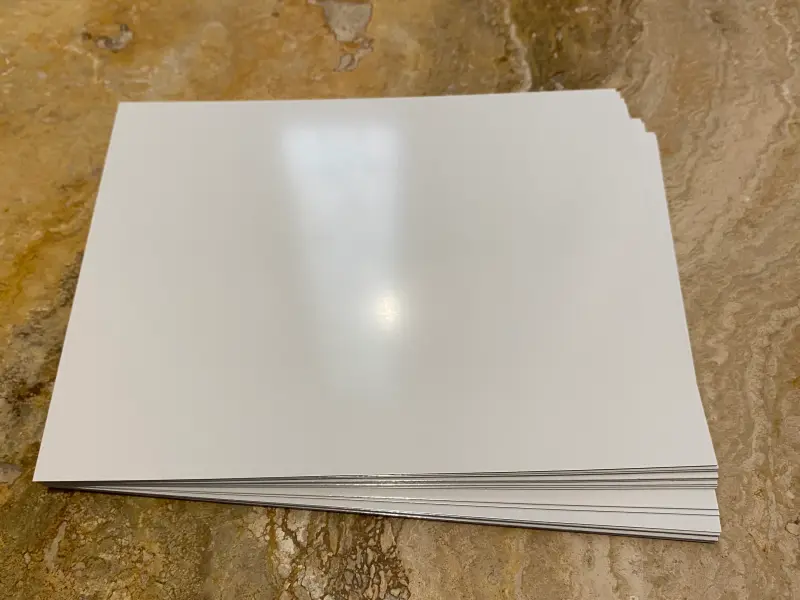
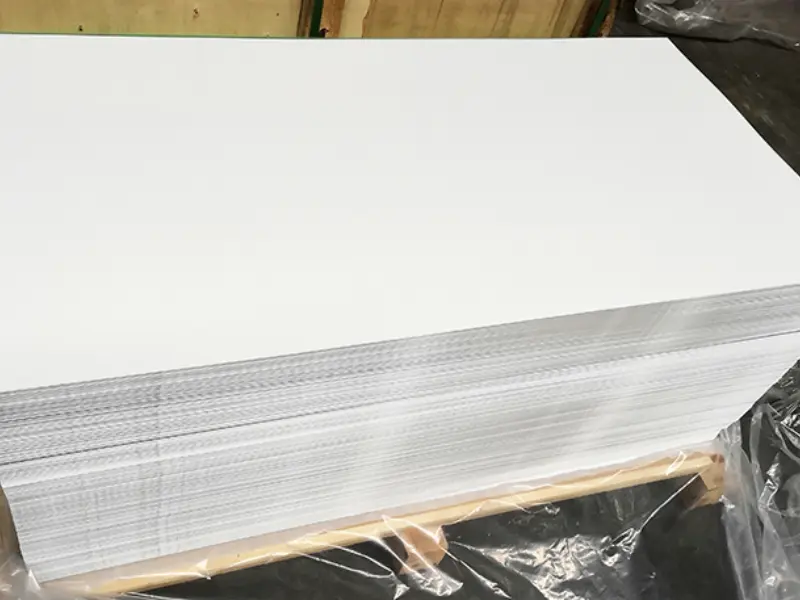
Gloss white is the most popular. It gives the brightest colors and sharpest photo reproduction. It is the standard for photo prints, award plaques, and retail display panels.
Matte white reduces glare. It works better in well-lit rooms or display cases where reflections are a problem. Colors appear slightly softer compared to gloss.
Clear Coat — The Metal-Visible Option
Clear coat sublimation sheets let the aluminum surface show through. Brushed aluminum with a clear sublimation coat produces a premium metallic photo effect. The image appears to float on a silver background. This is a popular choice for modern interior décor and gift products.
Nano Coating — For Outdoor Use
Standard polyester coatings are not designed for long-term outdoor exposure. Nano ceramic coatings offer better UV resistance and water repellency. Panels with nano coating can be used on outdoor signs, building directories, and exterior wayfinding boards.
Alloy & Temper — What the Base Metal Looks Like
Not all aluminum sublimation sheet uses the same base alloy. The alloy affects flatness, stiffness, and how well the coating bonds.
| Alloy | Temper | Thickness Range | Flatness | Surface Quality | Best For |
|---|---|---|---|---|---|
| 1100 | H14 | 0.45 – 1.0 mm | Good | Excellent | Standard sublimation blanks |
| 1060 | H14 | 0.45 – 0.8 mm | Good | Excellent | Economy sublimation sheet |
| 3003 | H14 | 0.5 – 1.5 mm | Very Good | Good | Stiffer panels, signs, plaques |
| 5005 | H14 / H24 | 0.6 – 1.5 mm | Very Good | Excellent | Anodize-base sublimation, premium panels |
| 5052 | H32 | 0.8 – 2.0 mm | Excellent | Good | Heavy-duty outdoor sublimation signs |
Why 1100 Is the Default Choice
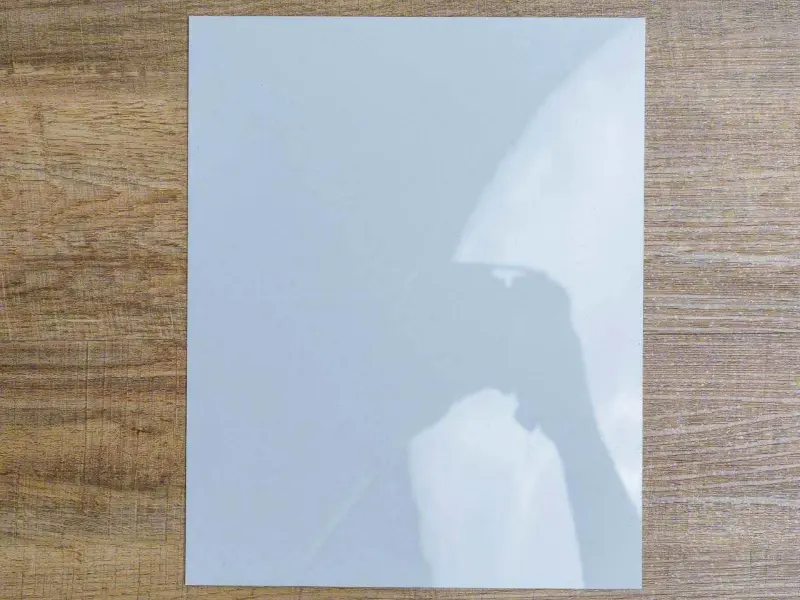
1100 aluminum has very high purity (≥99%). It has a smooth, consistent surface that accepts coating evenly. It is soft enough to cut and punch without burring. Most sublimation blank manufacturers use 1100-H14 as their standard base.
When to Use 3003
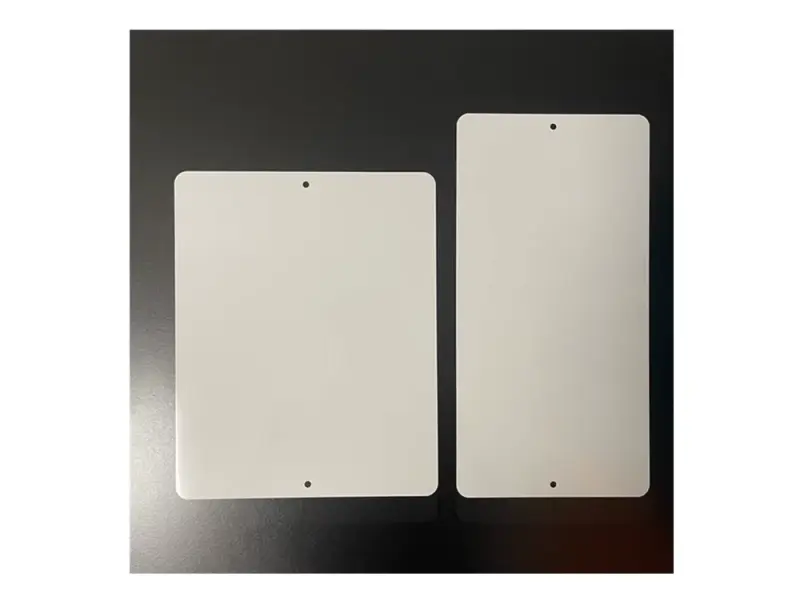
3003 adds manganese for about 20% more strength. Use it when the finished panel needs to be stiffer — for example, large-format wall panels that span without a backer, or outdoor sign blanks that must resist wind flutter.
5005 for Premium Anodized-Look Panels
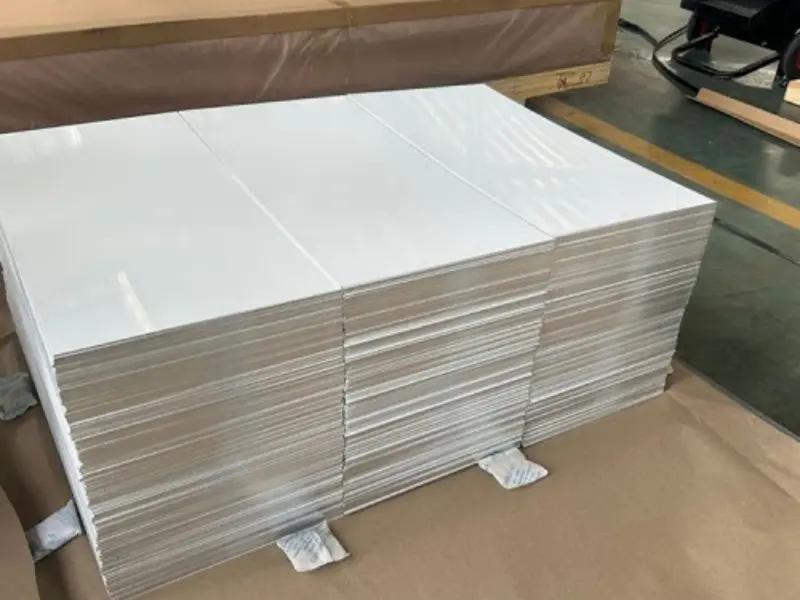
5005 responds to anodizing more uniformly than 1100 or 3003. Some manufacturers apply a light anodize layer before the sublimation coating. This gives the base a more consistent silver tone under a clear coat, producing a cleaner metallic effect in the final print.
Sheet Thickness — How to Choose
| Thickness (mm) | Weight (kg/m²) | Rigidity | Cut Method | Typical Product |
|---|---|---|---|---|
| 0.45 | 1.22 | Flexible | Guillotine / die cut | Thin flexible photo panels, inserts |
| 0.5 | 1.35 | Low | Guillotine / die cut | Standard sublimation blanks |
| 0.6 | 1.62 | Low–Med | Guillotine / CNC | Photo tiles, award plaques |
| 0.8 | 2.16 | Medium | Guillotine / CNC | Wall panels, display boards |
| 1.0 | 2.70 | Good | CNC / shear | Signs, license plates, plaques |
| 1.2 | 3.24 | Good | CNC / shear | Outdoor sign blanks |
| 1.5 | 4.05 | High | CNC / shear | Heavy-duty signs, architectural panels |
0.5 mm and 0.6 mm are the most common for photo gifts and award blanks. 1.0 mm and above are used when the panel needs to stand alone without a frame or backer board.
Product Types — What Manufacturers Supply
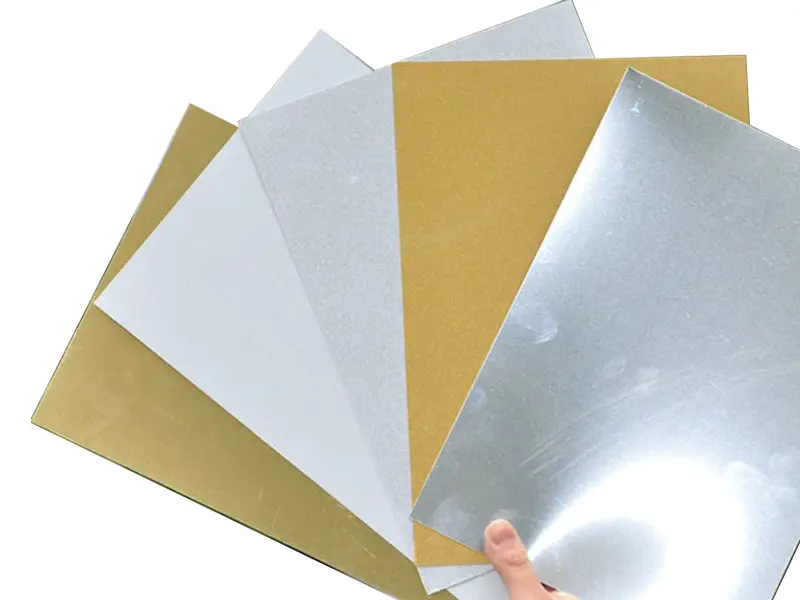
Sublimation aluminum is not just flat sheet. Manufacturers produce a wide range of blanks and cut-to-size products.
Standard Cut Sheet Flat sheet cut to common sizes — 300×200 mm, 400×300 mm, 600×400 mm, and so on. Sold in boxes of 10, 20, or 50 sheets. The most ordered form for print shops and POD (print-on-demand) businesses.
Custom-Size Blanks Cut to exact buyer dimensions with deburred edges. Minimum order is typically 500–1,000 pieces. Tolerances of ±0.5 mm are standard; ±0.2 mm available on request.
Pre-Punched Blanks Holes drilled or punched before coating. Common patterns include corner holes for license plates, top-center holes for hanging plaques, and keyhole slots for wall mounting. Saves fabrication steps for the buyer.
Coil Form Supply For buyers with their own cutting equipment. Supplied in coil widths of 500 mm, 800 mm, 1000 mm, or 1220 mm. Allows the buyer to cut any length on demand and reduces per-unit cost for high-volume operations.
Shaped Blanks Pre-cut into non-rectangular shapes — oval, circle, arch top, house shape, bone shape (for pet tags), and dog tag shape. Common in the gift and personalization market.
Double-Sided Coated Sheet Both faces coated for sublimation. Used for two-sided signs, window displays, and double-sided plaques where both faces will be printed and visible.
Aluminum Photo Panels (Ready-to-Print) Pre-cut with a protective film on the coated surface. Film is removed just before printing. Packed individually or in stacks with interleaving paper to prevent scratching.
Size Reference — Common Blank Formats
| Format | Size (mm) | Common Use |
|---|---|---|
| Small gift tile | 100 × 100 | Fridge magnets, coasters, mini plaques |
| Photo insert | 152 × 102 (6×4 inch) | Photo gifts, promotional prints |
| Standard plaque | 200 × 150 | Award plaques, certificates |
| A4 panel | 297 × 210 | Wall art, menu boards |
| A3 panel | 420 × 297 | Large photo prints, posters |
| License plate | 300 × 150 | Custom vehicle plates, novelty plates |
| Square tile | 200 × 200 | Wall tile sets, decorative panels |
| Large display | 600 × 400 | Retail displays, trade show graphics |
| Full sheet | 1220 × 2440 | Cut-to-order, architectural cladding |
Applications — Who Buys Aluminum Sublimation Sheet
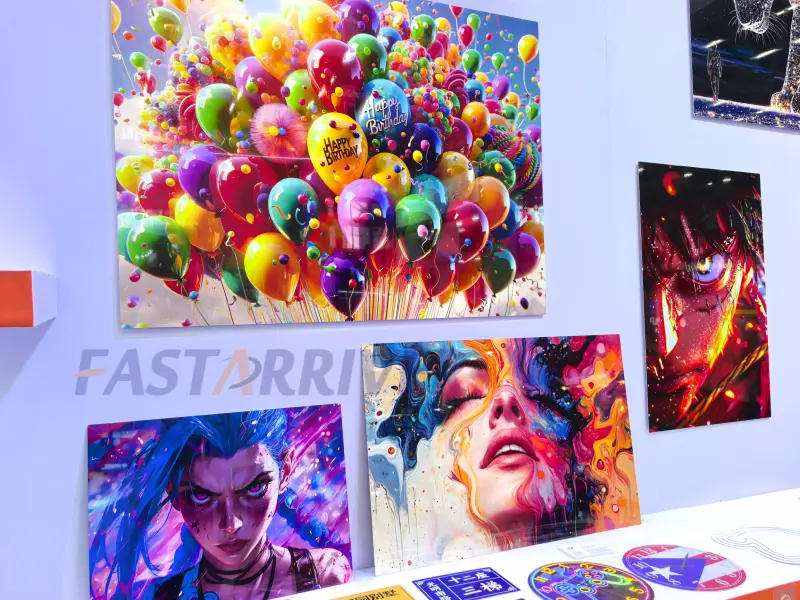
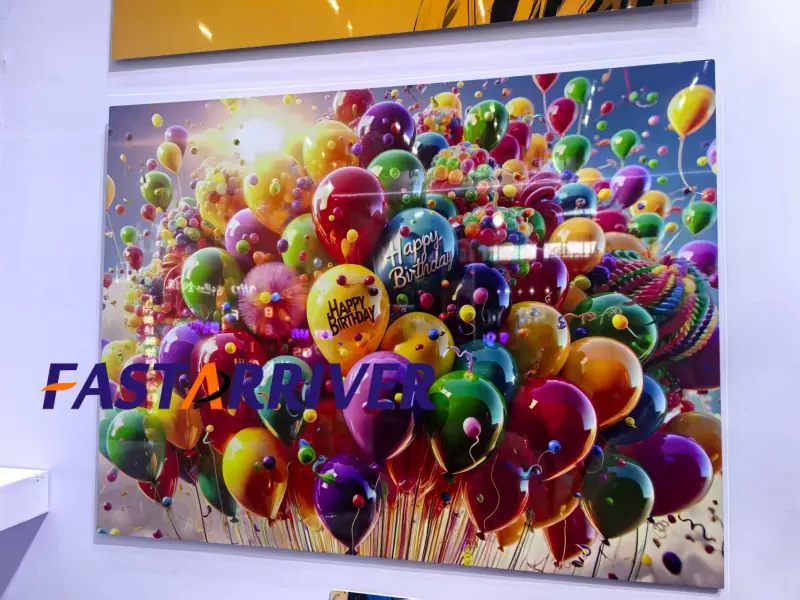
Print-on-Demand & Personalization
- Custom photo panels and wall art
- Award plaques and recognition trophies
- Personalized name plates and desk signs
- Wedding and event gifts
- Pet memorial plaques
Retail & Commercial Display
- Point-of-sale display boards
- Menu boards and café signage
- Retail shelf talkers and price displays
- Trade show graphics and backdrops
- Hotel room number plates
Outdoor Signage
- Building directories and wayfinding signs
- Real estate and property signs
- Safety and information boards
- License plates and vehicle identification
- Street-level advertising panels
Industrial & Institutional
- Equipment identification labels
- Asset tracking tags
- Door signs and office directories
- Hospital room and ward signs
- School and campus wayfinding
Sublimation Sheet vs. Other Print Substrates
| Substrate | Print Quality | Durability | Weight | Outdoor Use | Cost |
|---|---|---|---|---|---|
| Aluminum sublimation sheet | Excellent | Very Good | Light | Yes (nano coat) | $$ |
| PVC foam board | Good | Moderate | Very Light | Limited | $ |
| Acrylic sheet | Very Good | Good | Medium | Limited | $$$ |
| Ceramic tile | Excellent | Excellent | Heavy | Yes | $$ |
| Polyester fabric | Good | Moderate | Very Light | Limited | $ |
| Glass panel | Excellent | Excellent | Heavy | Yes | $$$$ |
Aluminum wins on the combination of print quality, weight, and cost. It is lighter than ceramic or glass, holds color better than PVC, and costs less than acrylic for large formats.
What to Check When Sourcing from a Manufacturer
Buying directly from an aluminum sublimation sheet manufacturer saves cost but requires attention to a few key quality points.
Coating Adhesion
Ask for a cross-hatch adhesion test result (ISO 2409). Good coating should score 0 or 1 on the scale. Poor adhesion causes ink bleed and delamination after printing.
Coating Weight
Standard coating weight is 8–12 g/m² for polyester systems. Too thin and colors will be dull. Too thick and the coating may crack during cutting or bending.
Flatness Tolerance
Panels must lie flat for heat press printing. Ask for flatness spec — ≤1.5 mm/m is acceptable; ≤1.0 mm/m is better for large-format panels.
Surface Film Protection
Quality manufacturers apply a PE protective film to the coated surface before packing. This prevents scratching during shipping and handling.
Sublimation Test Print
Request a test print before a large order. Print a full-color image including skin tones, dark gradients, and white areas. This reveals any coating defects, color cast, or uneven ink absorption.
Aluminum Sublimation Sheet Manufacturer Capability — What to Ask For
| Capability | Standard | Premium Manufacturer |
|---|---|---|
| Base alloy options | 1100 only | 1100, 3003, 5005, 5052 |
| Coating options | Gloss white only | Gloss, matte, clear, nano |
| Min. order (cut sheet) | 1,000 pcs | 100 pcs (sample orders) |
| Custom size tolerance | ±1.0 mm | ±0.3 mm |
| Surface film | Optional | Standard on all orders |
| Double-sided coating | No | Yes |
| Certifications | None stated | SGS, RoHS, REACH |
| Lead time (standard) | 15–20 days | 7–10 days |
Aluminum Sublimation Sheet Manufacturer Frequently Asked Questions
What coating is used on sublimation aluminum sheet?
Standard Coating Most sublimation aluminum sheet uses a polyester resin coating applied by roll coating or spray coating. The coating is cured at high temperature to bond to the aluminum surface. Standard coating weight is 8–12 g/m².
Nano Coating Nano ceramic coatings use smaller particle sizes for better UV resistance and water repellency. They cost more but are the right choice for outdoor applications.
What alloy is best for sublimation aluminum sheet?
For Most Applications 1100-H14 is the standard. High purity means a smooth, consistent surface. It accepts coating evenly and cuts cleanly without burring.
For Stiffer Panels 3003-H14 adds strength without sacrificing surface quality. Use it for large panels (over 400 mm in any direction) that need to stay flat without a frame.
For Premium Metallic Panels 5005-H14 gives the cleanest result under a clear sublimation coat because it anodizes more uniformly than other alloys.
What thickness should I order?
For Photo Gifts and Awards 0.5 mm or 0.6 mm is the standard. Light, easy to handle, and cost-effective for high-volume print operations.
For Wall Panels and Signs 1.0 mm or 1.2 mm gives enough rigidity to hang without bowing. No backer board needed up to about 600 mm width.
For Outdoor Signs 1.2 mm to 1.5 mm with a nano coating. The extra thickness resists wind flutter and physical impact.
Can sublimation aluminum sheet be used outdoors?
Standard Coating — Limited Standard polyester sublimation coating is not UV-stable long-term. Colors will fade within 12–18 months in direct sunlight.
Nano Coating — Yes Nano ceramic coated panels can handle outdoor exposure for 3–5 years with good color retention. For longer service life, a UV-protective overlaminate can be applied after printing.
What is the minimum order quantity?
For Standard Sizes Many manufacturers accept orders from 100–500 sheets for standard sizes (A4, A3, 200×150 mm, and so on).
For Custom Sizes or Shapes Minimum orders are typically 500–1,000 pieces. Some manufacturers will cut samples in quantities of 10–50 pieces for testing, with a higher per-unit price.
For Coil Supply Minimum order is usually 500 kg per alloy-coating combination.
How do I print on aluminum sublimation sheet?
Equipment Needed A heat press with a flat platen. Temperature: 180–200°C. Time: 45–90 seconds depending on thickness. Pressure: medium-firm.
Aluminum Sublimation Sheet Manufacturer Process Print your image mirror-reversed onto sublimation transfer paper using sublimation ink and an inkjet printer. Place the transfer face-down on the coated aluminum surface. Apply heat and pressure. Peel the paper while hot.
Common Mistakes Ghost images from paper movement during pressing — use heat-resistant tape to fix the paper firmly. Uneven color from uneven platen pressure — check platen flatness before production runs.