
Standard sublimation aluminum sheets are ready-to-print panels. They come pre-coated, pre-cut, and packed for immediate use. No additional surface prep is needed before putting them on a heat press.
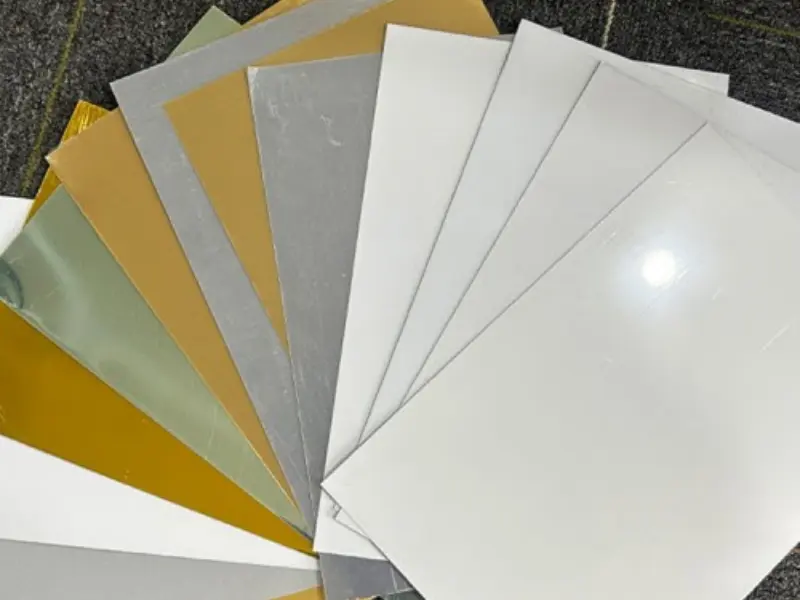
The word “standard” refers to three things:
- Standard coating — white polyester base coat, gloss or matte, applied at the factory
- Standard sizes — common dimensions that most heat press equipment and print templates are built around
- Standard alloy and thickness — consistent base material that behaves the same way every time
Most print businesses start with standard sheets. Custom sizes and special coatings come later once volume grows.
Standard Sheet Sizes — The Full Reference Table
These are the sizes most suppliers stock without a minimum order requirement. They match common frame sizes, heat press platens, and design templates used in the industry.
| Size (mm) | Size (inches) | Common Name | Typical Use |
|---|---|---|---|
| 102 × 152 | 4 × 6 | 4R / Photo size | Photo gifts, postcards, small prints |
| 127 × 178 | 5 × 7 | 5R | Portrait prints, greeting cards |
| 203 × 254 | 8 × 10 | 8R | Award plaques, portrait panels |
| 210 × 297 | A4 | A4 | Office signs, menu boards, wall art |
| 297 × 420 | A3 | A3 | Large prints, retail displays |
| 200 × 200 | — | Square tile | Wall tile sets, decorative panels |
| 100 × 100 | — | Mini tile | Fridge magnets, coasters, keyrings |
| 300 × 150 | 12 × 6 | License plate | Custom vehicle plates, novelty plates |
| 150 × 200 | 6 × 8 | Small plaque | Name plates, desk signs |
| 300 × 200 | 12 × 8 | Medium panel | Awards, wall signs, display boards |
| 400 × 300 | 16 × 12 | Large panel | Retail signage, photo enlargements |
| 600 × 400 | 24 × 16 | XL panel | Trade show graphics, large wall art |
Most print shops keep 4×6, A4, A3, and 8×10 as their core stock. Everything else is ordered as needed.
Alloy Grade — What the Base Metal Is

Why Alloy Matters for Sublimation
The alloy affects surface smoothness, flatness, and how well the coating bonds. A rough or uneven base produces streaky prints even with a perfect coating.
| Alloy | Purity / Key Element | Surface Quality | Flatness | Cost | Best For |
|---|---|---|---|---|---|
| 1060 | ≥99.6% Al | Excellent | Good | Lowest | Economy blanks, high-volume POD |
| 1100 | ≥99.0% Al | Excellent | Good | Low | Standard sublimation sheets — most common |
| 3003 | Mn added | Good | Very Good | Medium | Stiffer panels, larger formats |
| 5005 | Mg added | Excellent | Very Good | Medium | Premium anodized-look clear coat panels |
| 5052 | Mg + Cr | Good | Excellent | Higher | Outdoor sublimation signs, heavy use |
1100 — The Industry Default
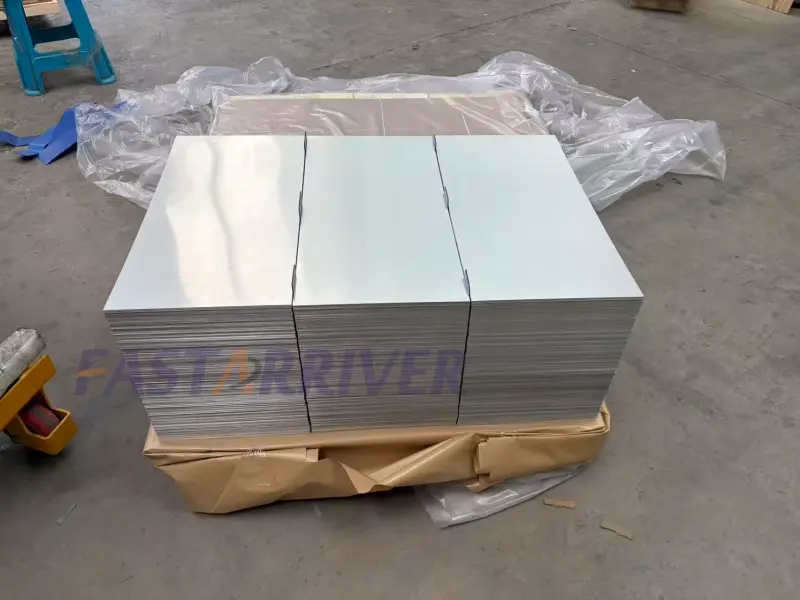
Almost every standard sublimation sheet on the market uses 1100 aluminum. It is pure enough to give a smooth, even surface. It cuts cleanly without burring the edges. The coating bonds well because the surface has no heavy oxide contamination from alloying elements.
3003 — When You Need Stiffer Panels
Panels over 400 mm wide can flex noticeably if made from 1100 at 0.5 mm or 0.6 mm. 3003 adds about 20% more strength. It keeps large panels flat during printing and after hanging. The surface quality is slightly lower than 1100 but still fully compatible with standard sublimation coating.
Temper Codes for Sublimation Sheet
| Temper | Condition | Hardness | Effect on Printing |
|---|---|---|---|
| O | Fully annealed | Softest | Slight risk of warping under heat press |
| H12 | Quarter-hard | Low | Acceptable for thin sheets |
| H14 | Half-hard | Medium | Standard — best flatness for heat press use |
| H16 | Three-quarter hard | Medium-High | Stiffer; less common for sublimation |
| H18 | Full-hard | Hardest | Very flat; harder to cut cleanly |
H14 is the standard temper for sublimation aluminum sheets. It gives the best combination of flatness, cut quality, and resistance to heat-press warping. Avoid O temper for sublimation — soft sheets can bow under the heat press platen, leaving uneven pressure marks in the print.
Thickness Options — Numbers That Matter
| Thickness | Weight (kg/m²) | Rigidity | Heat Press Behavior | Recommended Use |
|---|---|---|---|---|
| 0.3 mm | 0.81 | Very low | Warps easily | Avoid for standard printing |
| 0.45 mm | 1.22 | Low | Needs firm support | Thin inserts, flexible signs |
| 0.5 mm | 1.35 | Low–Med | Standard; works well | Photo gifts, awards, tiles |
| 0.6 mm | 1.62 | Medium | Very stable | Best all-round for most print shops |
| 0.8 mm | 2.16 | Good | Stable; slight thermal lag | Wall panels, display boards |
| 1.0 mm | 2.70 | High | Needs longer press time | Signs, license plates, plaques |
| 1.2 mm | 3.24 | High | Needs longer press time | Outdoor signs, heavy-use panels |
| 1.5 mm | 4.05 | Very High | Needs longer press time | Architectural panels, structural signs |
The Sweet Spot
0.5 mm and 0.6 mm cover 80% of sublimation print applications. They are light, easy to handle, and work well on standard swing-arm and clamshell heat presses. Move to 1.0 mm or 1.2 mm only when the finished product needs to stand without a frame or backer.
Coating Types on Standard Sheets
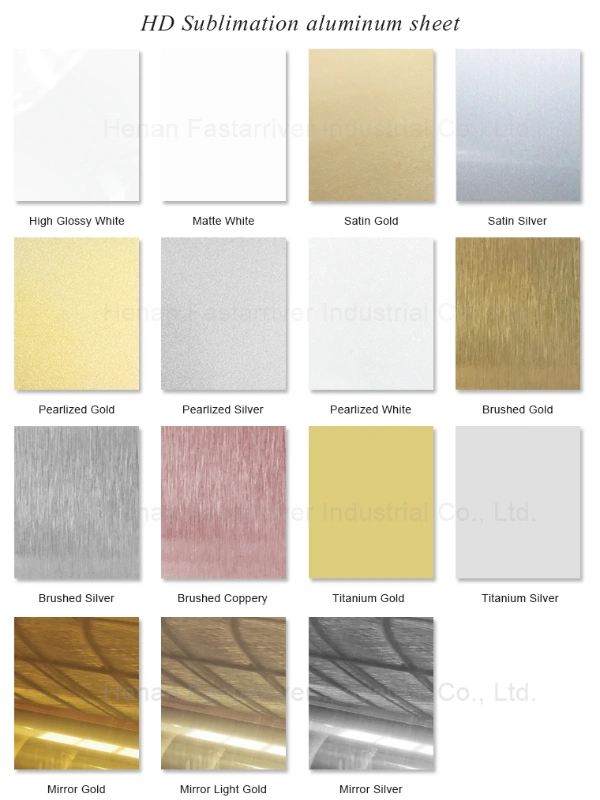
Standard sublimation sheets come with one of four coating options. The coating — not the aluminum — is what actually holds the ink.
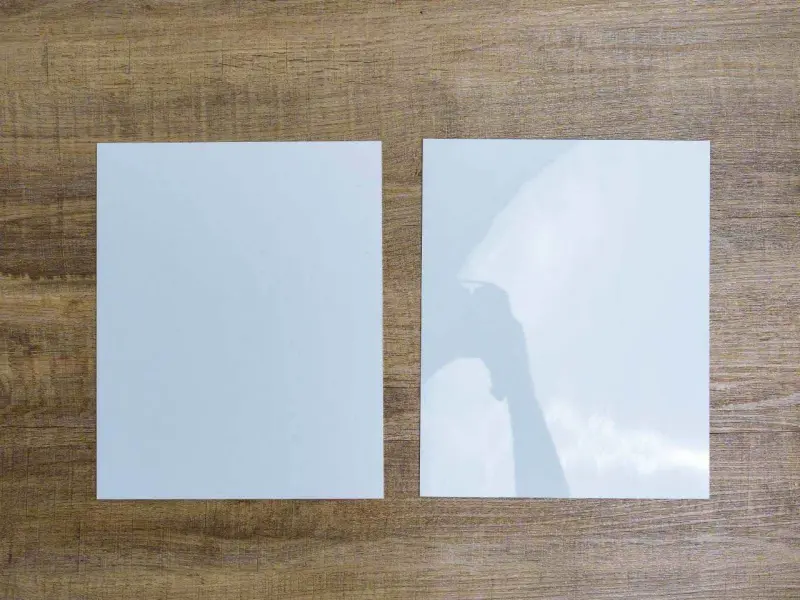
Gloss White Coating Bright white base. Colors appear vivid and saturated. Best color gamut of all options. This is the default for photo prints, award plaques, and retail display panels. Slight glare under direct light.
Matte White Coating Soft white base with a non-reflective surface. Colors are slightly less saturated than gloss but more readable under bright room lighting. Good for office signage, menus, and wall décor where glare is a problem.
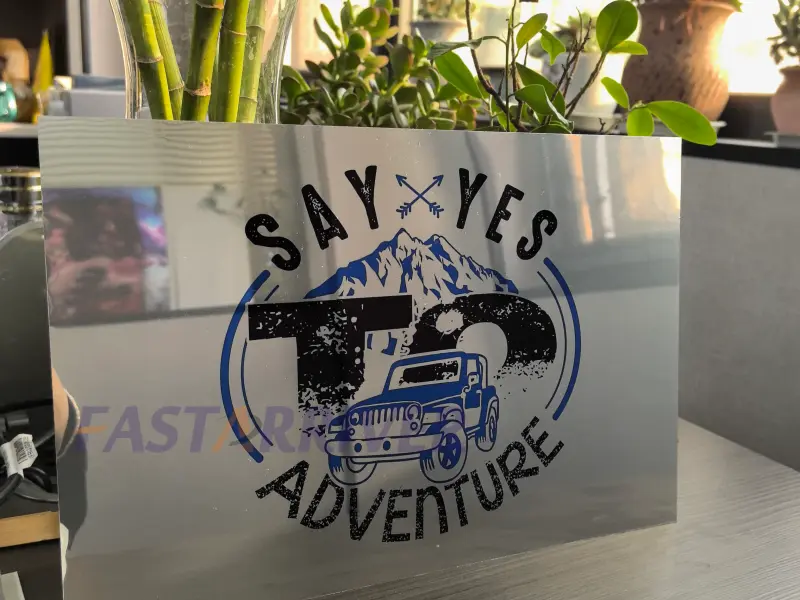
Gloss Clear Coating No white base — the aluminum surface shows through. After printing, the image appears to sit on a silver or brushed metal background. Very popular for modern wall art, premium photo gifts, and metallic-look prints. The coating is on a brushed or mirror-polished aluminum base.
Matte Clear Coating Same as gloss clear but with a soft, non-reflective finish. Gives a more understated, industrial look. Used for interior décor, gift products, and architectural signage.
Coating Comparison — Side by Side
| Coating | Background Color | Color Vibrancy | Glare | Best Print Style | Typical Market |
|---|---|---|---|---|---|
| Gloss white | Bright white | Highest | High | Photo-realistic, full color | Awards, photo gifts, retail |
| Matte white | Soft white | High | None | Text, flat graphics, portraits | Office signs, menus, décor |
| Gloss clear | Silver / brushed metal | Medium | High | High-contrast, bold graphics | Wall art, premium gifts |
| Matte clear | Soft metallic | Medium | None | Minimalist, architectural | Interior décor, modern signage |
Product Types — More Than a Flat Rectangle
Standard sublimation aluminum sheets come in several product forms. Each suits a different workflow or end product.
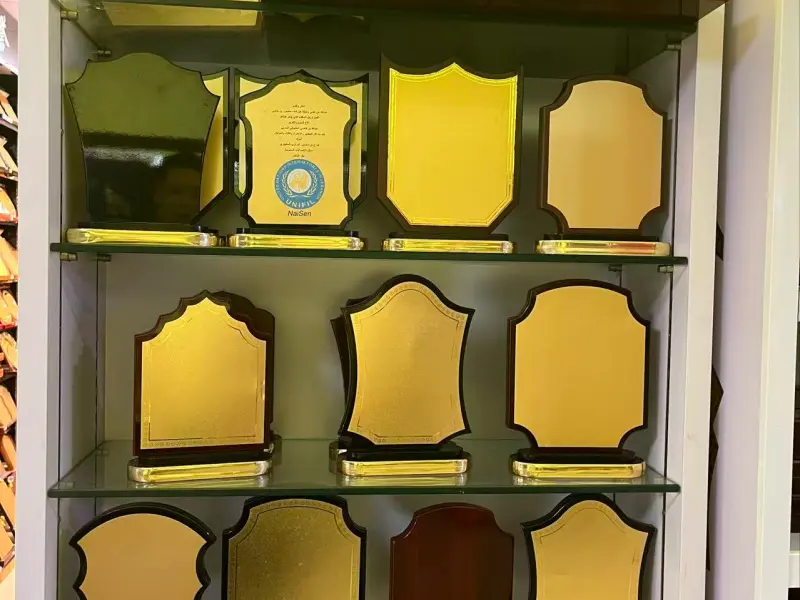
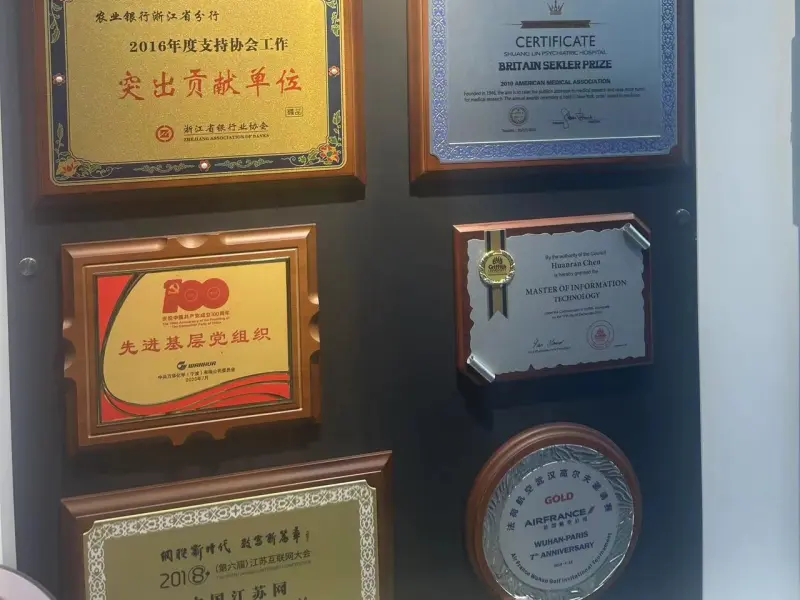
Flat Sheet — Standard Stock The most ordered format. Flat, pre-coated, packed with protective film. Available in all standard sizes. Suitable for heat press printing without any further preparation.
Pre-Punched Sheet Holes drilled or punched before coating. Common patterns include corner holes for plate mounting, top-center holes for hanging plaques, and keyhole slots for tool-free wall installation. Saves a fabrication step in the workshop.
Scored and Folded Blanks Sheet pre-scored so it folds into a standing frame or box shape after printing. Used for tent signs, desk displays, and counter cards. Print flat, then fold.
Shaped Blanks Pre-cut into non-rectangular shapes. Common shapes include:
- Circle / disc — coasters, wall medallions
- Oval — classic plaque shape, pet tags
- House shape — real estate and novelty signs
- Bone shape — pet ID tags and gifts
- Dog tag — military-style ID and fashion accessories
- Heart — Valentine and wedding gifts
- Arch top — traditional award plaque shape
Double-Sided Sheet Both faces coated. Print both sides for double-sided signs, window hangers, and two-sided information boards. Slightly heavier than single-sided but eliminates the need for back-to-back lamination.
Sheet with Adhesive Backing Peel-and-stick adhesive applied to the reverse. After printing, peel the liner and press onto any clean flat surface. Used for wall graphics, vehicle decals, and product labeling.
Standard Sheet Product Type Comparison
| Product Form | Extra Prep Needed | Print Both Sides? | Shape Options | Best Application |
|---|---|---|---|---|
| Flat sheet | None | No (single coat) | Rectangle only | Photo prints, awards, signs |
| Pre-punched | None | No | Rectangle | Hanging plaques, license plates |
| Scored/folded | Fold after print | No | Rectangle | Desk signs, tent cards |
| Shaped blank | None | No | Many shapes | Gifts, tags, novelty items |
| Double-sided | None | Yes | Rectangle | Window signs, two-sided boards |
| Adhesive-backed | Peel liner | No | Rectangle | Wall graphics, decals |
Where Standard Sublimation Sheets Are Used
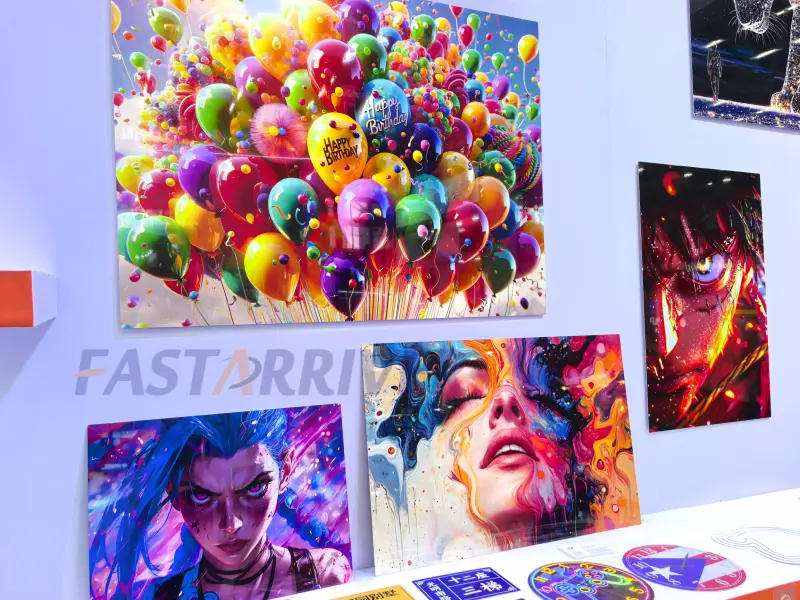
Photo & Gift Market
- Custom photo panels for home and office
- Personalized award plaques and trophies
- Wedding and anniversary gifts
- Pet memorial and ID panels
- Holiday gifts and seasonal promotions
Business Signage
- Office door and desk name plates
- Meeting room and directional signs
- Retail price displays and shelf talkers
- Menu boards for cafés and restaurants
- Hotel room number and information plates
Promotional & Events
- Trade show display panels
- Event backdrop graphics
- Branded gifts and corporate merchandise
- License plate novelties and custom plates
- Sports team awards and recognition boards
Education & Institutional
- School award plaques and certificates
- Campus wayfinding and room signs
- Library and archive labeling
- Hospital room identification plates
- Recognition boards and donor walls
Standard vs. Custom — Which to Order
| Factor | Standard Sheet | Custom Order |
|---|---|---|
| Size | Fixed standard dimensions | Any size within mill capability |
| Min. order quantity | 1 sheet to full box | Usually 500–1,000 pcs minimum |
| Lead time | In stock — ships same day | 10–20 days production |
| Price per sheet | Higher unit price | Lower for large volumes |
| Coating options | Gloss/matte white, clear | All options including nano, specialty |
| Shape | Rectangle only (standard) | Any shape available |
| Edge finish | Sheared, slight burr | Deburred, CNC-clean edge |
| Tolerance | ±1.0 mm | ±0.3–0.5 mm |
Start with standard sheets for testing and low-volume work. Switch to custom orders when monthly volume exceeds 500–1,000 pieces of the same spec.
Heat Press Settings for Standard Sheets
Getting the press settings right is as important as choosing the right sheet. Standard polyester sublimation coating on 1100-H14 aluminum performs within these ranges.
| Sheet Thickness | Temperature | Time | Pressure | Notes |
|---|---|---|---|---|
| 0.45 – 0.5 mm | 180–190°C | 45–60 sec | Medium | Use silicone pad for even pressure |
| 0.6 mm | 185–195°C | 55–70 sec | Medium | Most forgiving thickness |
| 0.8 mm | 190–200°C | 65–80 sec | Medium-Firm | Preheat press longer |
| 1.0 mm | 195–205°C | 80–100 sec | Firm | Add 10–15 sec for cold start |
| 1.2 – 1.5 mm | 200–210°C | 100–120 sec | Firm | Use upper platen preheat if available |
Always peel the transfer paper while the sheet is still hot. Cold peeling causes ghost images as residual ink re-deposits on the coating surface.
Frequently Asked Questions
What does “standard” mean for sublimation aluminum sheets?
Standard Size Standard sizes match common print templates and heat press platen sizes — 4×6 inch, A4, A3, 8×10, and similar. These sizes are stocked by most suppliers without a minimum order.
Standard Coating Standard coating means a white polyester base coat — either gloss or matte — applied at the factory. It is the most common coating for sublimation printing worldwide.
Standard Alloy and Temper Most standard sheets use 1100-H14 aluminum. This combination gives consistent flatness, good surface quality, and clean cut edges.
Which coating is best — gloss or matte white?
Gloss for Photos and Full Color Gloss white gives the highest color saturation and sharpest photo detail. It is the right choice for photo prints, personalized gifts, and any design where color accuracy matters.
Matte for Signage and Text Matte white reduces glare and makes text easier to read under direct lighting. Use it for office signs, menu boards, and display panels in brightly lit spaces.
What thickness should a beginner start with?
Start with 0.6 mm It is the most forgiving thickness for heat press printing. It stays flat under pressure, does not warp after printing, and is light enough to handle easily. Most standard heat press settings work well with 0.6 mm without adjustment.
Move Up When Needed Switch to 1.0 mm or 1.2 mm when customers ask for panels that need to hang without a frame, or for outdoor sign applications.
Can standard sublimation sheets be used outdoors?
Short-Term — Yes Standard polyester coating handles occasional outdoor exposure for short-term promotions, event signage, and seasonal displays. Expect color fading within 6–18 months in direct sun.
Long-Term — Use Nano Coating For permanent outdoor signs, specify nano ceramic coated sheets instead of standard polyester. Nano coating resists UV degradation for 3–5 years. It is not a standard product — it requires a custom or specialty order from the supplier.
How do I avoid ghost images and color streaks?
Ghost Images Caused by paper moving during or after pressing. Fix the transfer paper with heat-resistant tape on all four edges before pressing. Peel the paper immediately while hot — do not let it cool on the surface.
Color Streaks Usually caused by uneven platen pressure. Check that the platen is flat and the pressure is even across the full sheet. A silicone foam pad under the sheet helps distribute pressure on thin sheets.
Dull Colors Temperature too low or time too short. Increase temperature by 5°C or add 10 seconds to press time. Also check that the protective film has been removed from the coated surface before printing.
What is the shelf life of unprinted sublimation aluminum sheets?
Storage Life Unprinted sheets with the protective film intact can be stored for 12–24 months without degradation in a clean, dry, indoor environment. Keep them flat — stacking heavy objects on top can cause permanent bowing.
What Damages Coating Moisture, direct sunlight, and dust are the main risks. Store sheets in their original packaging, away from windows, in a room with stable temperature and humidity. Do not store near solvents or strong chemicals — fumes can affect coating adhesion.