
Sublimation Aluminum Panels for Interior Design
What Are Sublimation Aluminum Panels?
Sublimation aluminum panels are thin metal sheets with a special polyester coating. When you apply heat and pressure, dye sublimation ink turns into gas and bonds with that coating.
The image becomes part of the surface. It does not sit on top like a sticker. It does not peel off.
For These panels start as raw aluminum alloy. A factory applies the coating, bakes it, and adds a protective film.
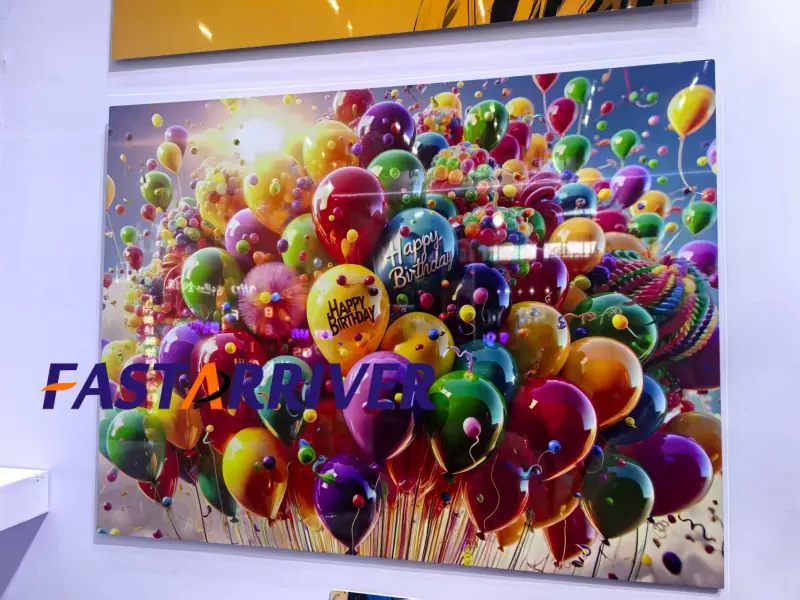
The result is a blank canvas that accepts high-resolution photos, graphics, and artwork. Interior designers use them because the final piece looks modern, lasts for years, and weighs far less than framed glass or canvas.
Sublimation Aluminum Panels for Interior Design
Why Designers Choose Metal Over Canvas
Canvas has texture. Wood has grain. Glass has glare. Sublimation aluminum panels offer something different. The surface is smooth, rigid, and reflective in a controlled way. Colors pop. Blacks look deep. Whites stay bright.
Metal panels do not warp in humidity. They do not attract dust like fabric. A quick wipe restores the original look. For commercial spaces, they meet fire safety codes better than synthetic materials. For homes, they add a contemporary edge that fits minimalist, industrial, and luxury styles alike.
Alloy Options: The Metal Behind the Print
The alloy decides how the panel behaves during printing and after installation. Not all aluminum is the same.
1000 Series: Pure Aluminum for Clean Images
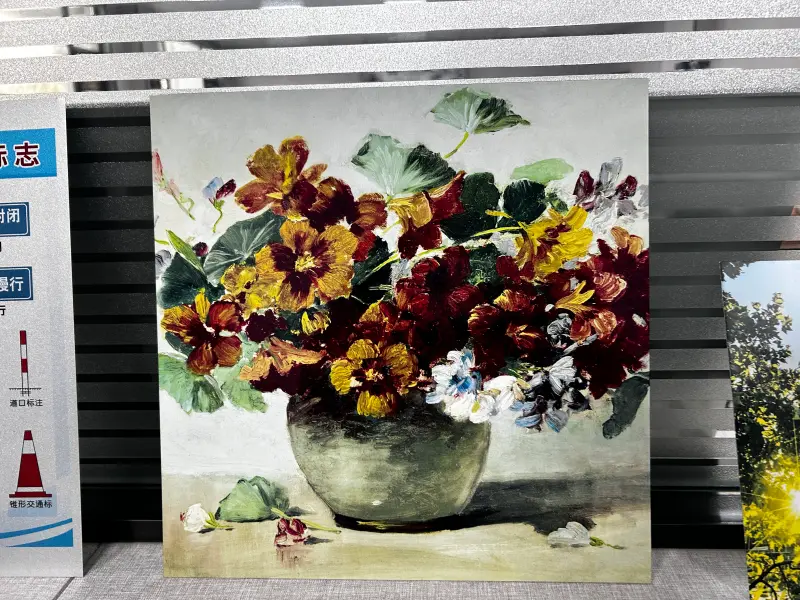
Alloys 1050, 1060, and 1100 contain 99% or more pure aluminum. They are soft, lightweight, and affordable. The surface is very smooth. This makes them ideal for photo panels, fine art reproductions, and decorative wall pieces.
The downside is low strength. Thin panels in this series can flex if they are not mounted on a frame or backing. They also heat up quickly in the press. You need to watch warping on large sheets.
3000 Series: Stronger Panels for Large Walls
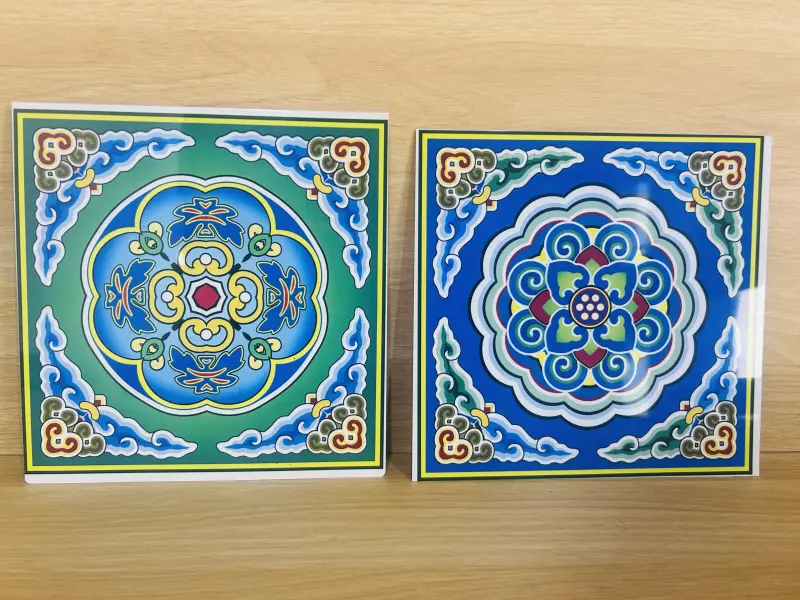
Alloy 3003 adds manganese. It is about 20% stronger than 1000 series metal. It resists warping under heat. It stays flat on big walls. This is the most common choice for interior design projects that use panels larger than 24 by 36 inches.
The surface is slightly less pure than 1050 or 1060. With a quality coating, the difference is invisible to the eye. The extra strength is worth the small price jump for oversized installations.
5000 Series: Premium Strength for High-Traffic Spaces
Alloy 5052 contains magnesium. It is the strongest of the three groups. It handles bumps, scratches, and temperature shifts better than pure aluminum. Designers specify this for hotel lobbies, elevator interiors, and restaurant walls where people brush against the surface daily.
The trade-off is cost. It also needs more pressure to cut or drill. For residential art that hangs still, 5052 is overkill. For commercial interiors, it pays for itself in durability.
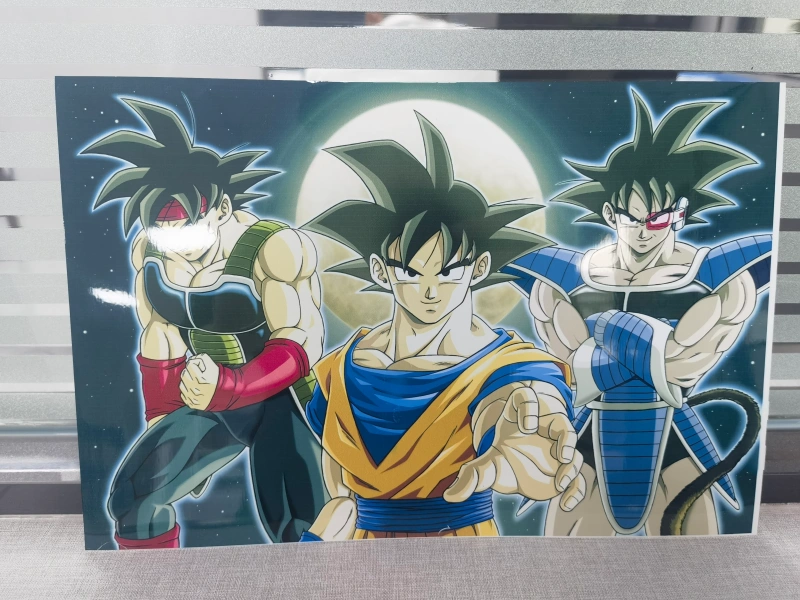
Sublimation Aluminum Panels for Interior Design
| Alloy Series | Common Grades | Purity | Strength | Best Interior Use |
|---|---|---|---|---|
| 1000 | 1050, 1060, 1100 | 99%+ | Low | Photo panels, home decor, small art pieces |
| 3000 | 3003 | 96.75%+ | Medium | Large wall art, gallery panels, room dividers |
| 5000 | 5052 | 95%+ | High | Hotels, elevators, public spaces, high-traffic walls |
Temper States: How Hard Should Your Panel Be?
Temper tells you how the metal was treated after rolling. This affects flatness, stiffness, and how the panel handles the heat press.
| Temper | Hardness | Heat Press Behavior | Best For |
|---|---|---|---|
| O (Annealed) | Very soft | Warps easily | Avoid for sublimation |
| H14 | Half hard | Acceptable for small panels | Light-duty indoor signs |
| H24 | Half hard, stabilized | Stays flat at 200°C | Standard wall art and photo panels |
| H18 | Fully hard | Very stiff, may crack if bent | Flat panels only, no forming |
Most sublimation aluminum panels for interior design ship in H24 temper. The stabilization process removes internal stress. When you press the panel at 190 to 200 degrees Celsius, it stays flat. O temper is too soft. H18 is too brittle for any post-print bending.
Thickness Guide: From Thin Accents to Statement Pieces
Thickness changes the feel, weight, and rigidity of the final piece. Here is how the numbers break down for interior work.
| Thickness (mm) | Thickness (inch) | Weight Class | Best Interior Application |
|---|---|---|---|
| 0.22 | 0.009 | Ultra light | Small magnets, tags, bookmarks |
| 0.35 | 0.014 | Light | Desk nameplates, small signs |
| 0.45 | 0.018 | Standard | Photo panels, gallery prints |
| 0.55 | 0.022 | Medium | Wall art without backing |
| 0.65 | 0.026 | Medium-heavy | Large standalone panels |
| 0.80 | 0.031 | Heavy | Feature walls, room dividers |
| 1.00 | 0.039 | Very heavy | Structural art, door panels |
| 1.15 | 0.045 | Premium | Oversized commercial murals |
For most interior design projects, 0.45 mm to 0.65 mm hits the sweet spot. The panel feels solid in the hand. It does not bend when hung. It is light enough to mount with simple hardware.
Surface Finishes That Change the Room
The coating finish is not just about looks. It changes how light interacts with the image. It changes where the piece works best.
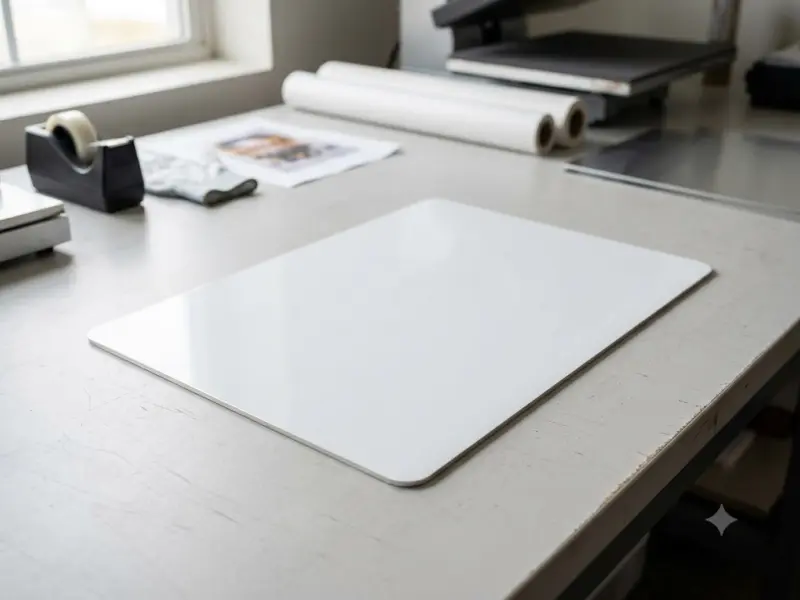
Glossy White
This is the default choice. The surface reflects light sharply. Colors look saturated and vivid. It works best in rooms with controlled lighting. Avoid placing glossy panels directly opposite windows. The reflection can overpower the image.
Matte White
No shine. No glare. The image looks soft and natural. Matte panels work in bright offices, sunrooms, and spaces with overhead LED lighting. They also hide fingerprints better during installation.

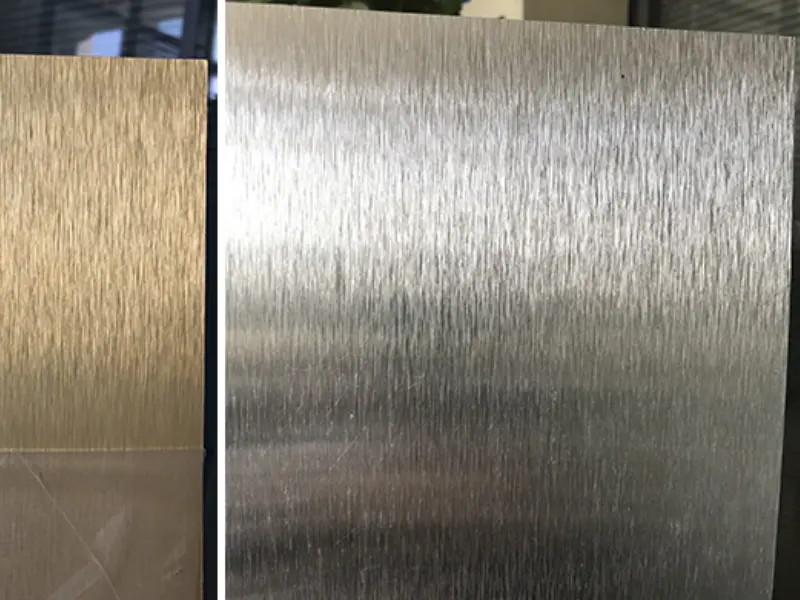
Brushed Silver
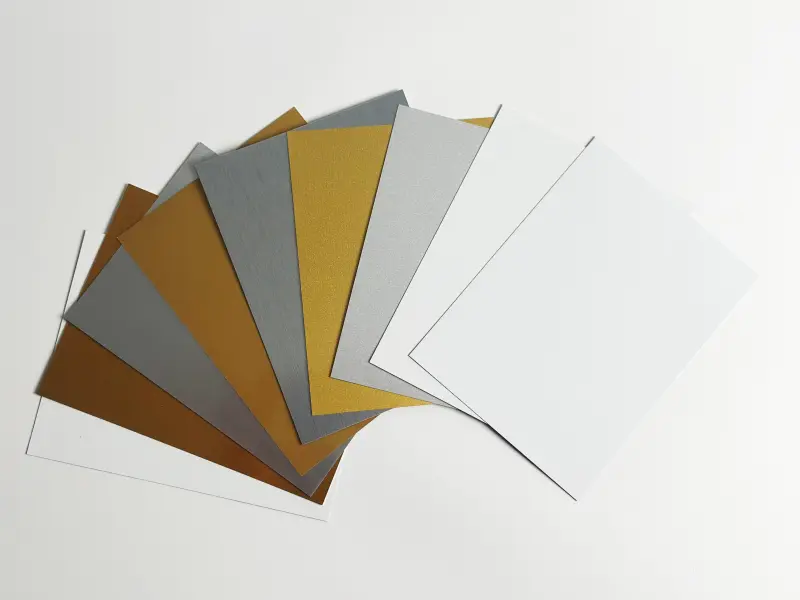
The aluminum base shows through in the unprinted areas. The image sits on a metallic background. This finish is popular for modern interiors, tech offices, and industrial-style homes. It pairs well with black-and-white photography and minimalist graphics.
Brushed Gold
Same concept as brushed silver but with a warm golden tone. It adds luxury without being flashy. Designers use it for boutique hotels, upscale retail spaces, and statement entryways.
Mirror Finish
The base metal is highly reflective. A clear coating protects the surface while allowing the metal to shine through unprinted areas. The result is a piece that catches light and shifts as you walk past it. It works for feature walls and decorative ceilings.
Pearl and Satin Effects
These finishes add a subtle shimmer. The image looks alive under changing light. Pearl white is popular for wedding photography displays and feminine retail interiors. Satin silver suits corporate spaces that want texture without bold color.
Size Formats for Every Wall
Sublimation aluminum panels come in standard sizes. Custom cutting is also common.
| Size (mm) | Size (inches) | Typical Use |
|---|---|---|
| 150 × 200 | 6 × 8 | Desk frames, small gifts |
| 200 × 300 | 8 × 12 | Shelf decor, small wall clusters |
| 300 × 400 | 12 × 16 | Medium wall art, bathroom pieces |
| 300 × 600 | 12 × 24 | Vertical panels, narrow spaces |
| 400 × 600 | 16 × 24 | Standard photo print size |
| 600 × 900 | 24 × 36 | Large statement pieces |
| 600 × 1200 | 24 × 48 | Oversized wall art |
| 1200 × 2400 | 48 × 96 | Feature walls, custom murals |
The 300 × 400 mm and 400 × 600 mm sizes are the most popular for residential interior design. They fit standard photo aspect ratios. They are easy to ship. For they look proportional on most walls.
| Finish | Base Color | Light Behavior | Ideal Room Style |
|---|---|---|---|
| Glossy white | White | High reflection, vivid color | Galleries, controlled lighting |
| Matte white | White | Diffused, soft | Offices, bright sunrooms |
| Brushed silver | Metallic silver | Directional sheen | Industrial, modern, tech |
| Brushed gold | Metallic gold | Warm highlights | Luxury, boutique, classic |
| Mirror | Reflective silver | Full reflection | Feature walls, ceilings |
| Pearl white | Shimmer white | Shifting iridescence | Romantic, retail, hospitality |

Sublimation Panels vs. Traditional Wall Art
How do these metal pieces compare to canvas, acrylic, and framed paper?
| Factor | Sublimation Aluminum Panel | Canvas Print | Acrylic Face Mount | Framed Paper Print |
|---|---|---|---|---|
| Weight | Light | Medium | Heavy | Medium |
| Moisture resistance | Excellent | Poor | Good | Poor |
| Color vibrancy | Very high | Medium | Very high | Medium |
| Surface reflection | Controlled by finish | Matte or varnish | High gloss | Glass glare |
| Fire safety | Non-combustible | Combustible | Combustible | Combustible |
| Cleaning | Wipe with damp cloth | Vacuum, no liquid | Special cleaner | Glass cleaner only |
| Durability | 20+ years indoors | 10–15 years | 15+ years | 5–10 years |
| Modern look | Excellent | Casual | Excellent | Traditional |
For designers who want durability plus a modern edge, sublimation aluminum panels win. They outlast canvas in humid spaces. They weigh less than acrylic. For they avoid the glass glare of traditional frames.
Where Interior Designers Use These Panels
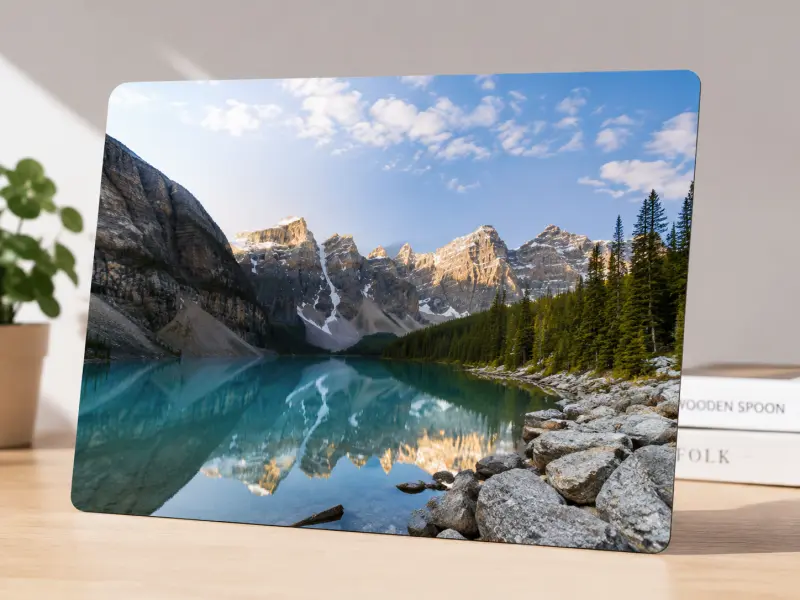
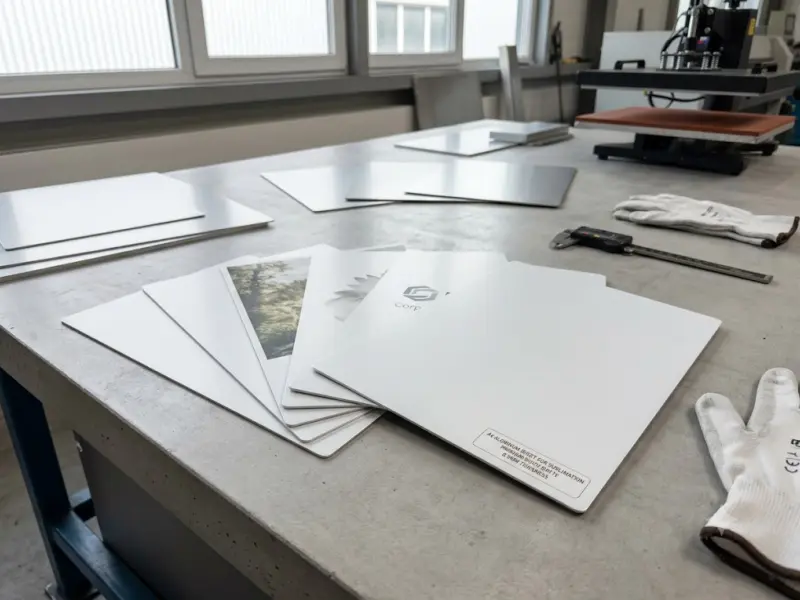
Sublimation aluminum panels fit more spaces than you might expect. Here are the top interior applications:
- Residential wall art – family photos, landscape prints, abstract pieces in living rooms and bedrooms
- Bathroom decor – moisture-proof images that survive steam and splashes
- Kitchen backsplashes – custom graphics behind stoves and sinks
- Hotel room art – durable, easy-to-clean pieces that withstand guest turnover
- Elevator interiors – scratch-resistant panels that handle daily contact
- Office branding walls – company logos, mission statements, and city photography
- Retail displays – product images and brand stories that pop under store lighting
- Restaurant interiors – menu boards, cultural art, and custom murals
- Healthcare waiting areas – calming nature scenes that sanitize easily
- Salon and spa decor – fashion imagery that resists chemical fumes and humidity
- Reception desk backgrounds – first-impression art that looks expensive but costs less
- Ceiling accents – reflective or printed panels that add dimension overhead
Printing Specs: Time, Temp, and Pressure
Getting the transfer right matters. Here are the standard settings for most sublimation aluminum panels used in interior design.
| Parameter | Standard Setting | Acceptable Range |
|---|---|---|
| Temperature | 200°C | 190–205°C |
| Time | 75 seconds | 60–90 seconds |
| Pressure | Medium-high | Medium to high |
| Paper | Sublimation paper for hard substrates | Resin-coated or standard |
Always test a small piece first. Glossy finishes may need 5 degrees less. Thick panels may need 10 seconds more. If the image looks blurry or the colors shift, check your heat press calibration.
Installation Tips for Interior Spaces
Mounting these panels is simple. A few tips help you get a professional result.
- Use a level. Even a small tilt draws the eye on a rigid metal panel.
- For panels under 0.5 mm, add a backing board or float mount. Thin metal can show wall imperfections.
- In bathrooms, seal the edges with silicone if the panel sits near a shower. The surface is waterproof, but the cut edge is raw aluminum.
- For brushed or mirror finishes, wear cotton gloves during install. Fingerprints show up before the protective film comes off.
- Use standoff mounts for a modern floating look. The shadow behind the panel adds depth.
- In high-traffic areas, mount at least 1.5 meters from the floor. This reduces the chance of accidental bumps.
Quality Checks Before You Buy
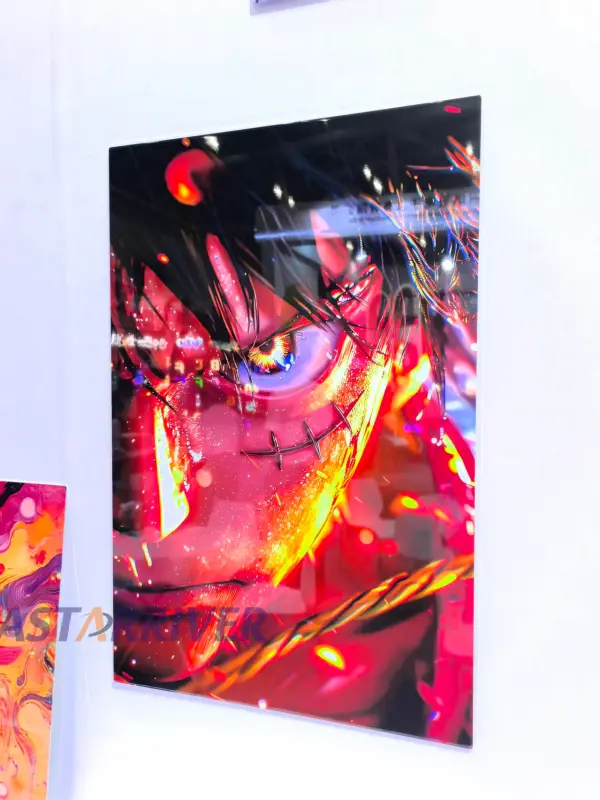
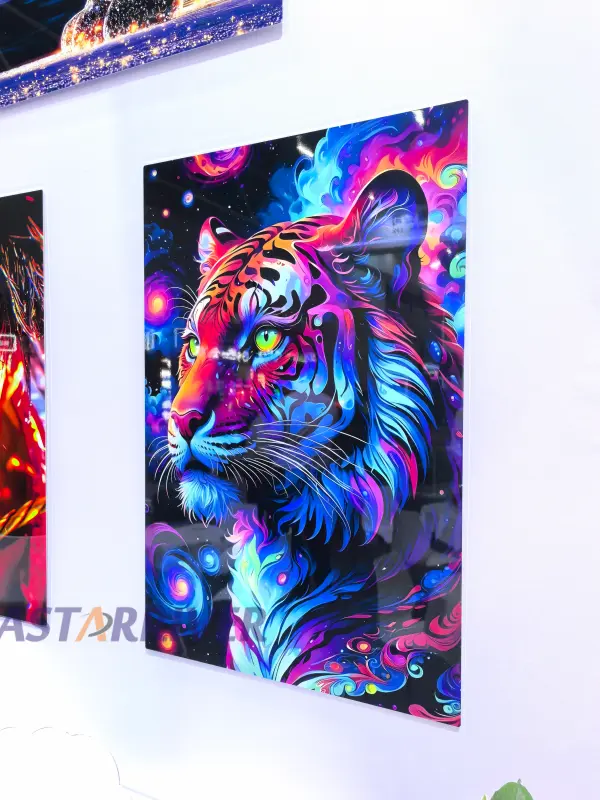
Not all panels are equal. Here is what to look for when sourcing blanks for interior projects.
| Check | Good Sign | Red Flag |
|---|---|---|
| Flatness | Sits flat on a table with no rocking | Rocks or bows in the center |
| Coating uniformity | Even color across the surface | Streaks, bubbles, or thin spots |
| Edge quality | Clean cut, no burrs | Rough edges, sharp slivers |
| Protective film | Smooth, no wrinkles | Torn, dirty, or missing film |
| Alloy certificate | Mill test certificate provided | Vague claims, no paperwork |
Ask for a sample before placing a large order. Press a solid black image and check for banding. Run a tape test on the printed surface. If the image lifts, the coating is substandard.
Frequently Asked Questions
What alloy works best for wall art panels?

For most interior wall art, 1050 or 1060 in H24 temper is ideal. The surface is smooth and the cost is low. For pieces over 24 by 36 inches, switch to 3003 H24 to prevent warping during the heat press.
How thick should a panel be for a gallery wall?
0.45 mm to 0.55 mm is the standard range. It is rigid enough to hang flat but light enough to mount with simple picture hooks. If you want a standoff mount that floats the panel off the wall, 0.65 mm gives a more substantial edge profile.
Can I use these panels in bathrooms or kitchens?
Yes. The polyester coating and aluminum base are both moisture-resistant. Unlike canvas or paper, these panels will not mold, warp, or stain in humid conditions. Just wipe them clean with a damp cloth.
Glossy or matte: which finish shows more detail?
Glossy white shows the finest detail and the deepest blacks. The reflective surface adds depth to the image. Matte white shows slightly less contrast but eliminates glare. For spaces with bright windows or overhead lights, matte is the safer choice.
Will the image fade over time indoors?
Not quickly. A quality sublimation transfer on a proper aluminum panel lasts 20 years or more indoors. The dye is embedded in the coating, not on top of it. Avoid direct southern exposure through unfiltered windows if you want maximum color life.
Can I drill holes through sublimation panels?
Yes, but drill before you print. The vibration and heat from drilling can damage the coating near the hole. Use a metal drill bit and go slowly. For mounting, many designers prefer adhesive standoffs or channel frames to avoid drilling altogether.
How do I clean printed aluminum wall art?
Use a soft, damp microfiber cloth. For greasy marks in kitchens, add a drop of mild dish soap. Do not use abrasive pads or ammonia-based cleaners. They can dull the coating over time.
What is the largest panel size available?
Standard stock sizes top out at 1200 × 2400 mm (48 by 96 inches). Larger custom sizes are possible but require special handling and freight shipping. For most interior design projects, 600 by 1200 mm is the practical maximum for easy installation.
Are these panels fire-safe for commercial spaces?
Yes. Aluminum does not burn. The polyester coating is the only combustible layer, and it is a thin film. Most sublimation aluminum panels meet commercial fire safety standards better than canvas, wood, or acrylic alternatives. Always check local codes for specific requirements.
How do I store blank panels before printing?
Keep them flat in a dry room. Stack them horizontally with cardboard between layers. Do not lean them against a wall for long periods. Thin panels can bow under their own weight. Leave the protective film on until the moment you print.
Leave a Reply
You must be logged in to post a comment.