
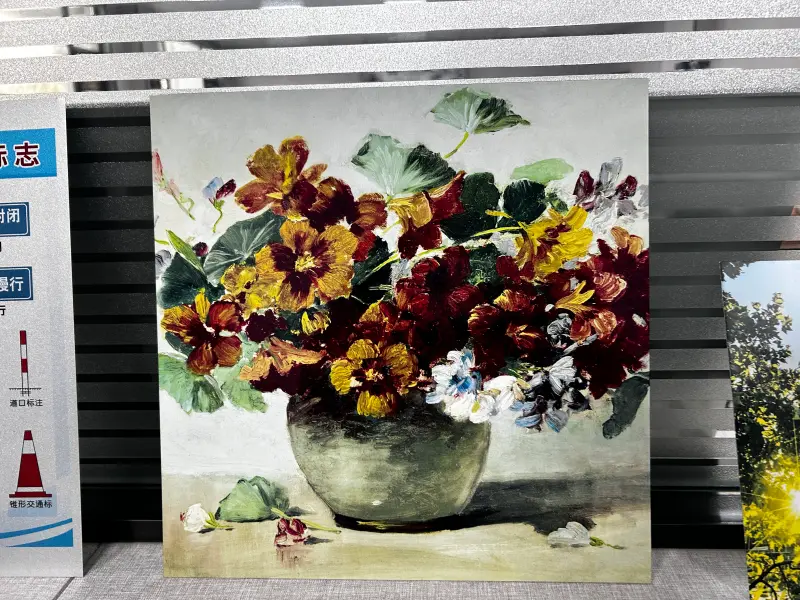
Sublimation Aluminum Sheet Applications
Printers and designers need a surface that holds color forever. Sublimation aluminum sheet gives them exactly that. The metal carries a special polyester coating.
When heat and pressure meet dye-sub ink, the gas seeps into that coating and locks in place. The result is a photo or graphic that will not peel, scratch, or wash away.
What Makes Sublimation Aluminum Different
Regular aluminum rejects ink. Dye sits on top and smears. Sublimation metal sheet solves this with a thin polymer skin baked onto the metal.
That skin opens its pores at high heat. Sublimation ink turns into gas and enters those pores. When the sheet cools, the pores close. The image is now part of the surface.
This process works on flat sheets, curved panels, and even pre-cut shapes. The key is the coating. Without it, you are just printing on metal that will not stick.
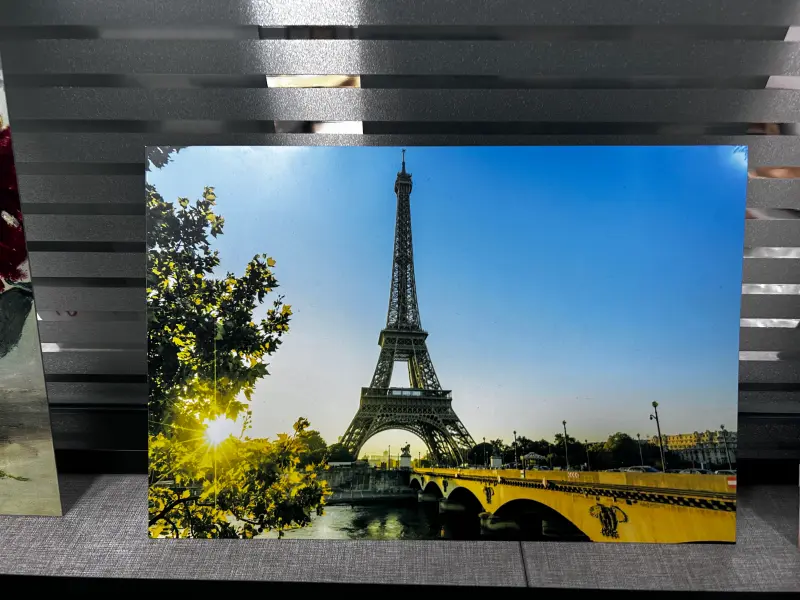
Alloy and Temper: The Metal Under the Coating
The coating hides the aluminum, but the base metal still matters. It controls flatness, weight, and how the panel handles temperature swings.
Common Alloys for Sublimation
| Alloy | Purity | Flatness | Cost Level | Best Use |
|---|---|---|---|---|
| 1050 | 99.5% | Very good | Low | Budget photo panels, tags |
| 1060 | 99.6% | Excellent | Low | High-end gloss prints |
| 1100 | 99.0% | Good | Low | General signage |
| 3003 | 98.6% | Good | Medium | Rigid outdoor signs |
| 5052 | 97% | Very good | Higher | Marine-grade displays |
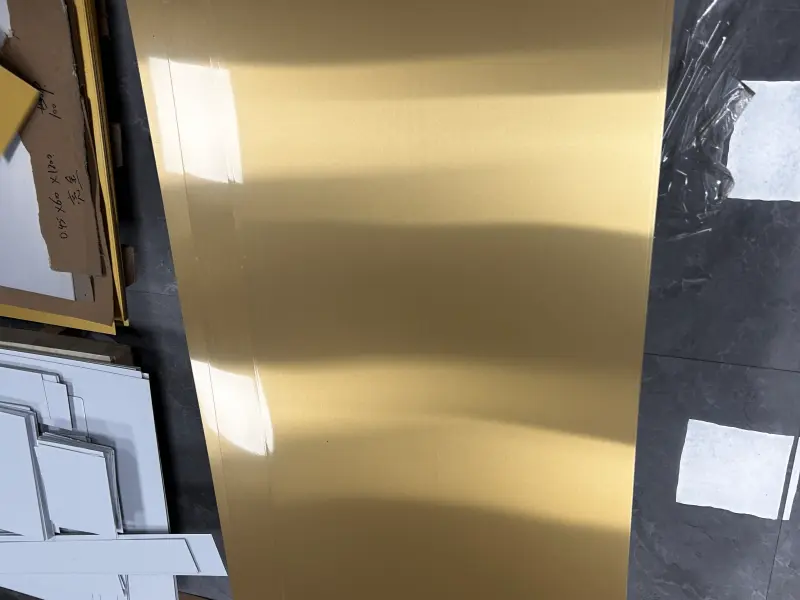
Most sublimation aluminum sheet suppliers stock 1050 or 1060. These pure alloys are soft and stay flat under heat presses. 3003 adds strength for large wall panels that must not flex. 5052 is rare in sublimation but useful if the final part lives near salt air.
Temper States Explained
| Temper | Hardness | Feel | Typical Use |
|---|---|---|---|
| O | Soft | Bends easily | Deep drawn mugs, curved panels |
| H14 | Half hard | Slight spring | Standard flat photo panels |
| H18 | Full hard | Rigid, stiff | Large wall signs, floor displays |
| H24 | Half hard, stabilized | Flat, stress-free | Precision-cut shapes |
For flat photo panels, H14 is the sweet spot. It is stiff enough to stay flat but soft enough to shear cleanly. H18 works better for jumbo panels that might warp in the sun.
Coating Types: The Surface That Accepts Ink
Not all sublimation ready aluminum wears the same skin. The coating changes the final look.
White Coatings
White is the most popular base. It makes colors pop.
| Coating Variant | Finish | Best For | Thickness Range |
|---|---|---|---|
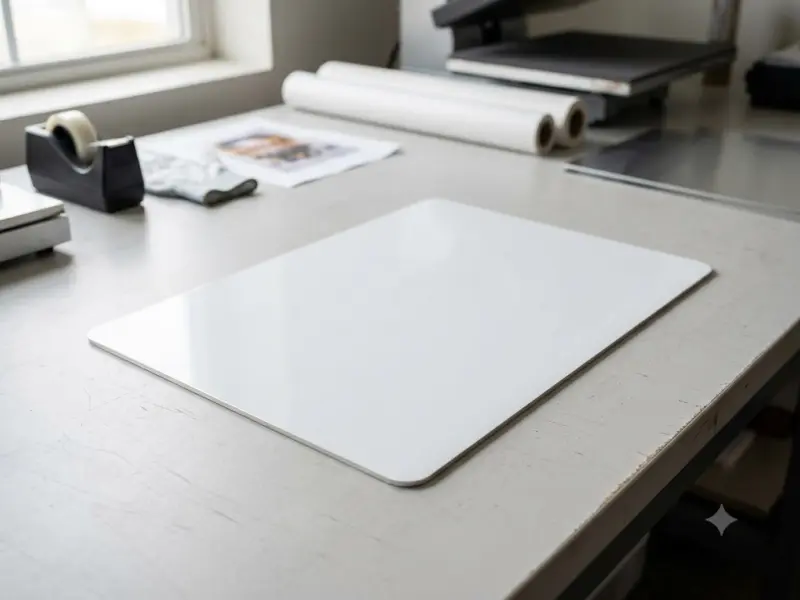
| High gloss white | Mirror-like shine | Photos, vibrant ads | 0.45 – 1.0 mm |
| Matte white | Flat, no glare | Art prints, museums | 0.45 – 1.0 mm |
| Semi-gloss white | Balanced sheen | General signage | 0.45 – 1.0 mm |
| Pearl white | Shimmer under light | Wedding photos, cosmetics | 0.5 – 0.8 mm |
Clear and Metallic Coatings
These let the metal show through the image.
| Coating Variant | Base Look | Print Effect | Typical Use |
|---|---|---|---|
| Clear over silver | Raw aluminum | Image looks metallic | Industrial labels |
| Brushed silver | Fine lines | Partial metal texture shows | Tech signage, automotive |
| Brushed gold | Gold lines | Luxury feel, metal visible | Awards, high-end retail |
| Mirror silver | Chrome reflection | Image floats on mirror | Modern art, displays |
| Mirror gold | Gold reflection | Rich, reflective signage | Trophies, corporate gifts |
Specialty Coatings
| Coating | Effect | Best For |
|---|---|---|
| Glitter white | Sparkle base | Party photos, novelty items |
| Satin silver | Soft metallic glow | Portrait studios |
| Frosted clear | Diffused metal | Backlit panels, light boxes |
| Night-glow | Phosphorescent | Exit signs, safety markers |
Thickness and Size Options
Thickness changes rigidity, weight, and heat-press behavior.
Thickness Guide
| Thickness | Weight (per m²) | Rigidity | Best Use |
|---|---|---|---|
| 0.45 mm | 1.2 kg | Flexible | Thin photo panels, luggage tags |
| 0.55 mm | 1.5 kg | Light duty | Small plaques, coasters |
| 0.65 mm | 1.8 kg | Standard | Wall art, desk frames |
| 0.8 mm | 2.2 kg | Rigid | Outdoor signs, table tops |
| 1.0 mm | 2.7 kg | Very rigid | Floor stands, heavy displays |
| 1.5 mm | 4.0 kg | Structural | Wall cladding, large murals |
Thin sheets heat faster. Thick sheets need longer press times but resist bending.
Standard Sheet and Panel Sizes
| Size (inch) | Size (mm) | Common Product |
|---|---|---|
| 4 x 6 | 102 x 152 | Photo gifts, tags |
| 5 x 7 | 127 x 178 | Desktop frames |
| 8 x 10 | 203 x 254 | Wall portraits |
| 11 x 14 | 279 x 356 | Gallery panels |
| 12 x 18 | 305 x 457 | Medium signs |
| 16 x 20 | 406 x 508 | Large art prints |
| 24 x 36 | 610 x 914 | Posters, menus |
| 48 x 96 | 1219 x 2438 | Wall cladding, murals |
Many sublimation aluminum sheet suppliers also sell pre-cut circles, ovals, and door-hanger shapes.
High Gloss White Photo Panels
These are the workhorses. A mirror-smooth white coating grabs every drop of color. Wedding photographers love them. The surface is so smooth that skin tones look real.
→ Standard thickness: 0.45 mm to 0.65 mm
→ Common sizes: 5×7, 8×10, 11×14, 16×20
→ Best press temp: 200°C for 60–90 seconds
→ Finish after print: glossy, no extra laminate needed
Matte White Fine Art Panels
Matte kills reflections. Museums and galleries prefer this look. Viewers see the image, not the lights in the room.
→ No glare under spotlights
→ Texture hides minor dust
→ Looks like paper but lasts like metal
→ Popular for black-and-white photography
Brushed Silver Sublimation Sheet
The image prints over fine metal lines. Any white in the file becomes silver. This creates a mixed-media look without cutting or layering.
→ Great for automotive art and tech themes
→ Metal lines add depth to logos
→ Thicker 0.8 mm stock feels premium
→ Often used for control panel overlays
Brushed Gold Sublimation Blanks
Gold lines replace white areas. The result feels expensive. Trophy shops and hotel signage teams order these often.
→ Matches brass fixtures in lobbies
→ Used for anniversary plaques
→ Looks good with black, red, and navy ink
→ 0.5 mm to 1.0 mm common
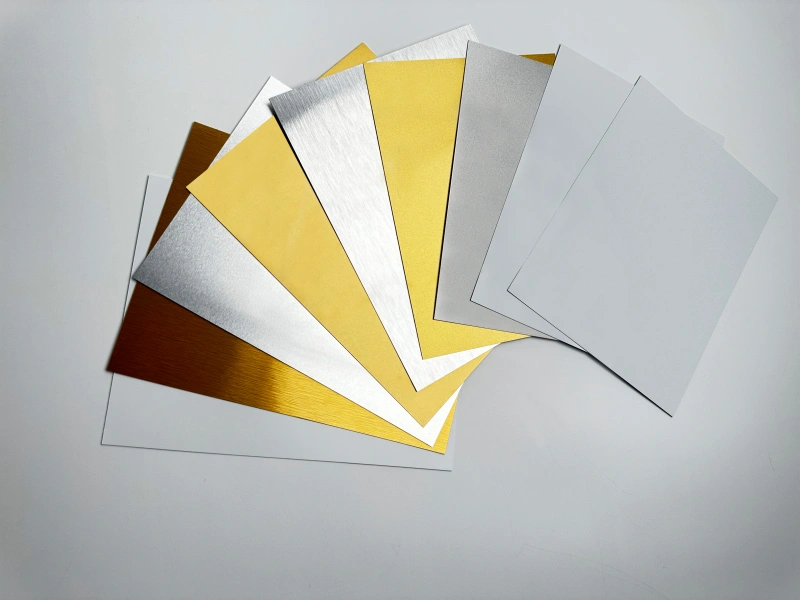
Mirror Sublimation Aluminum
The base is almost a mirror. The printed image sits on top of that reflection. Modern artists use this for layered effects.
→ 0.5 mm and 0.65 mm standard
→ Requires precise heat press to avoid ghosting
→ Stunning for abstract and portrait work
→ Fingerprints show easily; handle with gloves
Clear Sublimation Aluminum
The coating is transparent. The raw silver aluminum shows through any unprinted area. Industrial designers use this for labels and control panels.
→ White ink does not exist in dye-sub; use the metal as your white
→ Great for serial number plates
→ Thin 0.4 mm stock cuts easily
→ Often used for equipment faceplates
Product Types That Sell
Pearl and Glitter Blanks
These add sparkle under the image. Cosmetic brands and event photographers use them for standout pieces.
→ Pearl gives a soft shimmer
→ Glitter is bold and party-ready
→ Both need careful color management; sparkles shift hues
→ Best for smaller 4×6 and 5×7 products
Side-by-Side Coating Comparison
| Feature | Gloss White | Matte White | Brushed Silver | Mirror Silver | Clear |
|---|---|---|---|---|---|
| Color vibrancy | Highest | High | Medium | Medium | Low |
| Reflection | Low | None | Medium | High | Medium |
| Fingerprint show | Yes | No | Moderate | High | Moderate |
| Outdoor fade life | 3–5 years | 3–5 years | 5+ years | 5+ years | 5+ years |
| Best image type | Full color photos | Art, soft tones | Logos, tech art | Modern portraits | Industrial labels |
| Press temp tolerance | Wide | Wide | Narrow | Very narrow | Wide |
Where Sublimation Aluminum Sheets Work
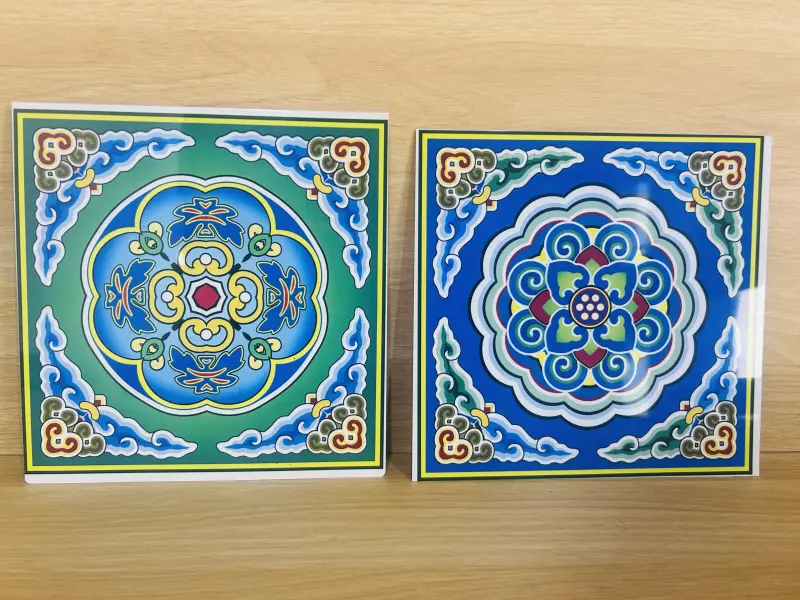
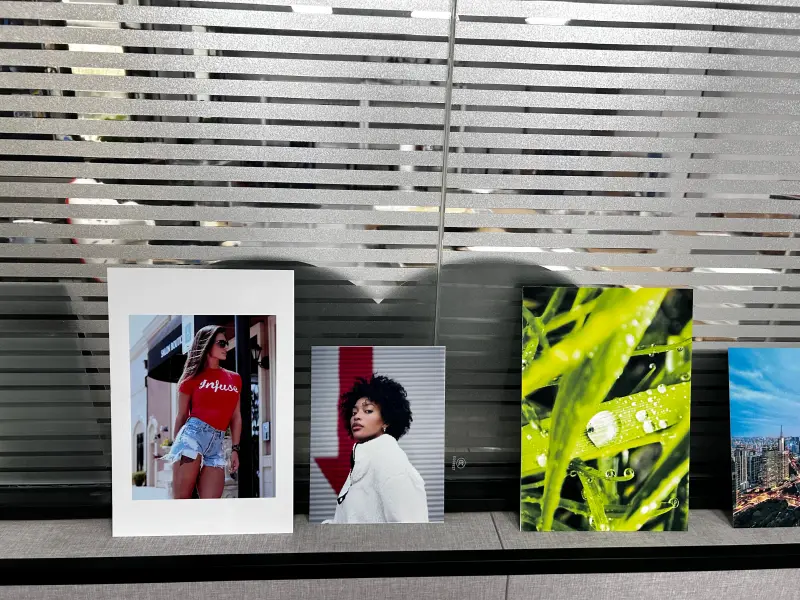
Photography and Fine Art
→ Gallery wraps without canvas sag
→ Portrait studios selling metal prints
→ Photo booths at weddings and parties
→ Artist editions that need archival life
→ Black-and-white prints on silver bases
Signage and Advertising
→ Real estate signs that survive rain
→ Menu boards in restaurants
→ Point-of-sale displays near cash registers
→ Trade show graphics that travel flat
→ Directional signs in hotels and hospitals
Home and Office Decor
→ Kitchen backsplashes with custom images
→ Bathroom art that resists steam
→ Wall murals in modern apartments
→ Desktop photo plaques
→ Clock faces with custom designs
Retail and Hospitality
→ Branded wall panels in boutiques
→ Hotel room art with local scenery
→ Bar fronts with vintage graphics
→ Elevator lobby displays
→ Reception desk nameplates
Industrial and Electronic
→ Control panel overlays
→ Equipment serial tags
→ Warning labels that resist chemicals
→ Faceplates for machinery
→ Switch plates with custom legends
Awards and Recognition
→ Trophies with full-color logos
→ Employee-of-the-month plaques
→ Sports medals and commemorative plates
→ Donor recognition walls
→ Retirement gifts with photo timelines
Sublimation Aluminum vs. Other Photo Panels
Buyers often compare metal to canvas, acrylic, or ceramic.
| Property | Sublimation Aluminum | Canvas | Acrylic | Ceramic Tile |
|---|---|---|---|---|
| Weight | Very light | Light | Heavy | Heavy |
| UV fade resistance | Excellent | Poor | Good | Excellent |
| Water resistance | Excellent | Poor | Good | Excellent |
| Scratch resistance | Good | Poor | Fair | Excellent |
| Outdoor rated | Yes, with right coating | No | Limited | Yes |
| Color saturation | Very high | Medium | High | Medium |
| Cleaning | Wipe with damp cloth | Vacuum, careful | Soft cloth | Any cleaner |
| Shipping cost | Low | Medium | High | High |
| Bendability | Yes, thin sheets | No | No | No |
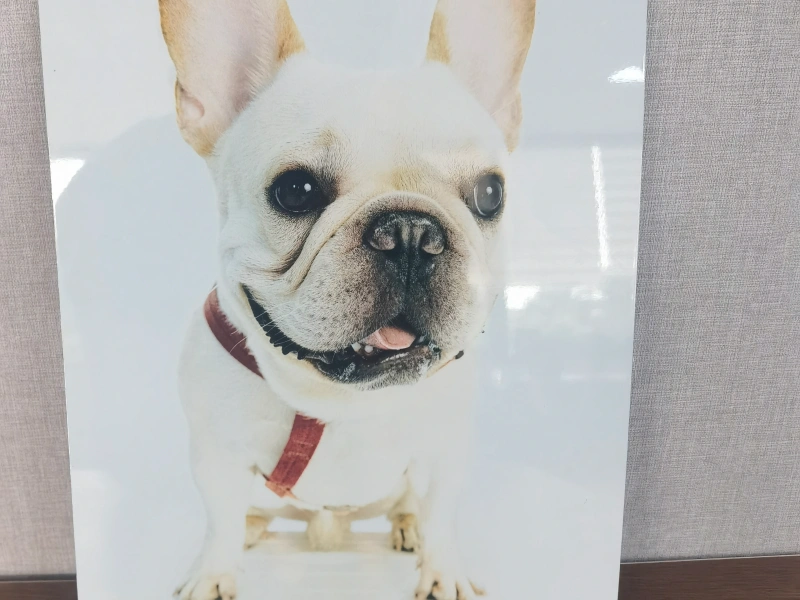
Aluminum wins when you need light weight, outdoor life, and easy shipping. Canvas wins for a soft, traditional look. Acrylic wins for depth and edge lighting. Ceramic wins for extreme durability on floors or counters.
Press and Print Tips
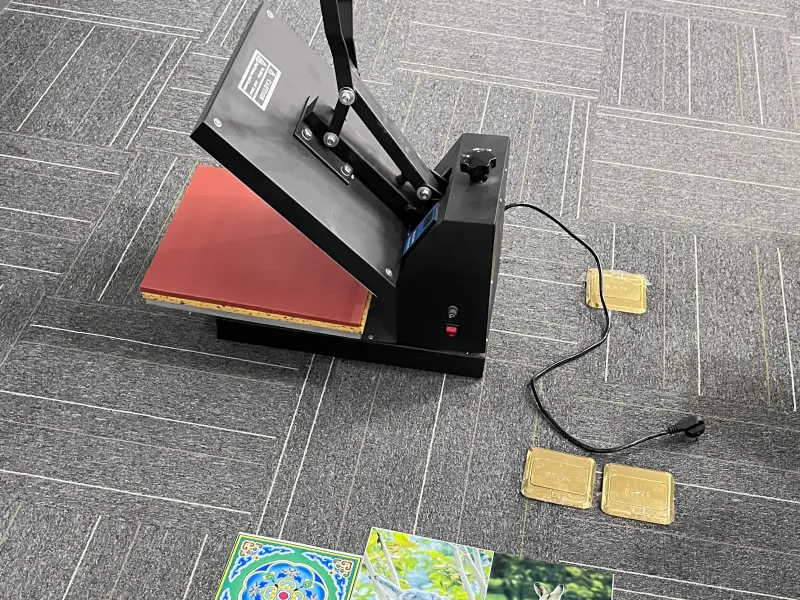
Even the best dye sublimation aluminum fails if the press is wrong.
Storage: Keep blanks in a dry room. Moisture under the coating causes bubbles in the press.
Temperature: Most white coatings want 200°C. Metallic bases often need 195°C to avoid yellowing.
Time: 60 to 90 seconds is standard. Thick panels need more time.
Pressure: Medium to firm. Too light causes ghosting. Too heavy can dent thin sheets.
Tape: Use heat-resistant tape to hold transfer paper flat. Wrinkles ruin the image.
Cooling: Let the panel cool flat. Bending while hot warps the metal.
FAQ: Common Questions from Buyers
What is the best alloy for sublimation aluminum sheet?
1050 and 1060 are the top choices. They are pure, soft, and stay flat under heat. They also cost less than structural alloys. If you need extra rigidity for outdoor signs, 3003-H14 works. For curved or wrapped panels, 1050-O is soft enough to bend.
How thick should sublimation aluminum be for wall art?
0.65 mm is the most popular thickness for wall art. It is rigid enough to hang flat but light enough to ship cheaply. For very large prints over 24 x 36 inches, step up to 0.8 mm or 1.0 mm to prevent flexing.
Can sublimation aluminum sheets be used outdoors?
Yes, if the coating is rated for UV. Standard indoor coatings fade in direct sun within a year. Outdoor-rated polyester coatings last three to five years in full sun. For longer life, some suppliers add a clear UV laminate after printing.
What is the difference between gloss and matte sublimation blanks?
Gloss catches light and makes colors look electric. It is best for photos and ads. Matte kills reflections and reads like fine-art paper. It is best for galleries and soft portraits. Gloss shows fingerprints. Matte hides them.
Can you cut sublimation aluminum sheets after printing?
Yes. Shear, saw, or router the panel after sublimation. The image goes all the way through the coating, so the edge will show white or silver where the coating ends. For clean edges, cut first and print second when possible.
Do brushed silver blanks need special image prep?
Yes. Any white in your design file will print as clear, letting the brushed metal show through. If you want true white, you must add a white background in your design. Otherwise, the metal texture becomes part of the image.
What size heat press do I need for large sublimation aluminum sheets?
Match your press to your blank. A 16 x 20 inch press handles most standard photo panels. For 24 x 36 inch murals, you need a large-format press or a swing-away model with even pressure. Some shops use a calendar heat press for continuous roll work.
Is sublimation aluminum safe for food contact?
The aluminum itself is safe. The polyester coating is inert after curing. However, most coatings are not tested for direct food contact. Use sublimation aluminum for display and decor, not for cooking surfaces or utensils.
How do you clean printed sublimation aluminum?
Use a soft, damp cloth. Mild soap is fine. Avoid ammonia and alcohol on glossy coatings; they can dull the shine over time. Do not use abrasive pads. The image is locked in, but the surface can still scratch.
Can you sublimate on both sides of an aluminum sheet?
Yes, but it requires two press cycles. Print one side, cool, flip, and print the other. Use a thick felt pad to protect the first image during the second press. Double-sided panels are popular for hanging room dividers and spinning displays.
Leave a Reply
You must be logged in to post a comment.