
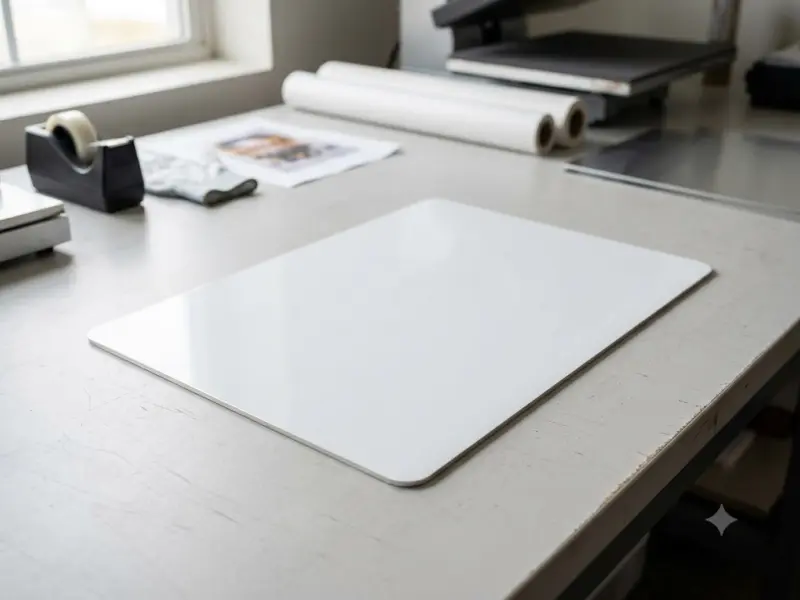
White sublimation aluminum sheete column.
A white sublimation aluminum sheet is a flat aluminum panel coated with a special white polyester layer. This layer accepts dye-sublimation ink under heat and pressure. The ink turns into gas and bonds with the coating. The result is a permanent, high-resolution image with vivid color.
The white background makes colors pop. Photos look bright. Text looks sharp. Logos show true brand colors. Without the white base, the natural silver of aluminum would dull the image.
These sheets come in many sizes, alloys, and thicknesses. They are popular with photo labs, gift shops, sign makers, and promotional product companies. The A4 size is the most common, but larger and smaller formats exist.
Why the White Base Changes Everything
The color of the base metal affects the final print. A white sublimation aluminum sheet gives you a clean canvas.
| Base color | Effect on print | Best for |
|---|---|---|
| White | True color, bright saturation | Photos, artwork, full-color graphics |
| Silver / Clear | Metallic tint in light areas | Industrial labels, metal art |
| Brushed silver | Metallic texture shows through | Nameplates, modern decor |
| Gold | Warm metallic tone | Awards, commemorative plaques |
White is the safest choice for most projects. It reproduces skin tones, skies, and brand colors without color shift.
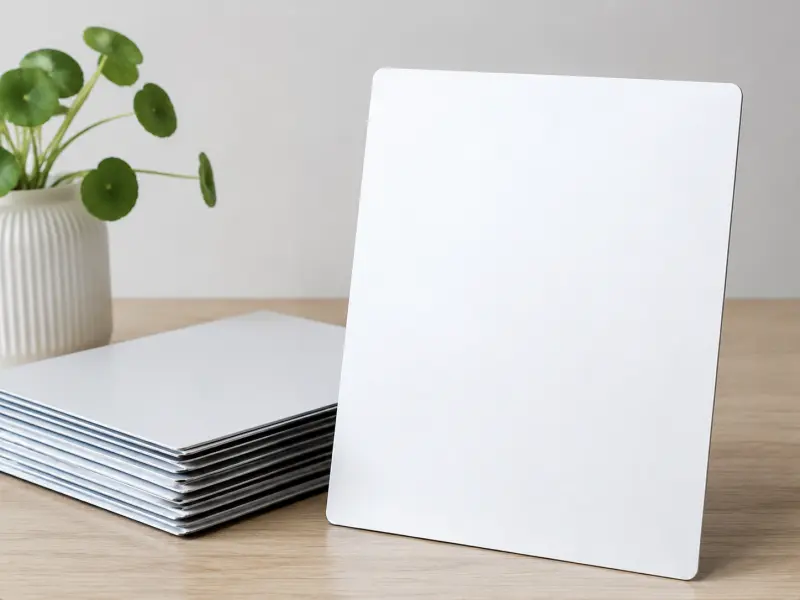
Alloy Types Behind the White Coating
The aluminum base is not just a carrier. The alloy changes how the sheet behaves in the heat press and over time.
1050 White Sublimation Aluminum
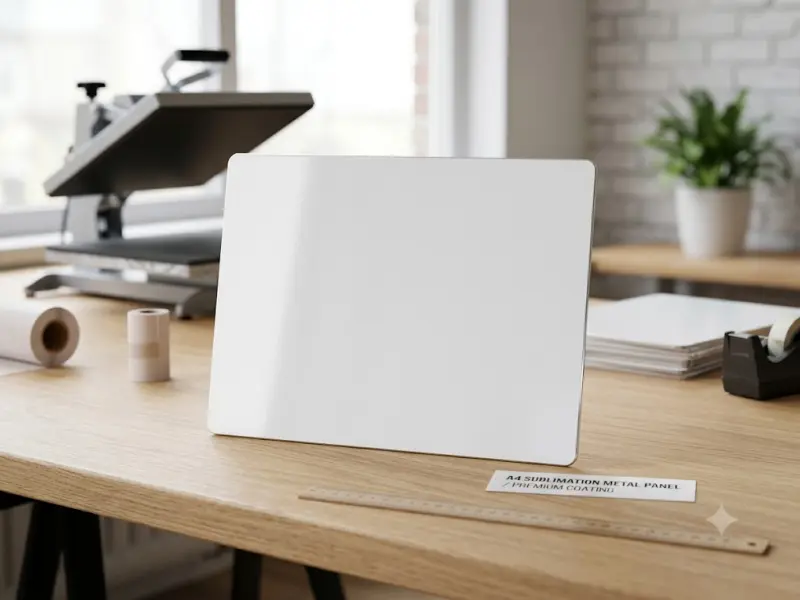
This alloy is nearly pure aluminum. It contains about 99.5% aluminum.
| Property | Value |
|---|---|
| Purity | ~99.5% Al |
| Temper | O, H14, H24 |
| Strength | Low |
| Formability | Excellent |
| Cost | Low |
| Best use | Indoor photo panels, gifts, awards |
1050 is soft and affordable. It works well for desk photos and small gifts. Do not use it for large outdoor signs. It dents easily and can warp under high heat if the sheet is too thin.
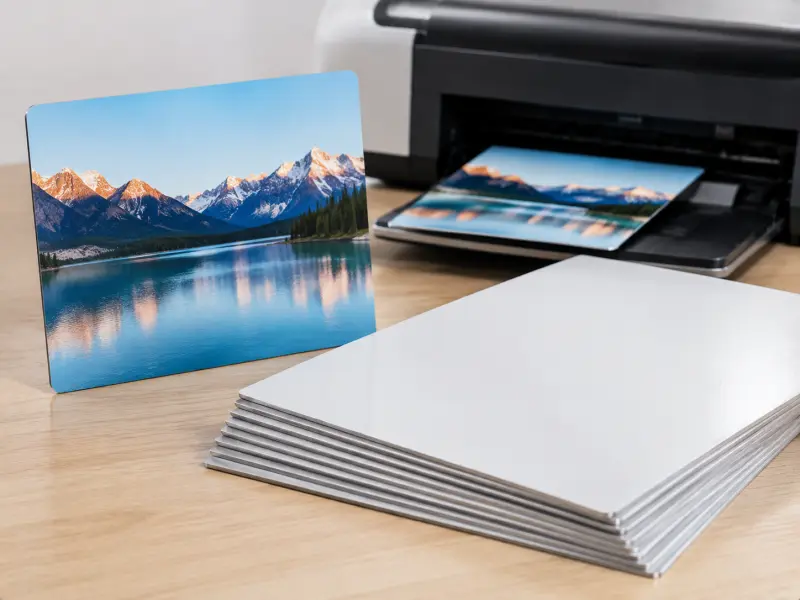
1060 White Sublimation Aluminum
With 99.6% purity, this grade offers a smoother surface than 1050.
| Property | Value |
|---|---|
| Purity | ~99.6% Al |
| Temper | O, H14, H24 |
| Surface quality | Very smooth |
| Coating adhesion | Strong |
| Cost | Low to medium |
| Best use | Premium photo panels, high-end awards |
1060 gives slightly better color consistency across large prints. If you are printing a panoramic photo on a big sheet, this alloy helps avoid streaks.
1100 White Sublimation Aluminum
This grade balances flexibility and corrosion resistance.
| Property | Value |
|---|---|
| Purity | ~99.0% Al |
| Temper | O, H12, H14, H24 |
| Strength | Medium |
| Corrosion resistance | Good |
| Best use | Decorative panels, wall art, general signage |
1100 is the safe middle choice. It is stronger than 1050 but still easy to press. Many sign makers keep this in stock for mixed jobs.
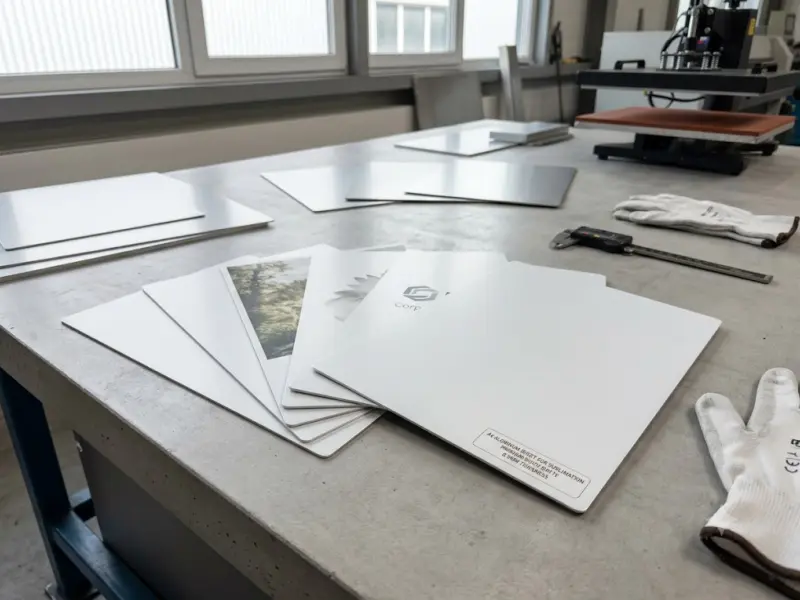
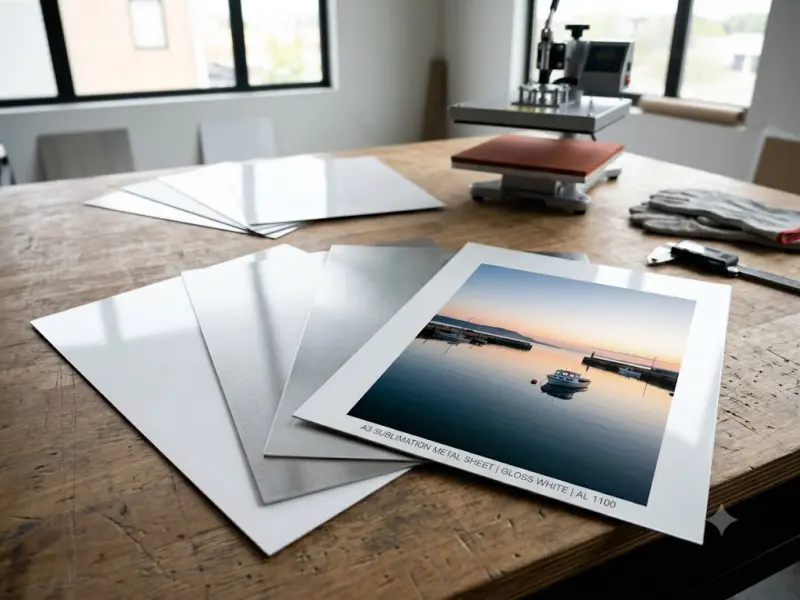
3003 White Sublimation Aluminum
This alloy adds manganese. It is stronger than the 1000 series.
| Property | Value |
|---|---|
| Manganese content | 1.0–1.5% |
| Strength | Higher than 1050/1060 |
| Heat resistance | Very good |
| Warp resistance | Better than pure grades |
| Best use | Outdoor signs, large panels, heat-intensive jobs |
3003 resists warping during the heat press. If you run a high-volume shop and press large sheets back to back, 3003 stays flatter. It is also the better choice for signs that face temperature changes.
5052 White Sublimation Aluminum
This alloy contains magnesium. It is the strongest grade commonly used for sublimation blanks.
| Property | Value |
|---|---|
| Magnesium content | 2.2–2.8% |
| Tensile strength | 210–260 MPa |
| Corrosion resistance | Excellent |
| Cost | Higher |
| Best use | Marine signs, industrial labels, outdoor displays |
5052 handles outdoor exposure and salt air. It costs more but lasts longer in harsh conditions. Use this when the printed panel must survive rain, snow, or sea spray.
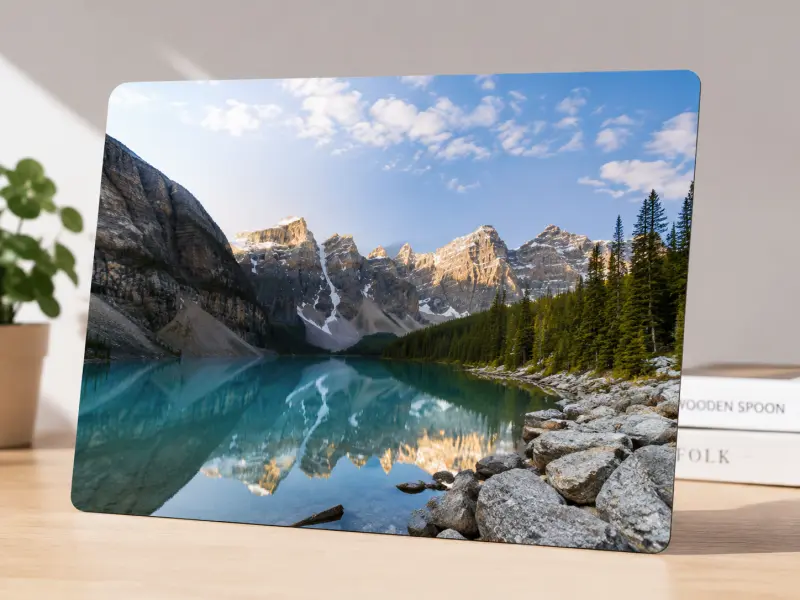
Alloy Comparison at a Glance
Choosing the right base metal saves money and prevents rejects. This table breaks down the key differences.
| Feature | 1050 | 1060 | 1100 | 3003 | 5052 |
|---|---|---|---|---|---|
| Purity | High | Very high | High | Medium | Medium |
| Strength | Low | Low | Low-medium | Medium | High |
| Flexibility | Excellent | Excellent | Excellent | Good | Good |
| Heat resistance | Good | Good | Good | Very good | Excellent |
| Outdoor use | No | No | Limited | Yes | Excellent |
| Price level | $ | $$ | $ | $$ | $$$ |
| Best product | Photo gifts | Premium panels | General signs | Outdoor signs | Marine plates |
Quick guide:
- Indoor photos and gifts → 1050 or 1060
- General indoor signs → 1100 or 3003
- Large panels or outdoor use → 3003
- Harsh weather or heavy handling → 5052
Temper States and What They Mean
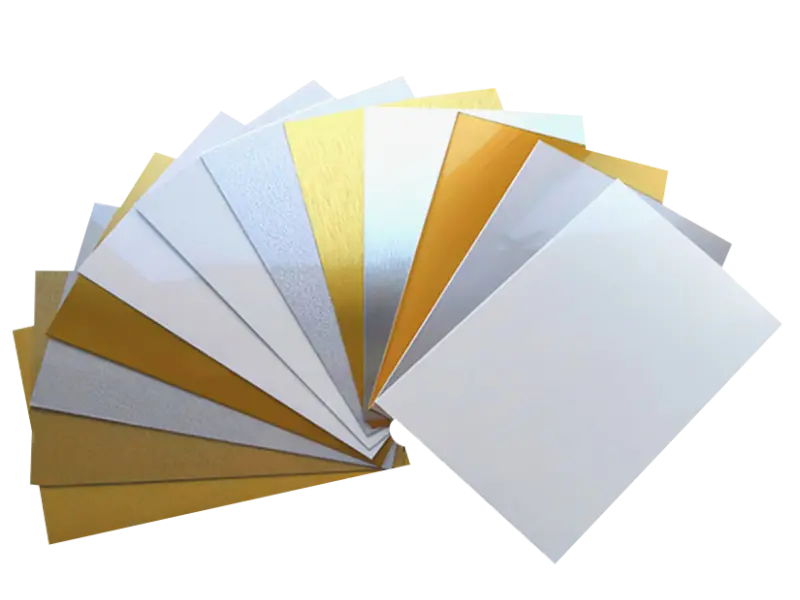
Temper describes how hard the metal is. It affects how the sheet acts in the heat press and how flat it stays after cooling.
| Temper | Description | Best For |
|---|---|---|
| O | Fully annealed, very soft | Bending, curved shapes, deep drawing |
| H14 | Half-hard, standard | General sublimation blanks |
| H24 | Partially annealed | Better flatness, less warp after pressing |
| H18 | Fully hard, stiff | Flat nameplates, rigid signs, no forming |
| H32 | Stabilized | 5000 series outdoor panels |
For most white sublimation aluminum sheet jobs, H14 or H24 is the sweet spot. O temper is too soft and may warp under press pressure. H18 is too stiff for curved projects and may not seat evenly in some heat presses.
Thickness Options and Real-World Use
Thickness changes the feel, weight, and press behavior of the sheet.
| Thickness | Weight feel | Typical use | Warp risk | Press notes |
|---|---|---|---|---|
| 0.3 mm | Very light | Keychains, tags, bookmarks | Higher | Use light pressure, short time |
| 0.4 mm | Light | Small signs, thin photo panels | Moderate | Standard for craft projects |
| 0.5 mm | Standard | Most photo panels, desk displays | Low | Industry standard for A4 |
| 0.65 mm | Solid | Premium awards, wall art | Very low | Handles higher pressure well |
| 0.8 mm | Heavy | Outdoor signs, large frames | Minimal | Needs longer press time |
| 1.0 mm | Very rigid | Industrial plates, big installations | None | High pressure and temperature |
Thinner sheets need gentler handling. Thicker sheets tolerate higher pressure and longer press cycles. If you are new to sublimation, start with 0.5 mm. It is forgiving and works for most images.
White Finish Types: Glossy vs. Matte
Not all white coatings are the same. The finish changes how the final image looks and feels.
Glossy White Finish
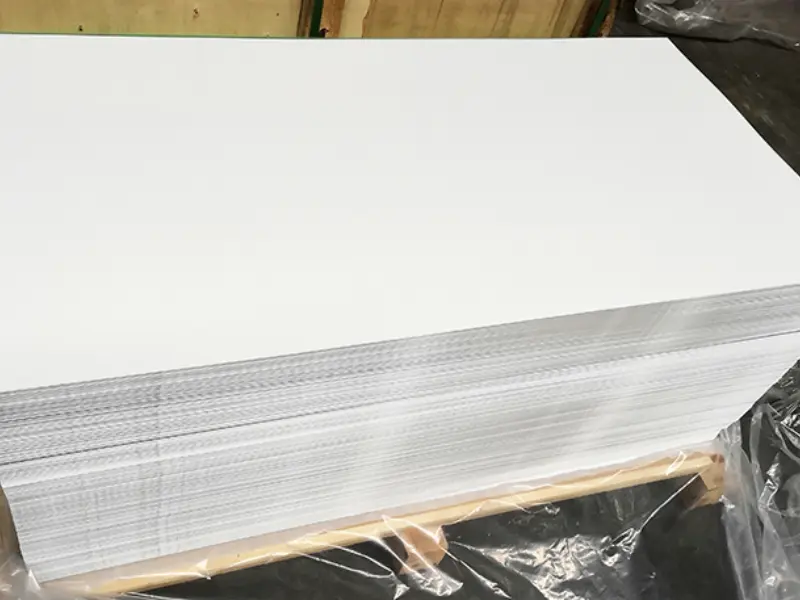
This is the most popular choice. The bright white background makes colors pop.
| Feature | Detail |
|---|---|
| Reflection | High |
| Color output | Vivid and saturated |
| Sharpness | Very high |
| Best for | Photos, artwork, vibrant graphics |
| Care note | Shows fingerprints and dust easily |
Glossy white sublimation aluminum sheet sells well for wedding photos, family portraits, and sports images. The shine gives a modern gallery look.
Matte White Finish

Matte reduces glare. It gives a softer, more professional appearance.
| Feature | Detail |
|---|---|
| Reflection | Low |
| Color output | Subtle and smooth |
| Sharpness | High, but less punch than glossy |
| Best for | Office signs, text-heavy designs, medical imaging |
| Care note | Hides fingerprints and soft reflections |
Use matte white when the panel sits under bright lights or near windows. Offices, clinics, and galleries often prefer this finish.
Satin White Finish
This sits between glossy and matte.
| Feature | Detail |
|---|---|
| Reflection | Medium |
| Color output | Balanced |
| Touch feel | Smooth, silky |
| Best for | Retail displays, hospitality signage |
Satin is a good compromise if you cannot decide between glossy and matte. It offers some depth without harsh reflections.
Finish Comparison Table
| Property | Glossy White | Satin White | Matte White |
|---|---|---|---|
| Brightness | Highest | Medium | Lowest |
| Glare | High | Medium | Low |
| Fingerprint visibility | High | Medium | Low |
| Scratch visibility | Higher | Medium | Lower |
| Best lighting | Normal indoor | Mixed | Bright / direct sun |
| Typical price | Standard | Slightly higher | Standard |
Heat Press Settings by Sheet Type
Wrong temperature ruins the print. Use this guide as a starting point. Always test a scrap piece first.
| Sheet type | Temperature | Time | Pressure |
|---|---|---|---|
| Glossy white 0.5 mm | 190–200°C | 45–60 sec | Medium |
| Matte white 0.5 mm | 185–195°C | 45–55 sec | Medium |
| Glossy white 0.3 mm | 180°C | 40–45 sec | Light-medium |
| Thick panel 0.8 mm+ | 195–205°C | 60–90 sec | Medium-high |
| 3003 alloy white sheet | 185–195°C | 50–70 sec | Medium |
| 5052 alloy white sheet | 190–200°C | 60–80 sec | Medium-high |
Always remove the protective film before pressing. Let the sheet cool flat on a clean surface. Do not blow air on it. Rapid cooling can curve the metal.
Sublimation Results: What Affects Color Output
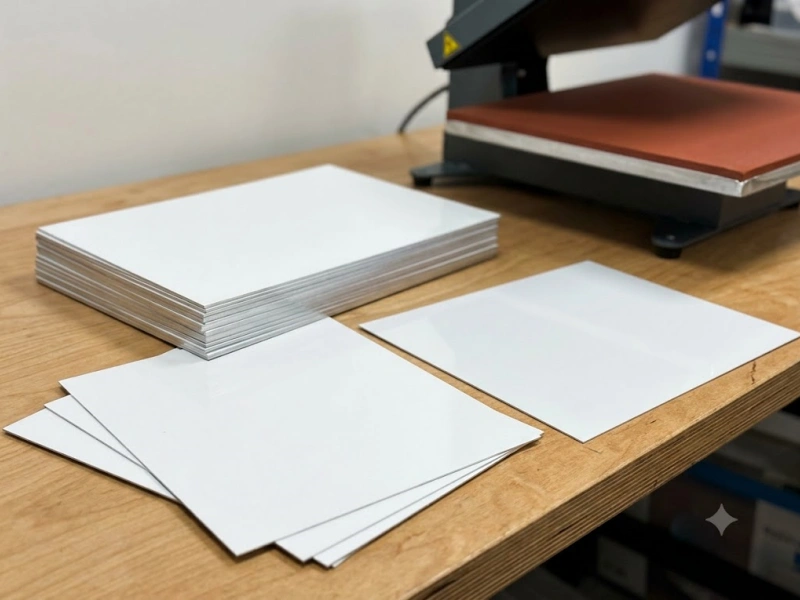
Several factors decide how good the final image looks on a white sublimation aluminum sheet.
Humidity: Damp paper or metal can cause ghosting. Store blanks in a dry room.
Coating quality: A thick, even polyester layer holds more ink and gives deeper color.
Base alloy purity: Higher purity aluminum reflects less interference through the coating. 1060 often looks cleaner than 1050 on close inspection.
Press temperature accuracy: A press that runs 10°C hot can yellow the white border. Use a temperature gun to verify.
Paper quality: High-release sublimation paper transfers more ink to the metal.
Applications and Where White Sheets Excel
White sublimation aluminum sheet fits many industries. The white base ensures color accuracy across all of them.
Photography and Home Decor
Photographers print portraits and landscapes on metal for a modern gallery look.
- Family portraits
- Wedding photos
- Pet portraits
- Travel prints
- Gallery mini-prints
Corporate Awards and Recognition
Companies use white metal panels for plaques and certificates. The white background makes company logos look exact.
- Employee of the month plaques
- Service anniversary awards
- Sales achievement boards
- Retirement keepsakes
- Team recognition panels
Signage and Branding
Small businesses need affordable, professional signs. White sheets work for indoor displays and directional signs.
- Reception desk nameplates
- Office door signs
- Menu boards
- Price lists
- Safety notices
Promotional Products
Marketers use printed metal for giveaways and branded items. The premium feel raises perceived value.
- Trade show handouts
- Event souvenirs
- Branded keychains
- Loyalty program gifts
- Limited edition prints
Medical and Scientific Imaging
Hospitals and labs need accurate color reproduction.
- X-ray display panels
- Microscopy image mounts
- Diagnostic imaging boards
- Research presentation panels
The white base preserves the subtle grays and color markers that doctors rely on.
Education and Institutions
Schools and museums use white metal panels for displays.
- Exhibit labels
- Donor walls
- Graduation mementos
- Science fair awards
- Historical markers
Glossy White vs. Matte White: Which Should You Stock?
If you run a print shop, you need to choose what to keep on the shelf.
| Factor | Glossy White | Matte White |
|---|---|---|
| Customer demand | Higher | Growing |
| Photo sales | Best choice | Good alternative |
| Text and logo jobs | Good | Better |
| Dust and fingerprints | Need frequent cleaning | Low maintenance |
| Bright room performance | Can glare | Perfect |
| Return rate | Low if customer expects shine | Low if customer expects soft look |
Many shops stock both. Glossy white moves faster for photo gifts. Matte white sells better to corporate and medical clients.
How to Pick the Right White Sheet for Your Job
Not every project needs the same blank. Ask yourself these questions before ordering.
Will the panel stay indoors?
→ Choose 1050 or 1060 in 0.4–0.5 mm. Glossy or matte depends on lighting.
Does it face sunlight or weather?
→ Move up to 3003 or 5052 in 0.65 mm or thicker. Matte finish reduces glare outdoors.
Is the image photo-heavy or text-heavy?
→ Photos love glossy white. Text and logos look sharp on matte white.
Do you need to bend or shape the panel after printing?
→ Use O temper or H14. Avoid H18.
Is weight a concern for shipping?
→ Thinner sheets save postage but need careful packing.
Does the customer need a fire rating?
→ Aluminum itself is non-combustible. Ask your supplier for a fire test certificate if the project requires it.
Packaging and Storage Tips
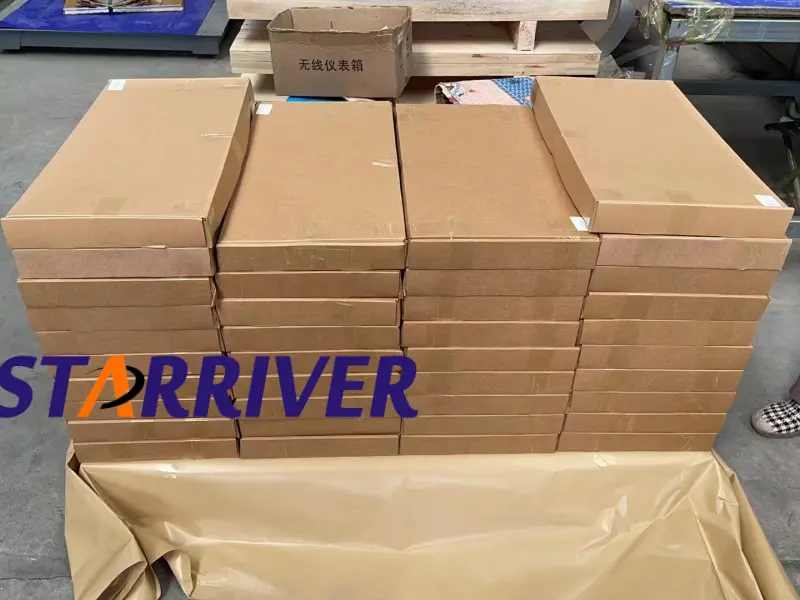
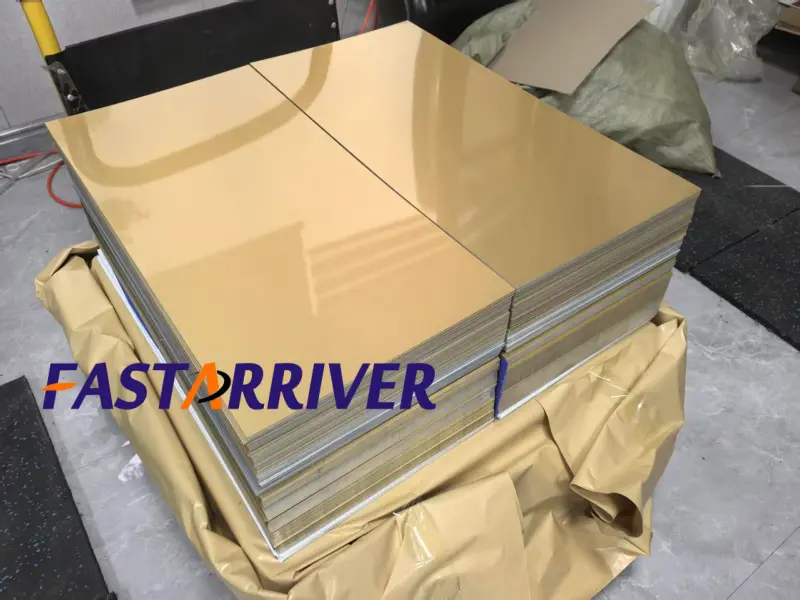
White sublimation aluminum sheets need care before they are printed.
- Protective film: Covers the coated side to stop scratches. Peel it off just before pressing.
- Paper interleaving: Sheets separated by paper prevent rubbing in transit.
- Carton box: Standard for small orders.
- Wooden crate: Used for bulk pallets to prevent bending.
Store blanks flat in a dry room. Humidity can affect the coating over time. Keep them away from direct sunlight before printing. UV can degrade the polyester layer.
Frequently Asked Questions
What makes a white sublimation aluminum sheet different from a regular aluminum sheet?
A regular sheet has no coating. Sublimation sheets have a white polyester layer that accepts dye ink under heat. Without this coating, the image will not transfer or bond.
Can I use any heat press for white sublimation aluminum sheets?
Most flat heat presses work. You need even pressure and accurate temperature. A swing-away press is easier for flat panels than a clamshell design.
Which alloy is best for beginners?
1050-H14 is the safest start. It is affordable, easy to press, and gives good color. Once you master the process, try 1060 for smoother results.
Why does my white sheet yellow after pressing?
Yellowing usually means too much heat or too long in the press. Lower the temperature by 5°C. Check your press with a temperature gun. Some cheap presses have hot spots.
Is glossy or matte better for photo printing?
Glossy gives brighter color. Matte reduces glare. For home display in normal light, glossy wins. For office or gallery lighting, matte is safer.
Can white sublimation aluminum sheets go outside?
Yes, if you use the right alloy. 3003 and 5052 handle outdoor conditions. Add a UV-resistant clear coat for extra protection in direct sun.
How thick should my sheet be for wall art?
0.5 mm to 0.65 mm is standard for wall art. It is rigid enough to stay flat but light enough to hang with simple hooks.
Do white sheets need different ink settings than clear or silver sheets?
White sheets are the most forgiving. They need standard sublimation profiles. Clear or silver sheets may need color correction because the metal base alters the hue.
Can I cut white sublimation sheets after printing?
Yes, but use a metal shear or CNC router. Avoid hand tools that scratch the coating. Always wear eye protection when cutting metal.
What is the shelf life of blank white sheets?
Stored flat and dry, coated panels last 12–24 months. High heat or humidity can degrade the coating. Use older stock first.
Are white sublimation aluminum sheets recyclable?
The aluminum base is recyclable. The polyester coating must be removed first. Check local rules for coated metal recycling.
How do I clean a finished white metal print?
Use a soft microfiber cloth. For glossy panels, a small amount of glass cleaner works. Do not use abrasive pads or ammonia on matte finishes.
Leave a Reply
You must be logged in to post a comment.